
Krka National Park (Skradinski buk)
Location: Skradin, KrkaLength: 2,5 kmElevation gain: 64 mDifficulty: EasyDifficulty rating: K1, T1, VR1

Krka is, alongside Plitvice, the first of the natural attractions you would recommend that a foreigner visit in Croatia. It is exceptionally attractive, easily accessible and pleasant to explore, even in the greatest heat, because it lies by the water and abounds in shade.

Krka National Park is one of the most beautiful parks in Croatia, and in the world too!
When people say they are going to Krka, it is understood that they are going to Krka National Park, to Skradinski buk. Although Krka is much more than a national park, few people know that even the national park itself covers much more than just the area around Skradinski buk. Krka National Park stretches across 142 km² from Knin to Skradin. The park encompasses almost the entire canyon, as well as part of the Čikola canyon and the very mouth of the Čikola as it flows into the Krka. So within the park you will also find Bilušića buk, Roški slap, the Roman camp of Burnum, Visovac Lake with the islet of Visovac, the Rogovo viewpoint, Skradinski buk, numerous other viewpoints and fortresses, as well as the Ključica fortress, which stands on a cliff above the Čikola river.

When buying tickets (online purchase is recommended), you can buy a ticket for the whole park, where the main attraction is Skradinski buk. If you are not going to Skradinski buk but to Roški slap, Manojlovački slap, Burnum or the Krka Eco Campus, you can buy a ticket for just this part of the park, which is half the price of the one for the whole park. Most of these parts of the park are even free out of season, presumably because it is not worth the park deploying so many staff for so few visitors.
In any case, Krka is, alongside Plitvice Lakes, a top destination in Croatia, so it would be wise to avoid visits at the peak of the season when the crowds are largest. Although we used to buy tickets at the park entrances (Skradin, Lozovac, Roški slap), if you are going in season, the recommendation is to buy tickets online, where you choose your entrance and time of visit. In any case, before your planned visit, you should check the current information on the park’s website https://www.npkrka.hr.
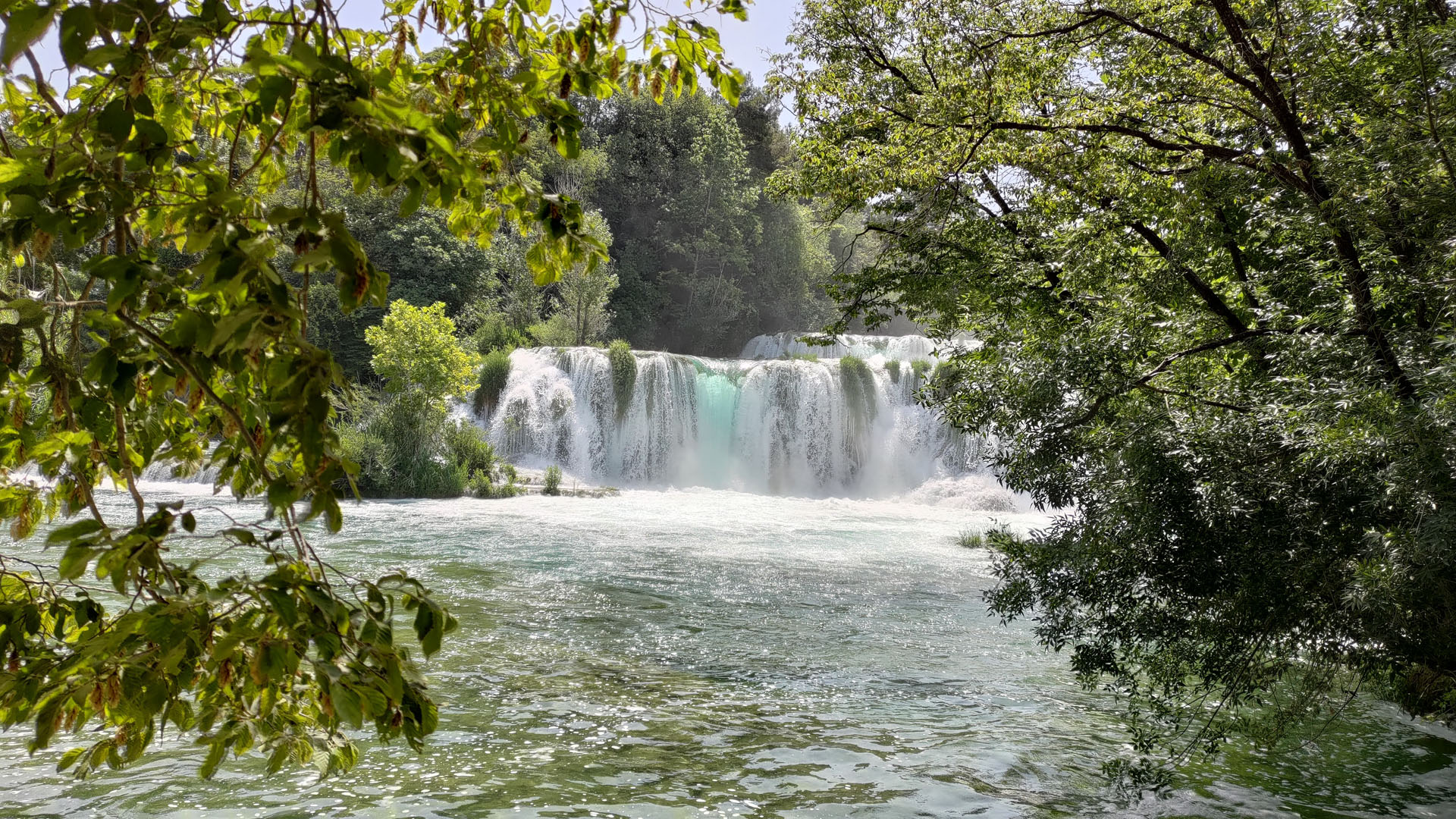
Skradinski buk
There are two entrances for Skradinski buk – Lozovac (the land entrance) and Skradin (the boat entrance).
We used to prefer Lozovac (43.79581850697599, 15.967839642328556). It has an enormous car park at the top of the canyon, and a regular bus line takes visitors to the start of the trail. Long ago, out of season, you could drive down by car all the way to the river itself, but we do not know whether that is still possible.
Now our favourite entrance is the boat one in Skradin (43.81659902527896, 15.922793881110255).

Skradin is a beautiful little town in the Šibenik hinterland, and regular boat lines run from it to Skradinski buk. Besides the chance to explore picturesque Skradin, the boat ride through the Krka canyon is an experience in itself!
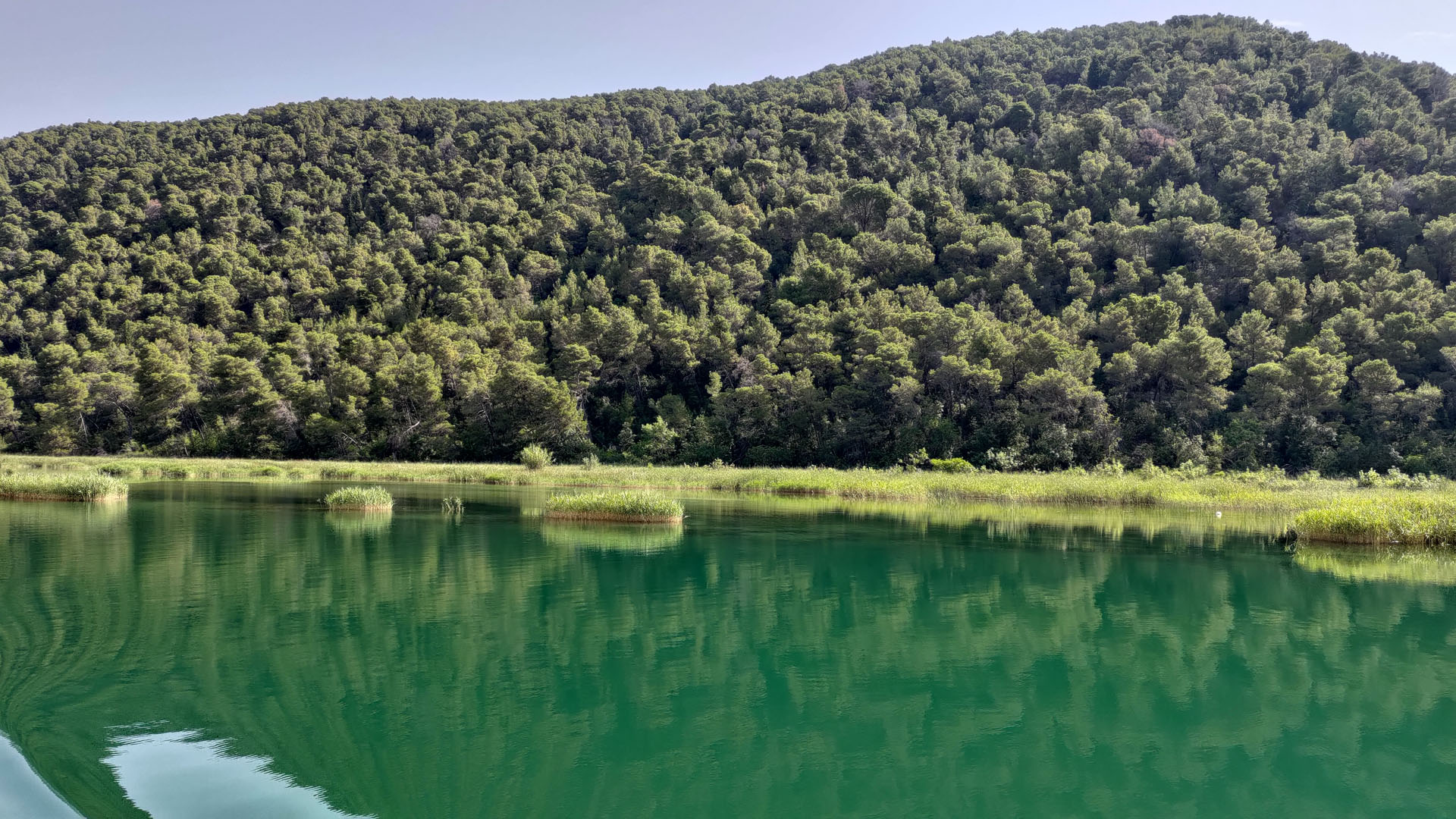

Skradin also has an enormous car park (43.81786327874147, 15.924910241014217), just 100 m from the boat pier.
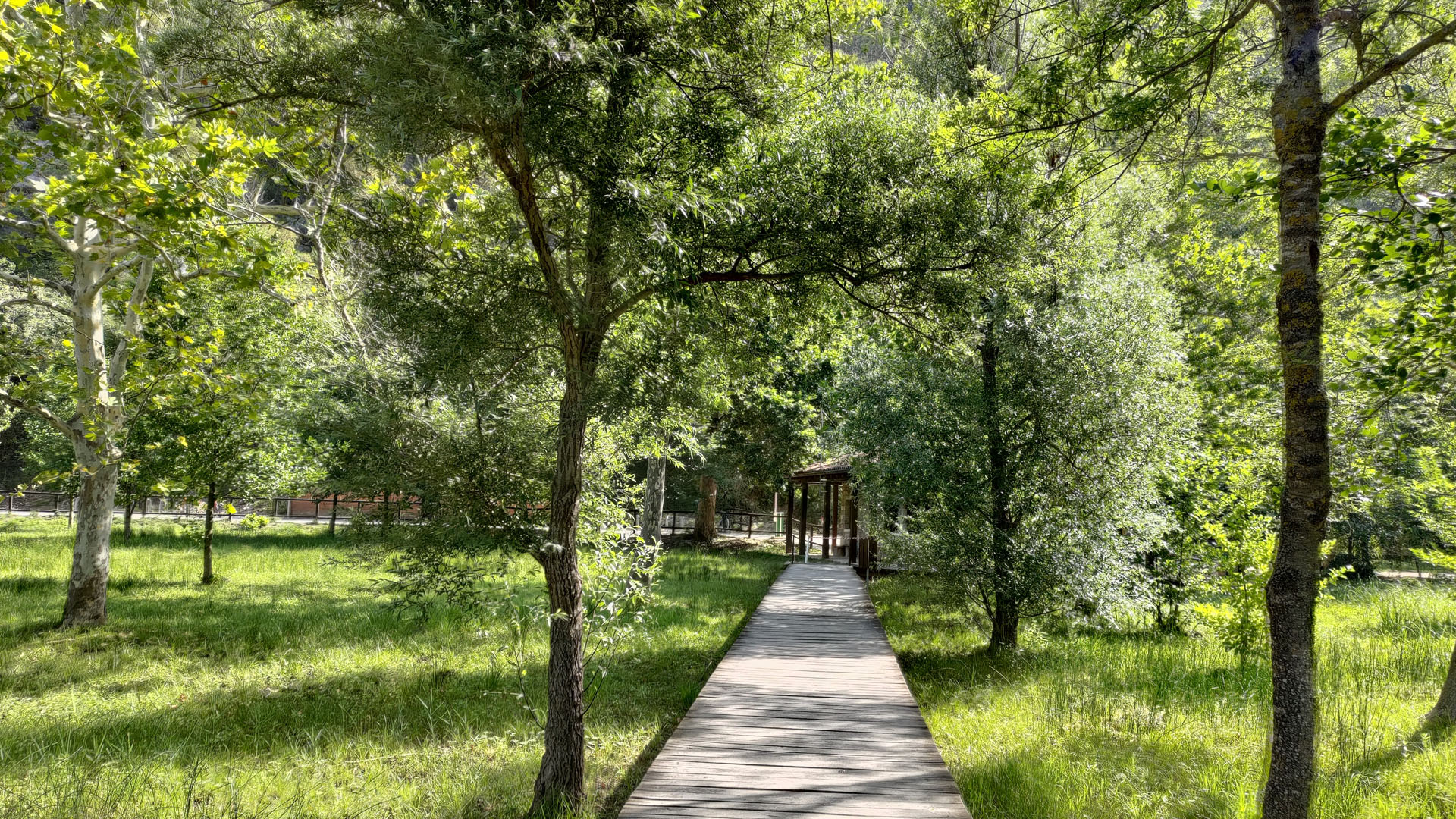
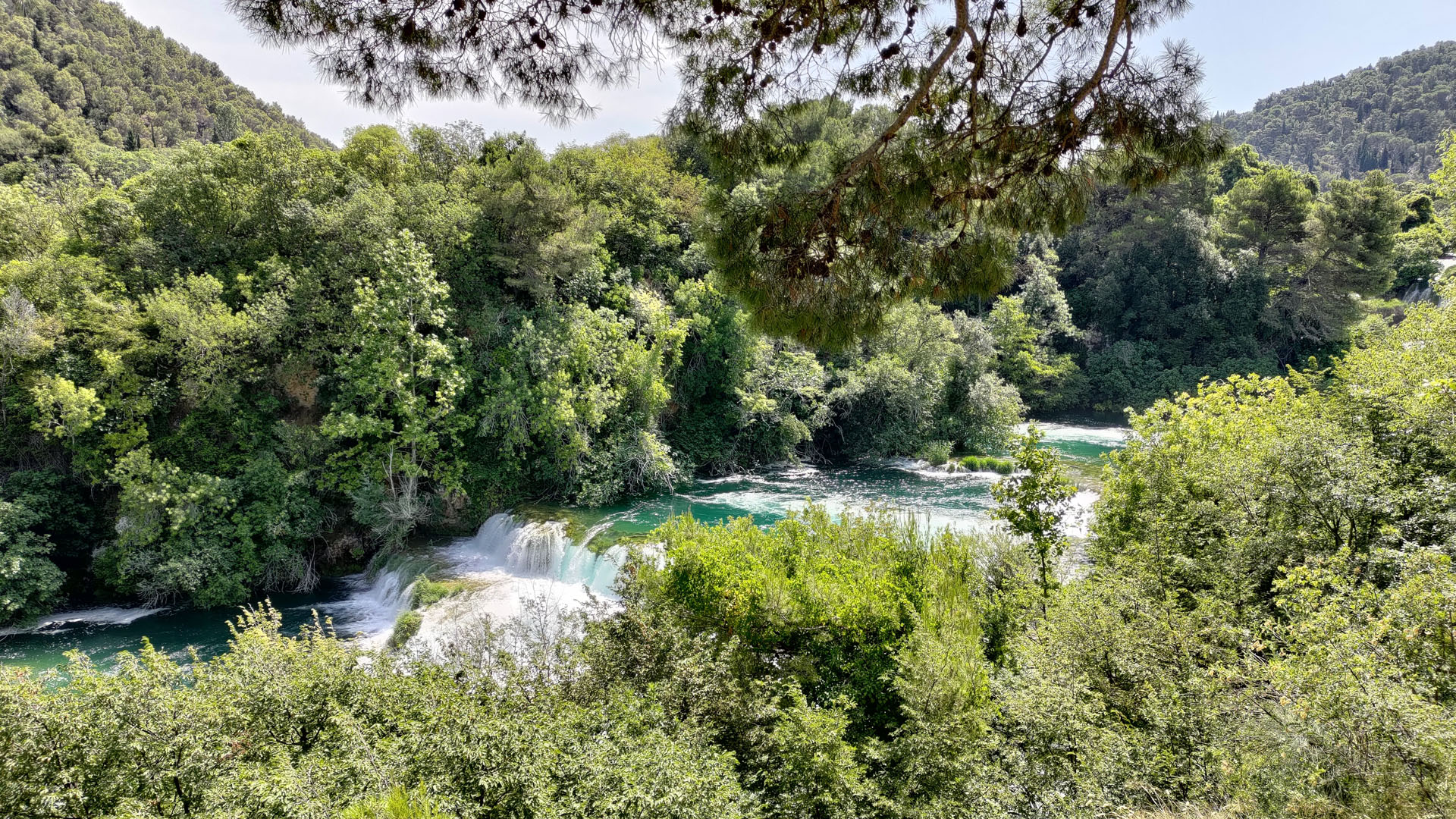
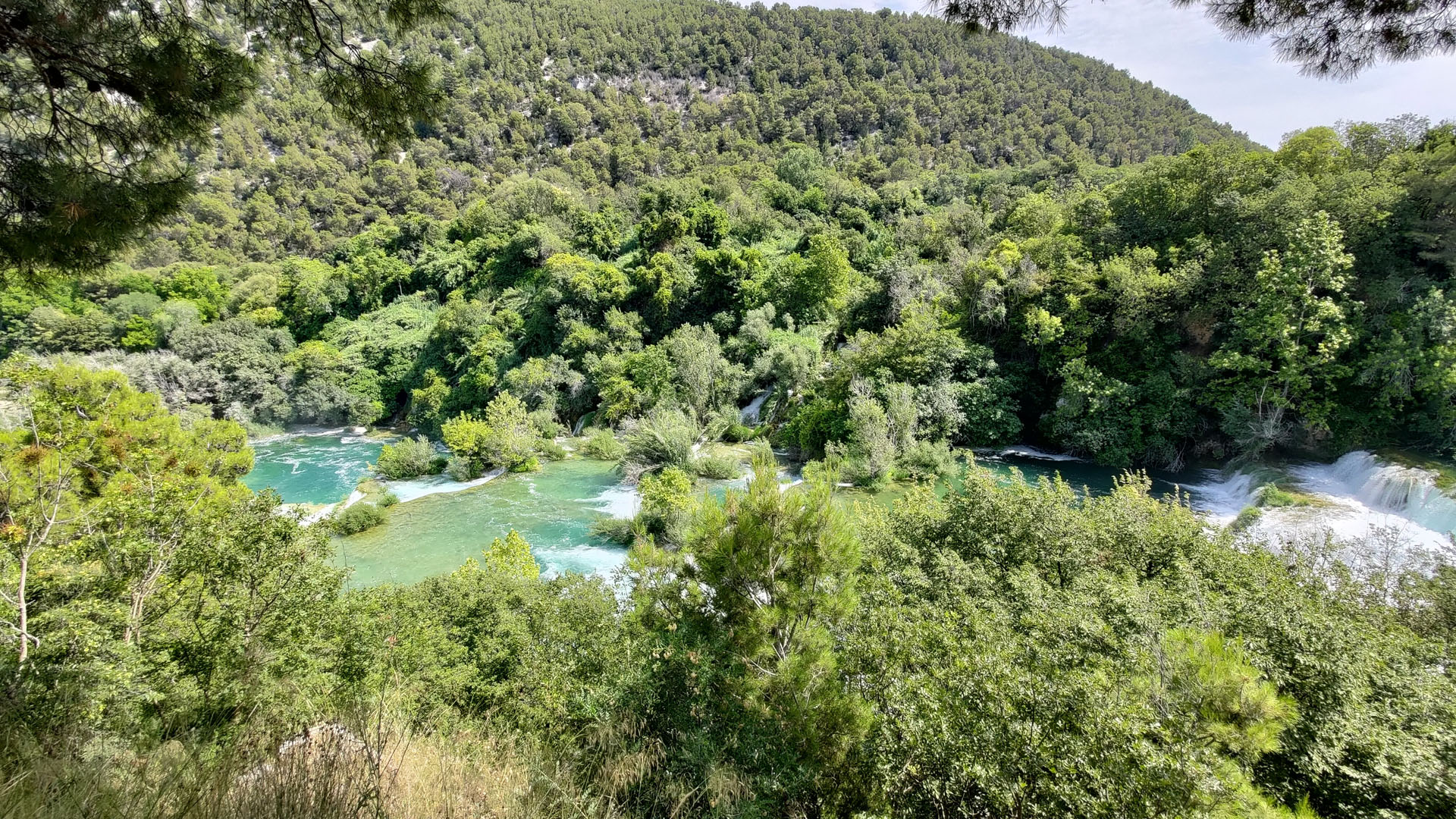
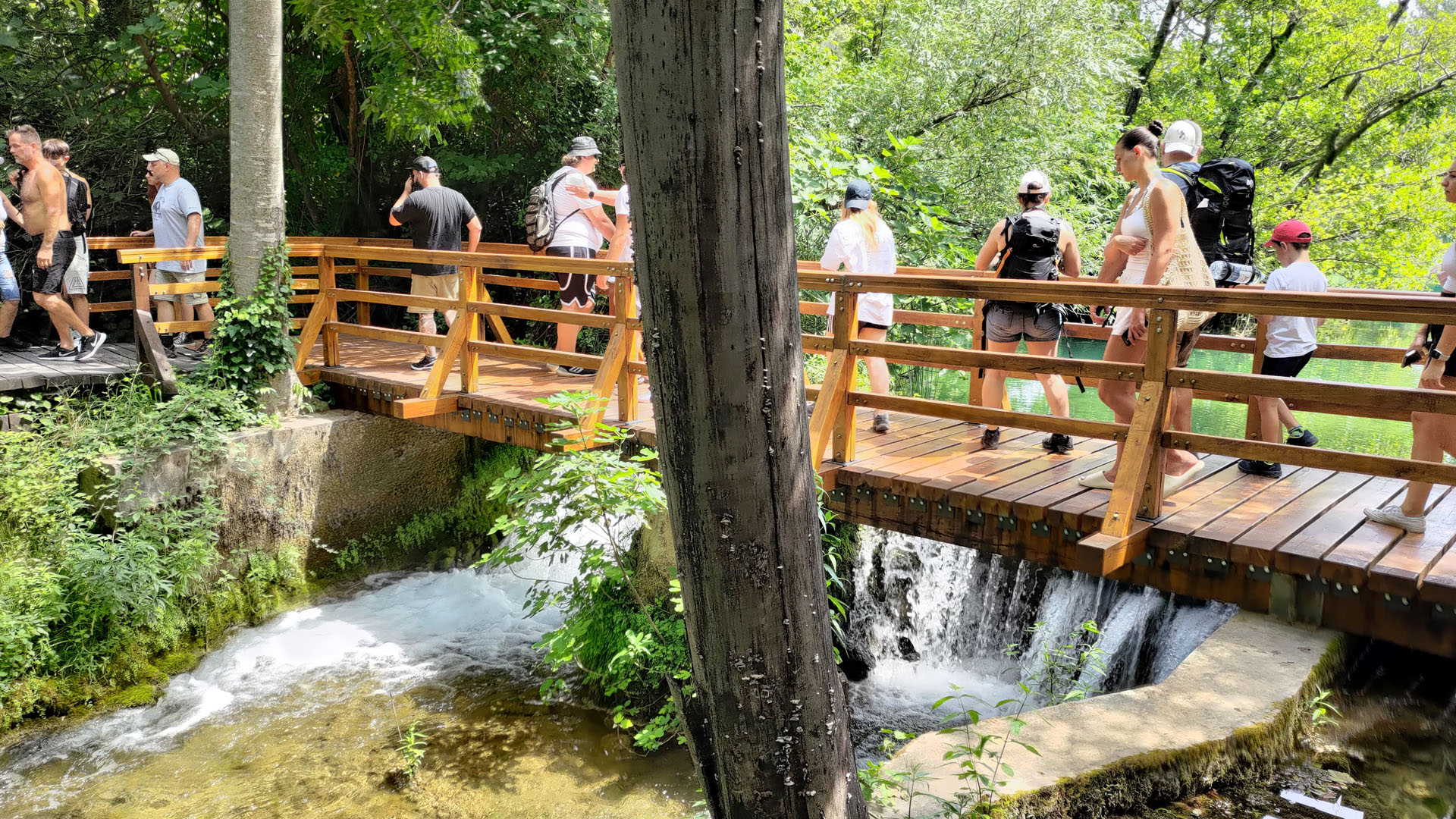
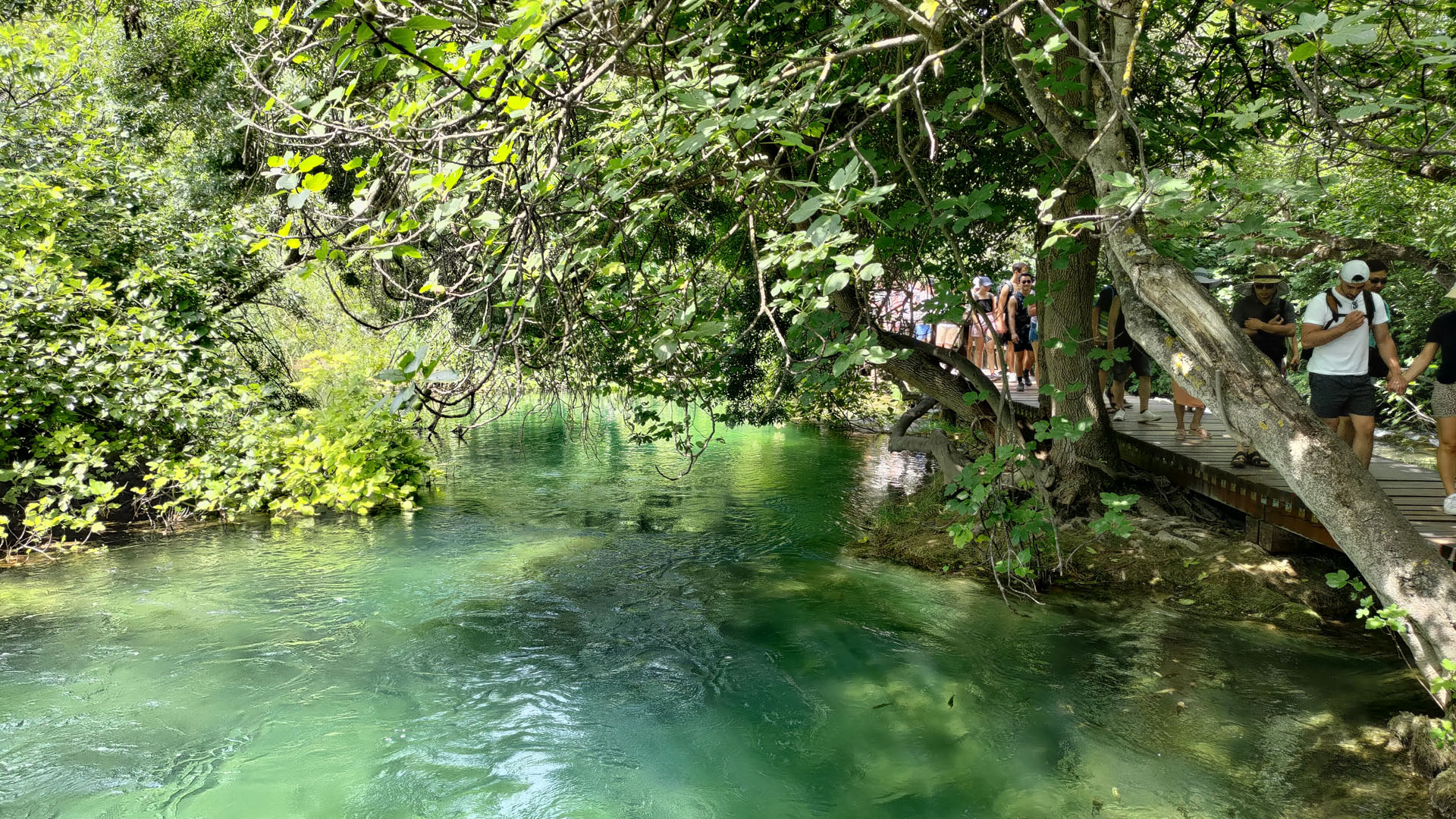
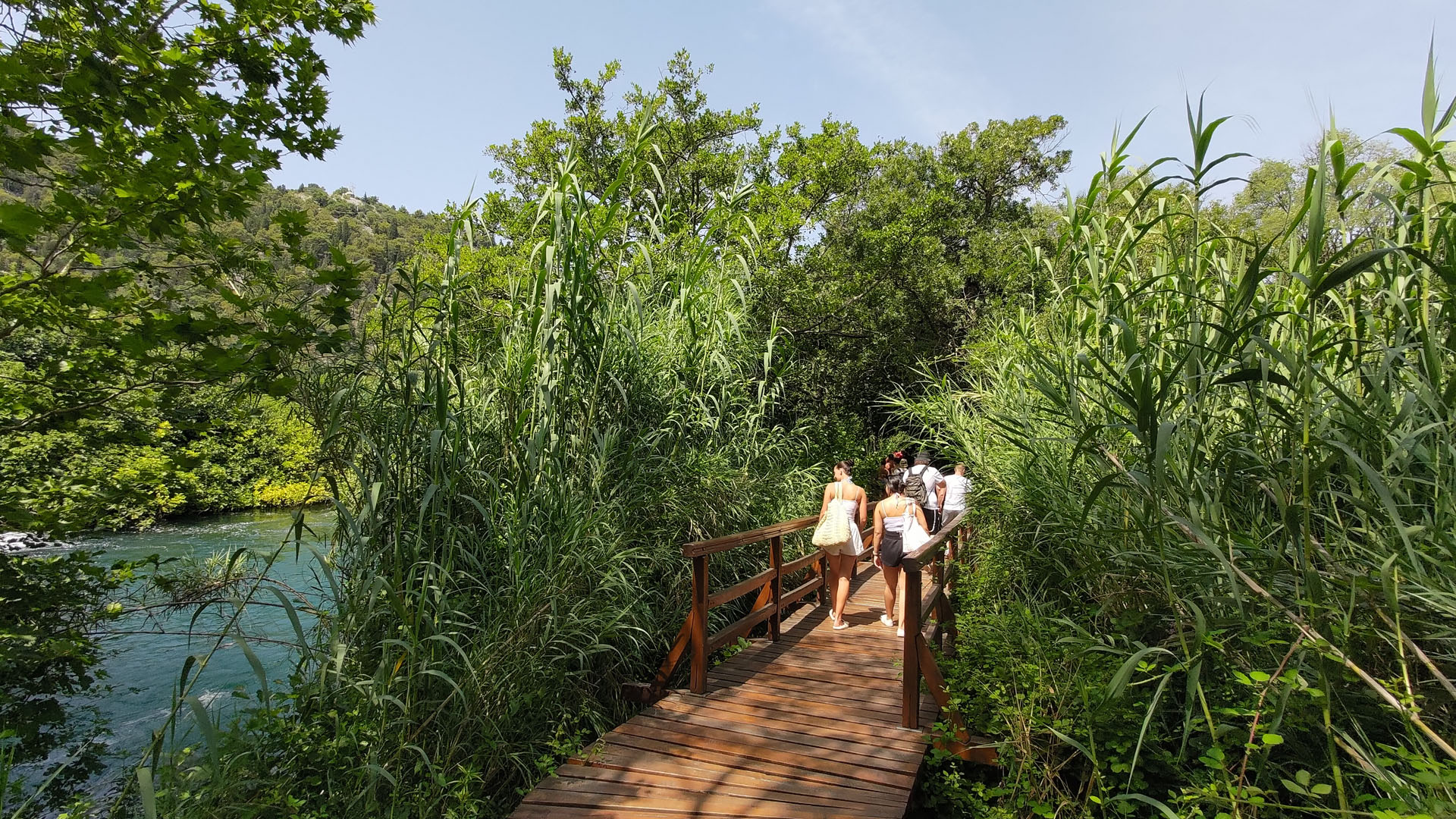
Besides the access, these two entrances also differ in the order in which you visit the attractions in the national park. From the Lozovac side, you first pass through the calmer parts of the park. The first part of the park is walked along wooden trails that lead above the little lakes and side channels of the Krka (similar to Plitvice). Every so often you come across small waterfalls and rapids. Along the right side of the river the trail is mostly an earthen path with turn-offs to viewpoints. The very finale is a descent that ends in front of the impressive Skradinski buk. Here you will find the central restaurant, an info centre, souvenir shops and a multitude of nooks where you can spend time in the shade, resting and enjoying nature. For more comfortable lounging on the meadows, it would be handy to bring a mat.
It is precisely this central part of the park that is where the boats dock. So if you arrive from Skradin by boat, your tour of the park starts from this point.
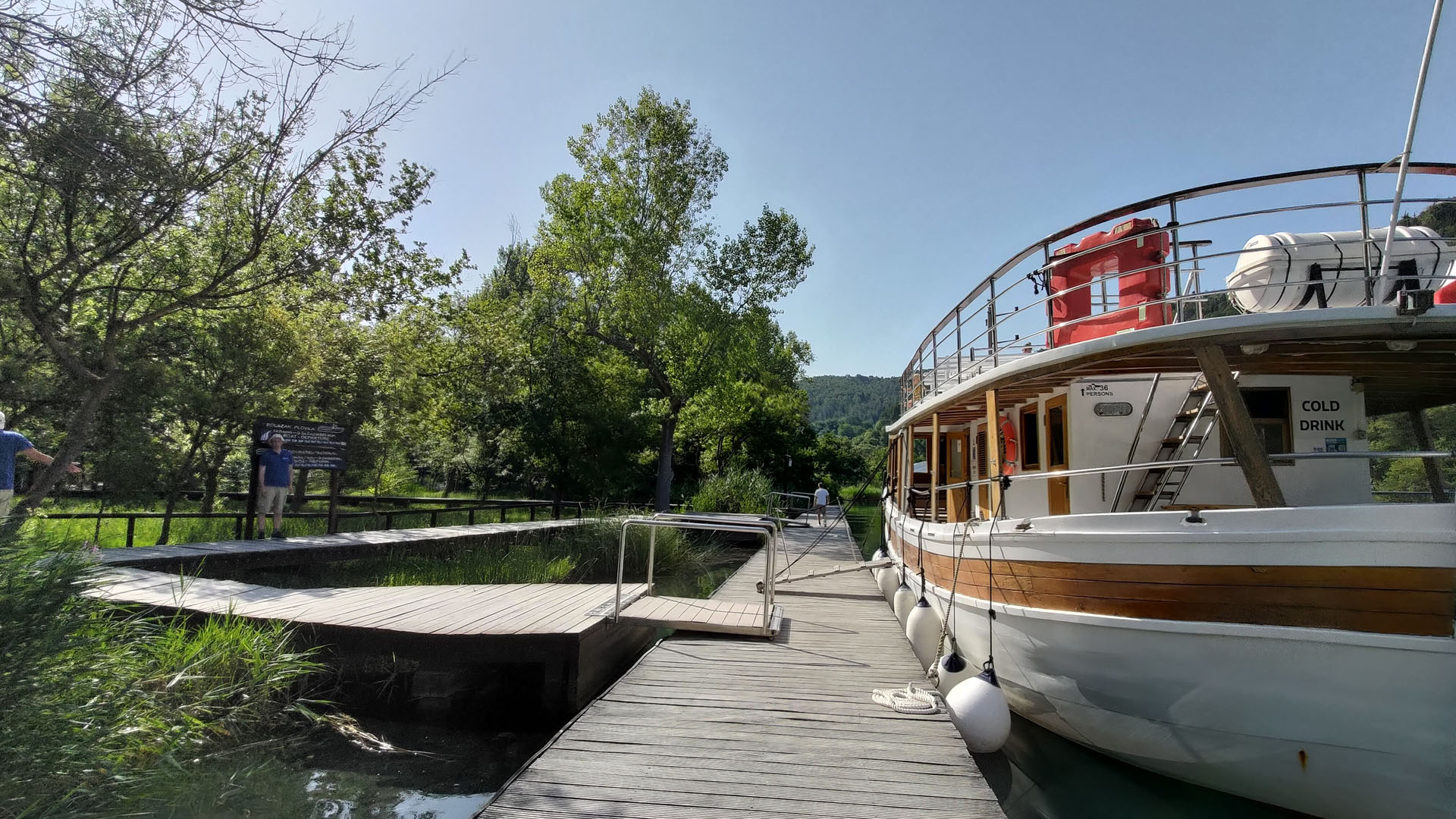
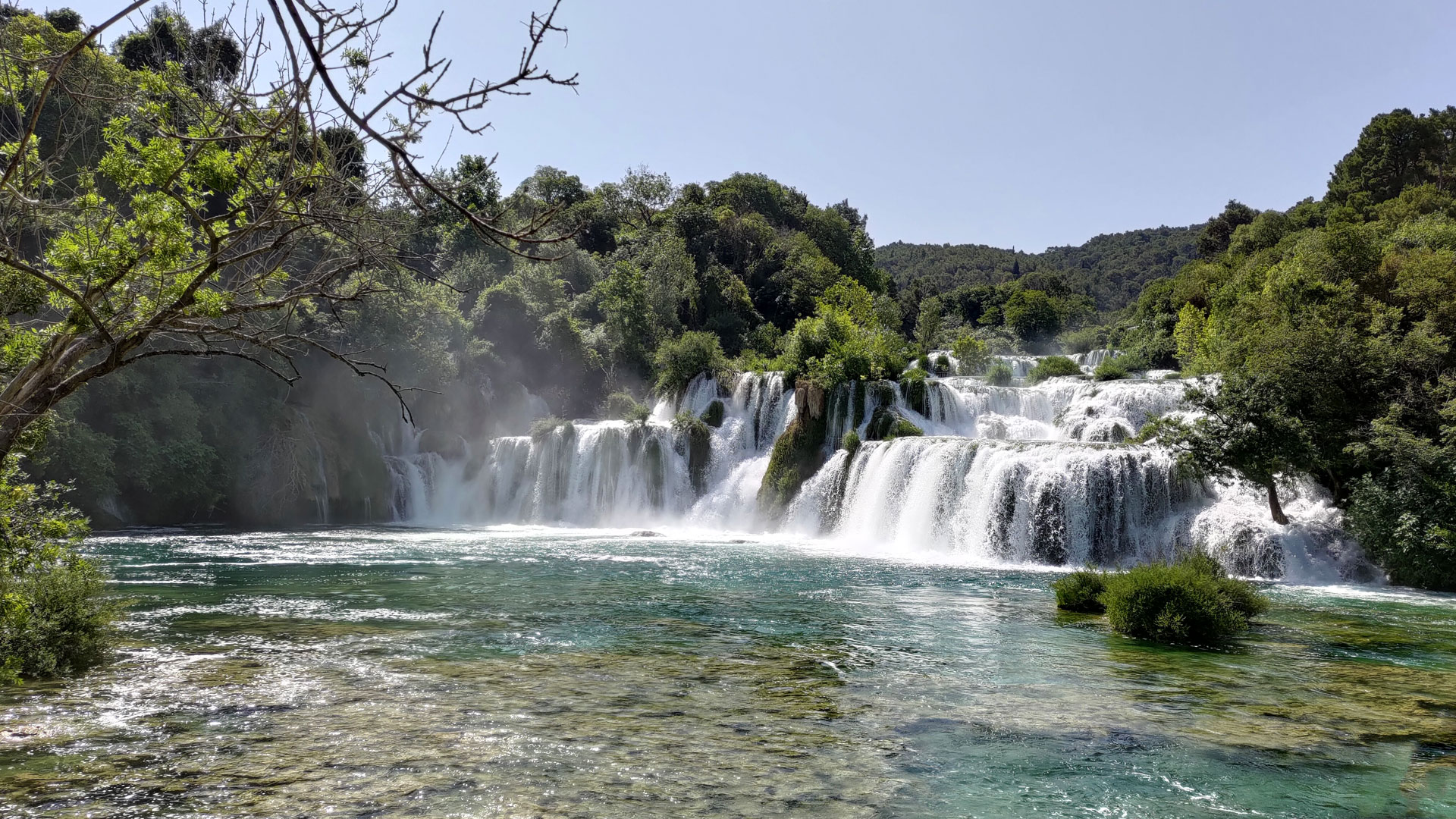
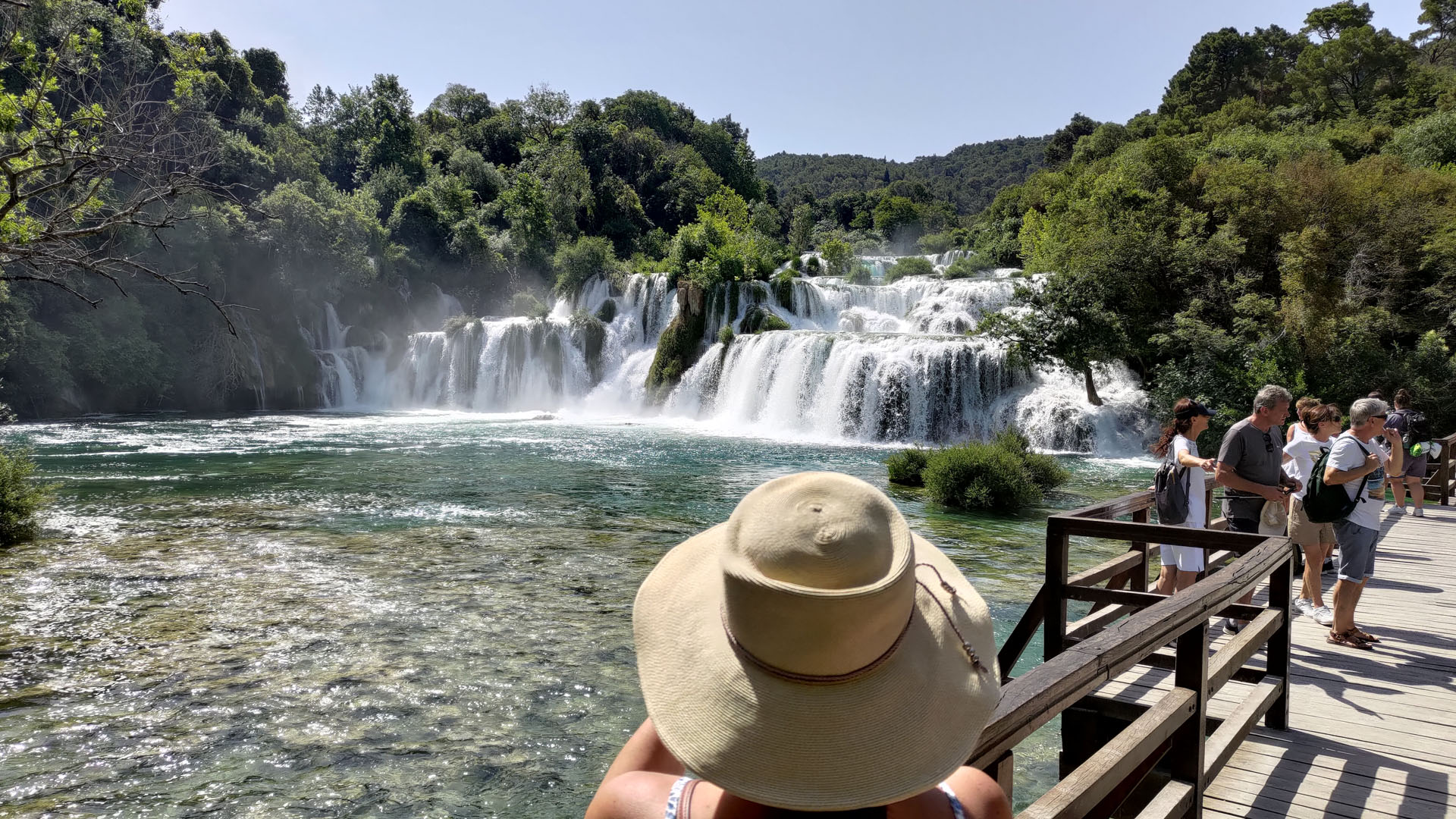
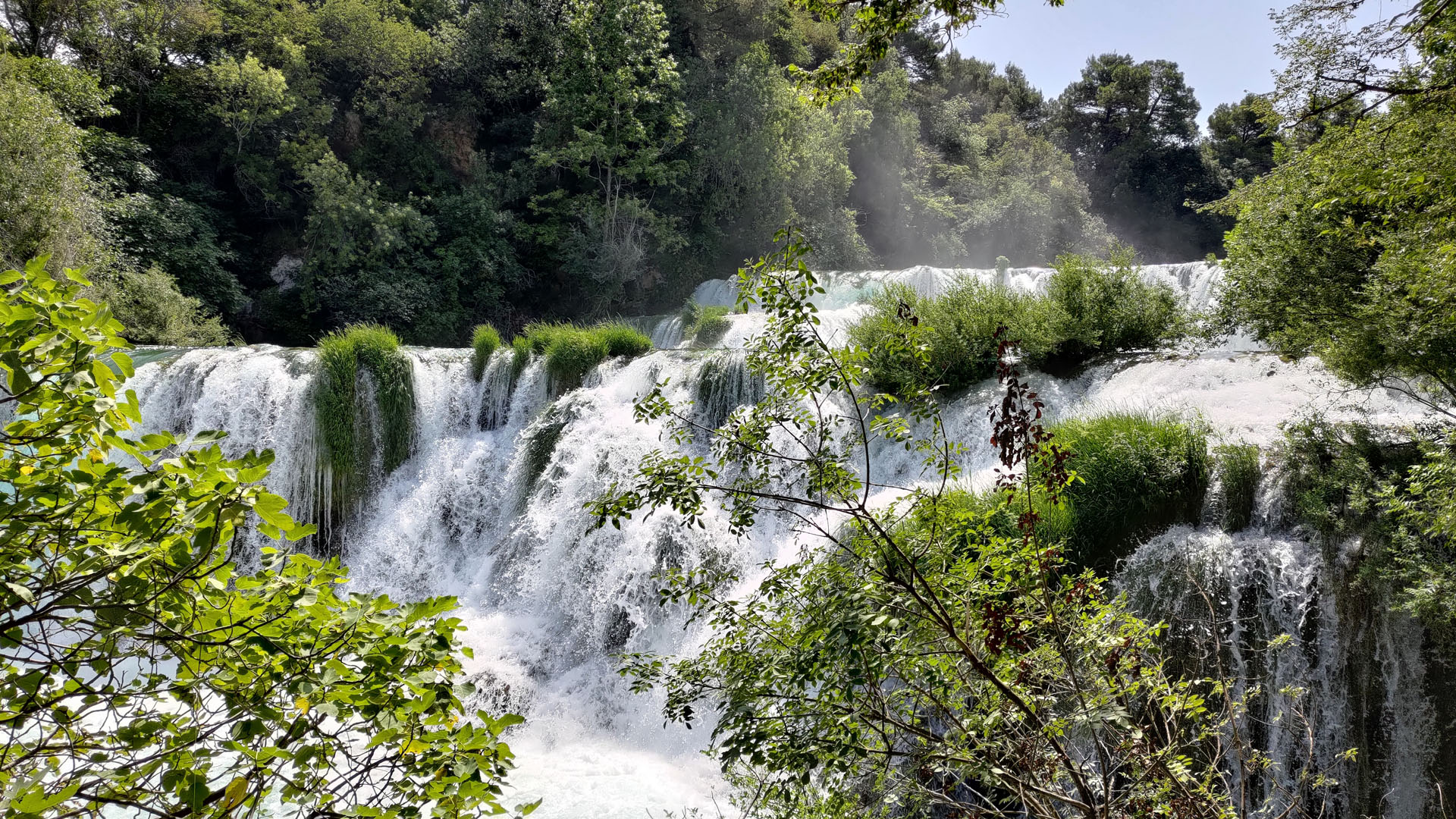
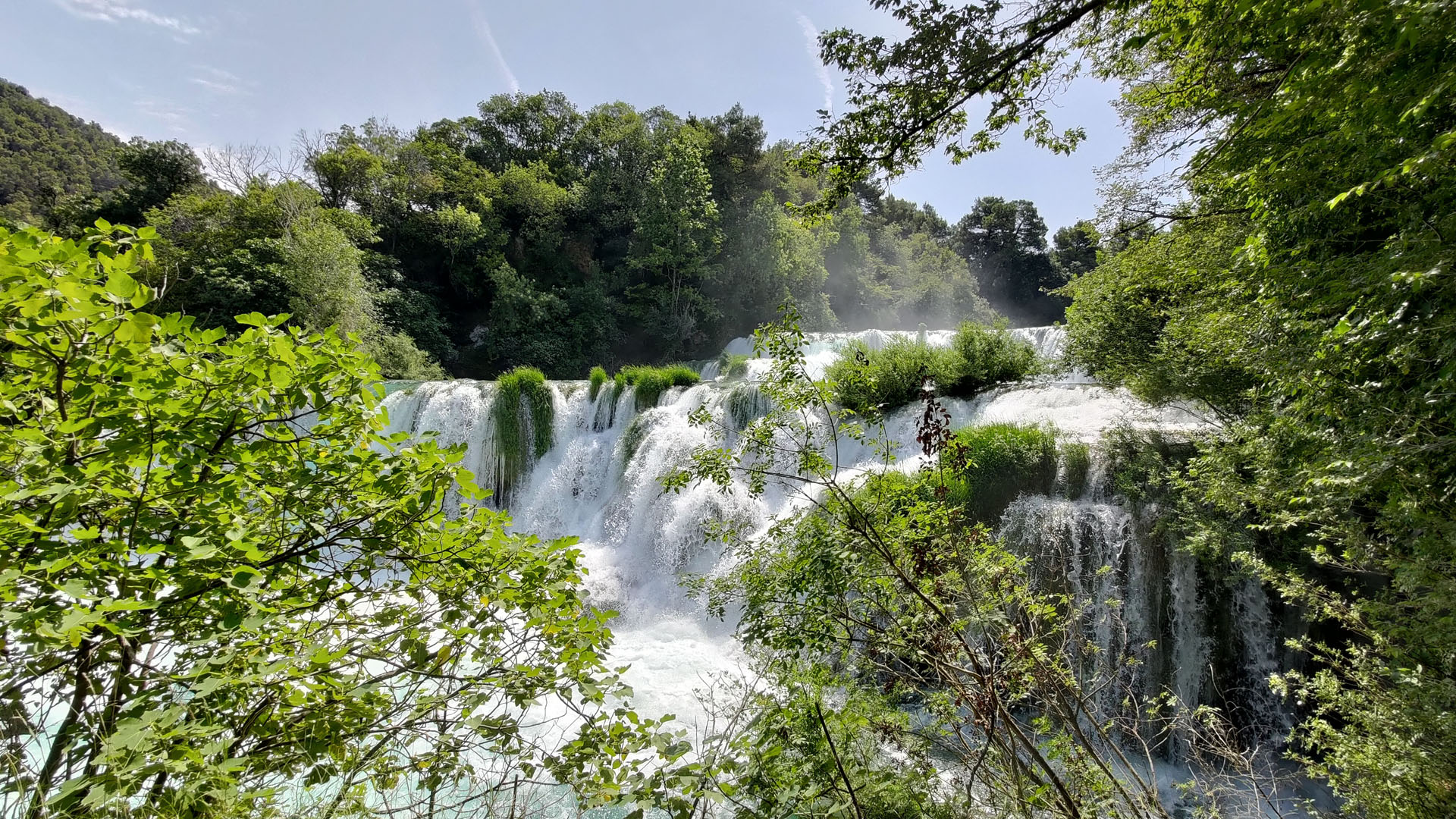
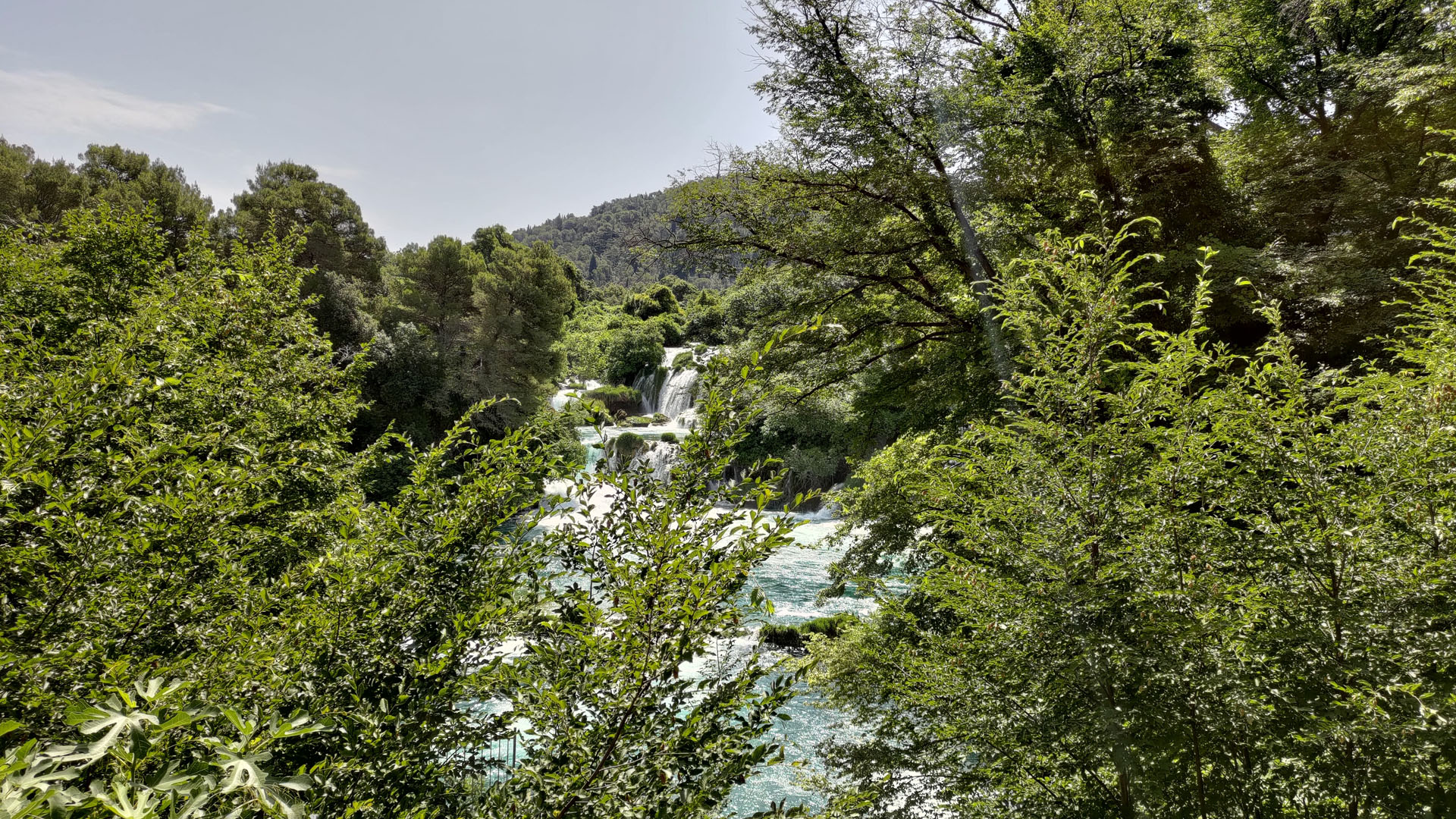
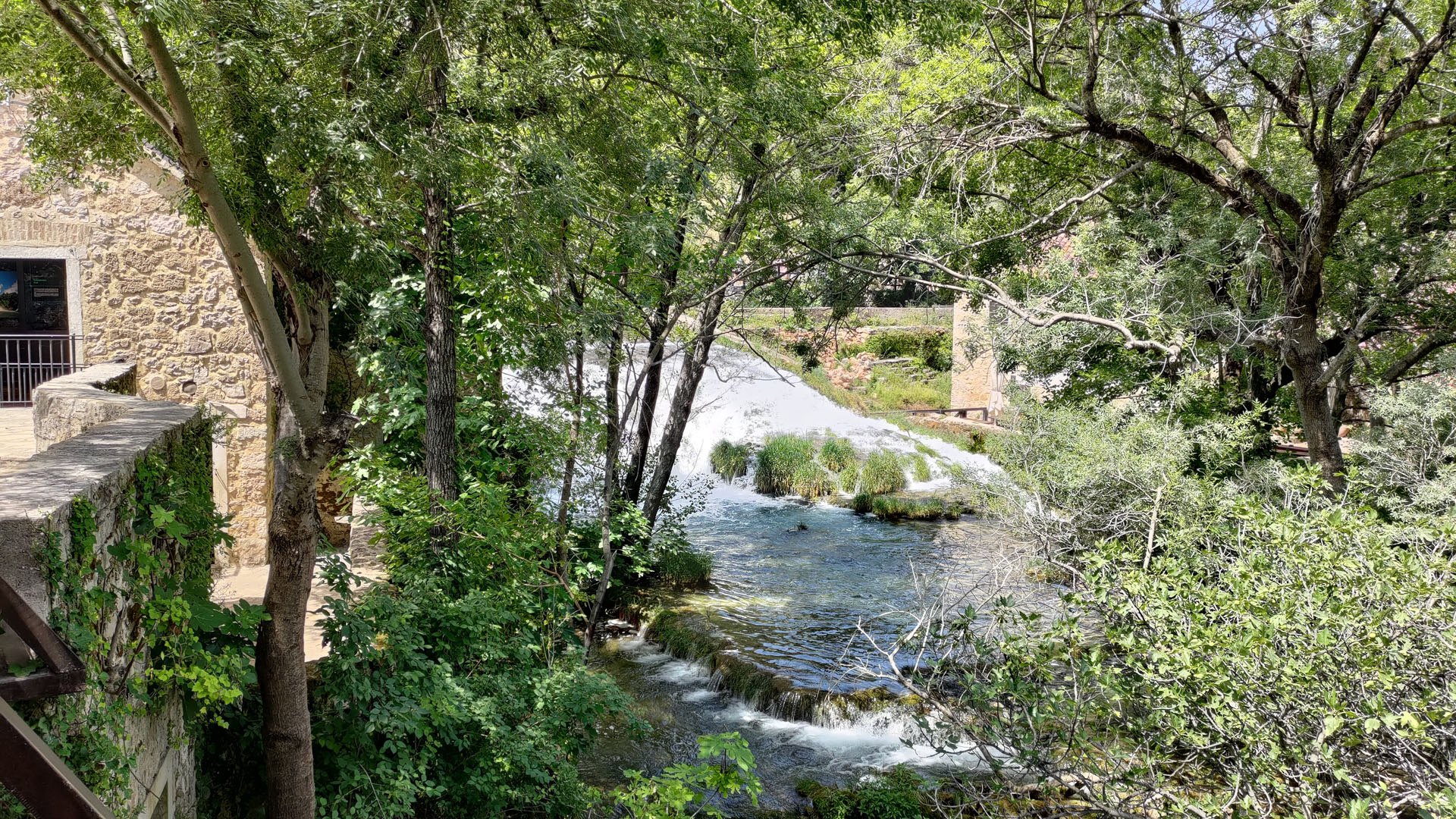
Skradinski buk is one of the most impressive waterfalls in Croatia. Although it is nowhere near the highest, its orientation towards the viewpoint (the bridge across the Krka), the volume of water, and its cascading configuration make it incredibly attractive and powerful.
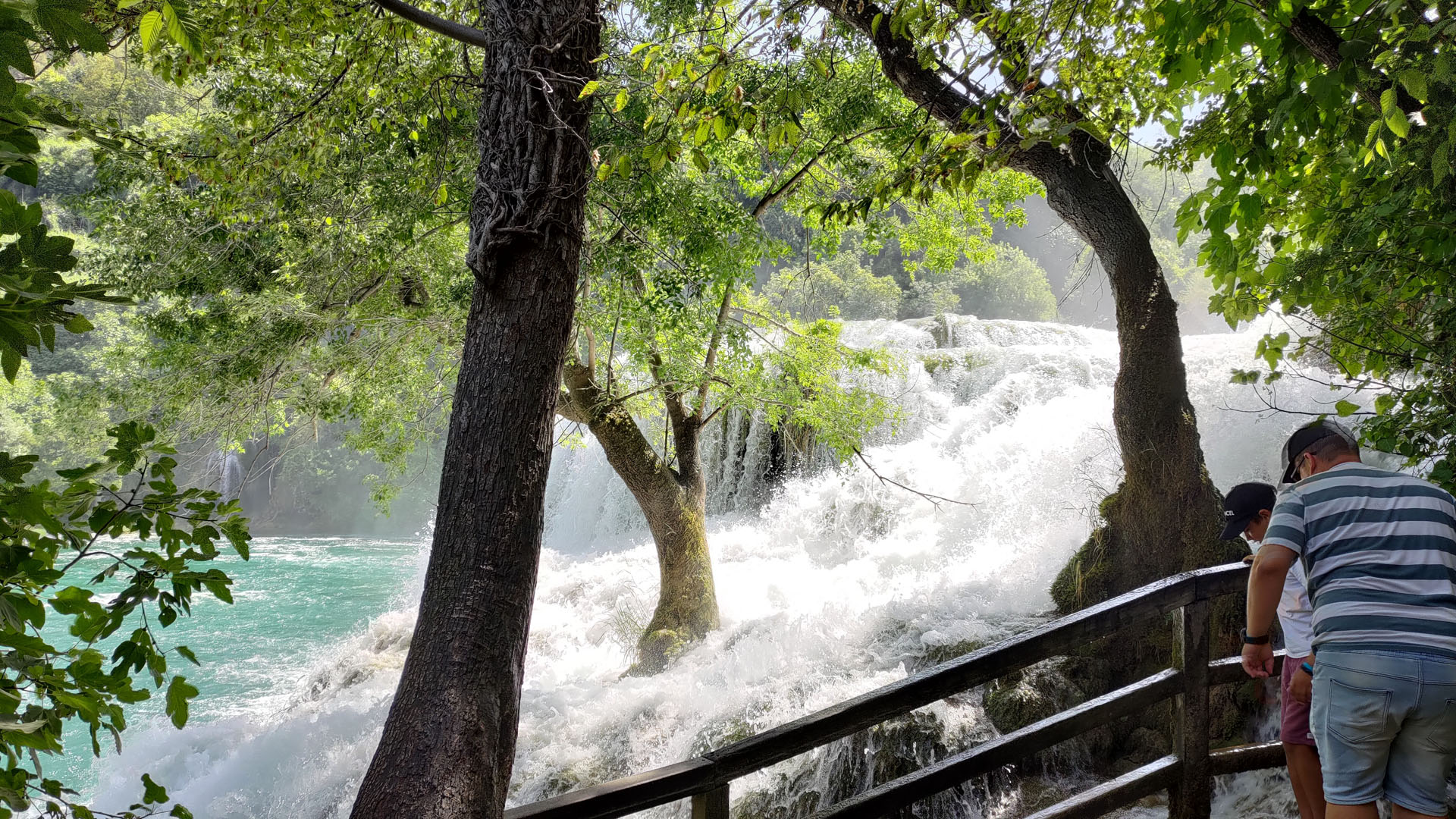
When you approach it from the right side (the left bank of the river), you can get very close to that enormous force of water cascading down towards the foot. If there are no crowds and you manage to get right up to the railing, for a moment you have the impression that you are not in a gentle national park in Croatia, but in the wilds of Patagonia or central Africa.

It is precisely moments like these that create the magic of certain places, and we have seen that many tourists simply walk past spots like this, not straying from the main trail, carried along by the torrent of the crowd rushing towards some imaginary destination that does not actually exist.
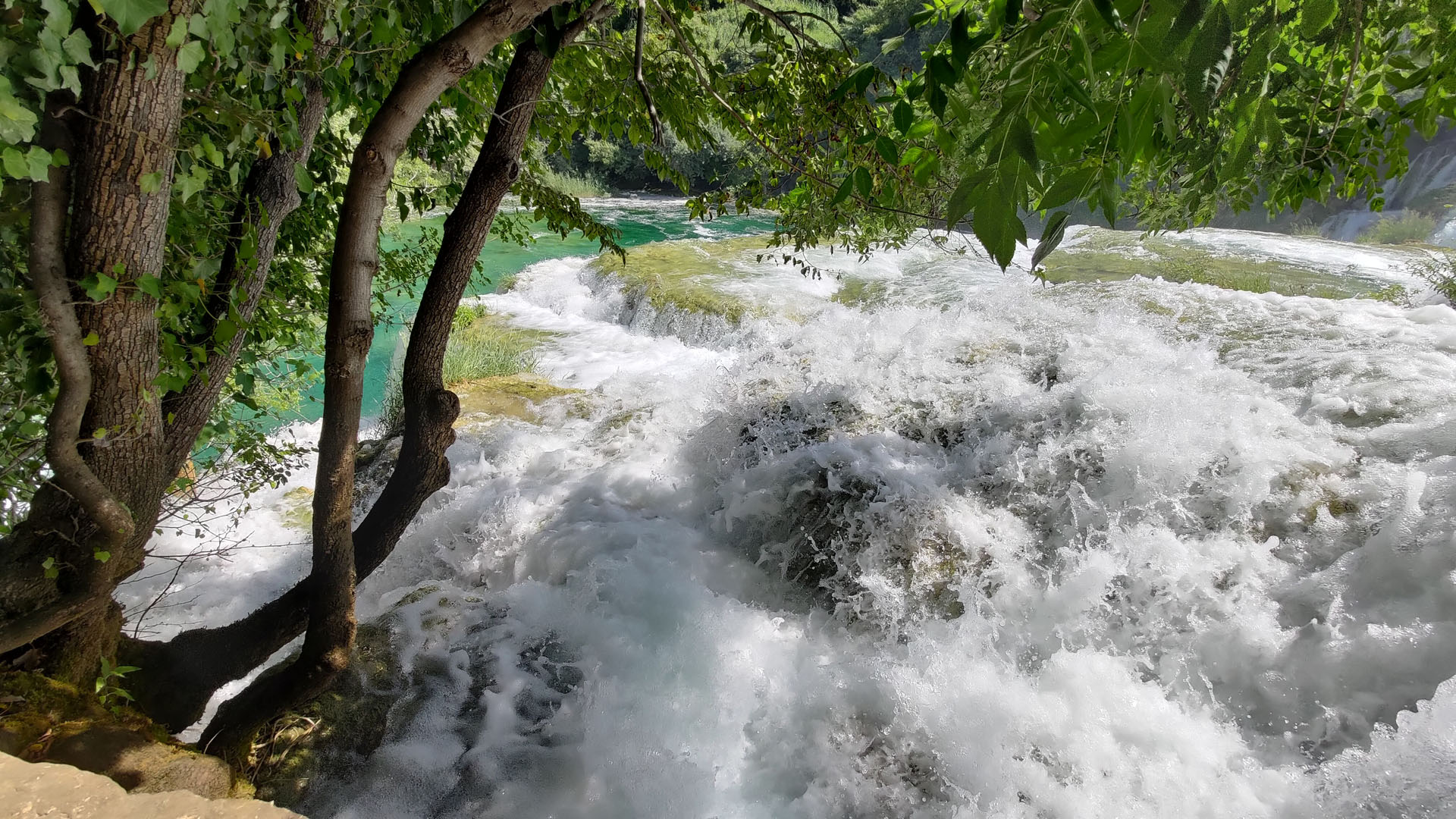
When you visit places like this, every turn-off, every viewpoint and hidden nook offers a new perspective and provides a unique experience that stays with you as a lasting memory.
Šibenik – the first complete public lighting system in the world
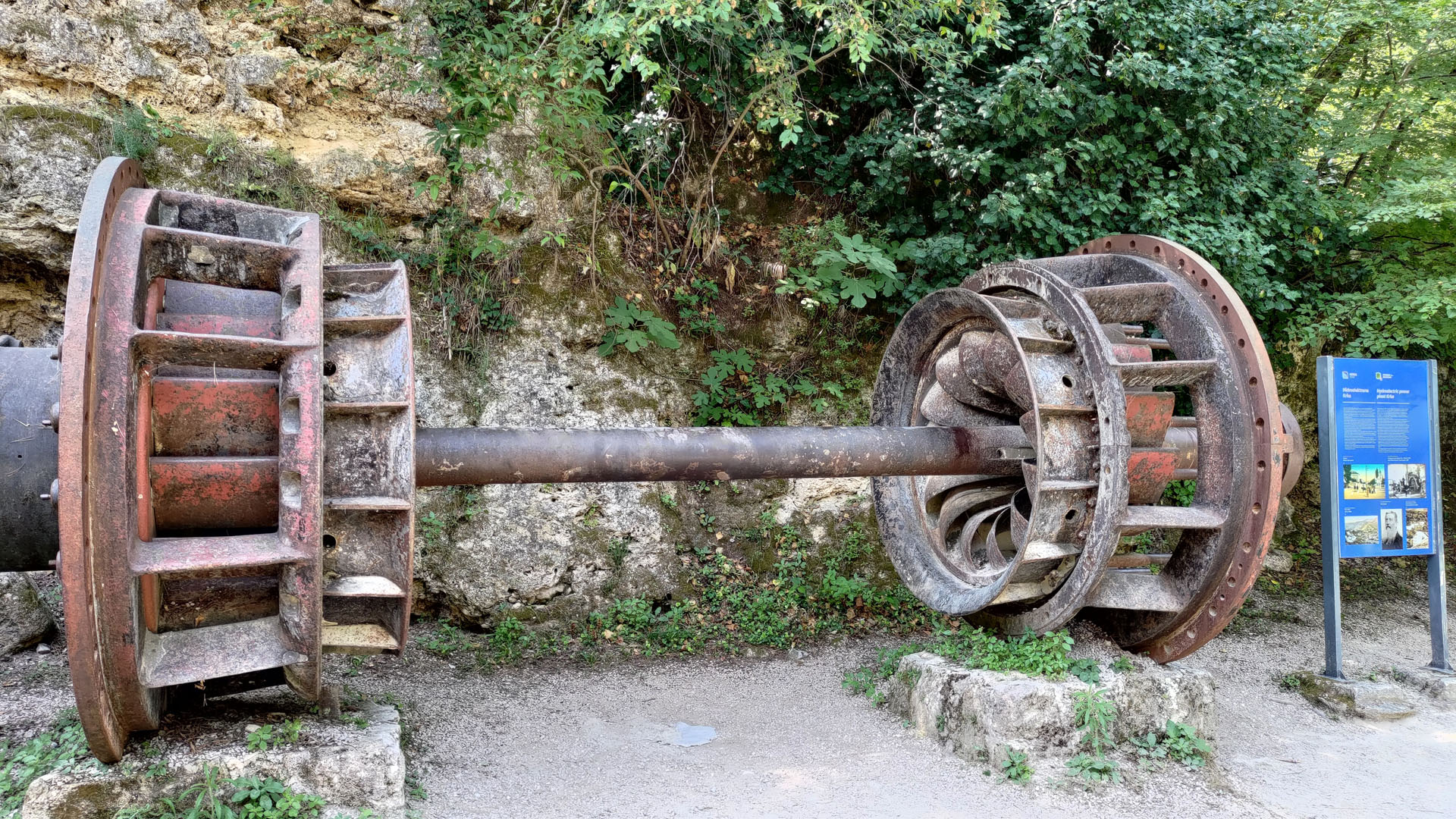
On exactly this part of the trail, on the left side of the Krka, you will find the remains of one of the oldest hydroelectric power plants in the world. The Jaruga I hydroelectric plant was put into operation on 28 August 1895. It was the first complete production and distribution of polyphase alternating current in Europe.
Under Tesla’s guidance, just three days earlier, on 25 August 1895, the world’s first hydroelectric power plant began operating, the one at Niagara Falls. However, that plant was not immediately connected to a transmission line to the nearby city of Buffalo; this was done only the following year. The Krka hydroelectric plant, on the other hand, had a transmission line to Šibenik built from the very start, thereby creating the world’s first complete system for the production, transmission and distribution of alternating current.
With the hydroelectric plant put into operation, that same evening, on 28 August 1895, Šibenik received public lighting powered by alternating current. This made Šibenik the first city in the world with a complete public lighting system that used polyphase alternating current. The system consisted of the hydroelectric plant, an 11.5 km long transmission line, and the town grid with lighting and six transformer stations. This pioneering application of alternating current, based on the patents of Nikola Tesla, was a revolutionary undertaking at the time. This is a big deal that very few people know about!
The ethno village

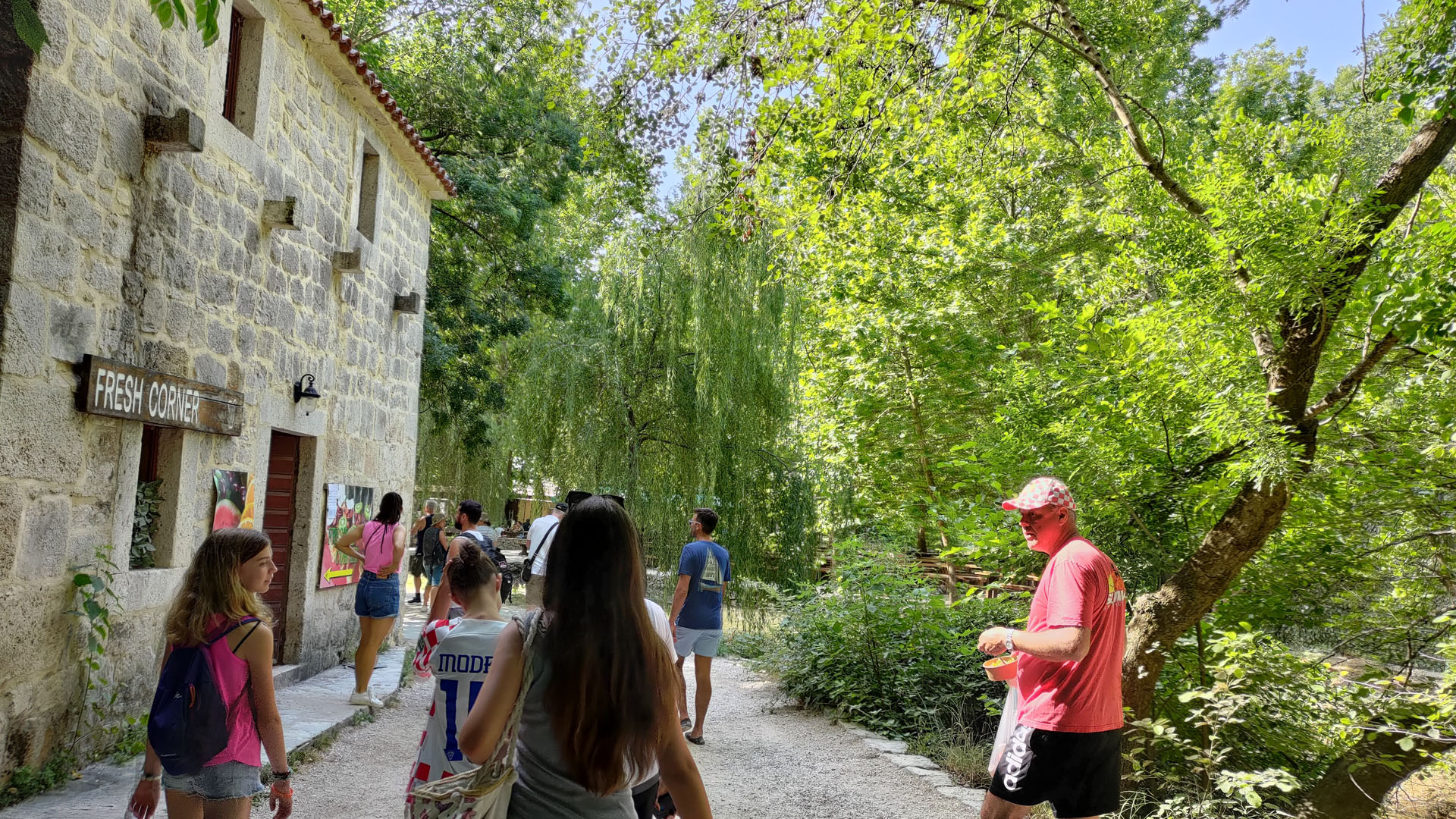
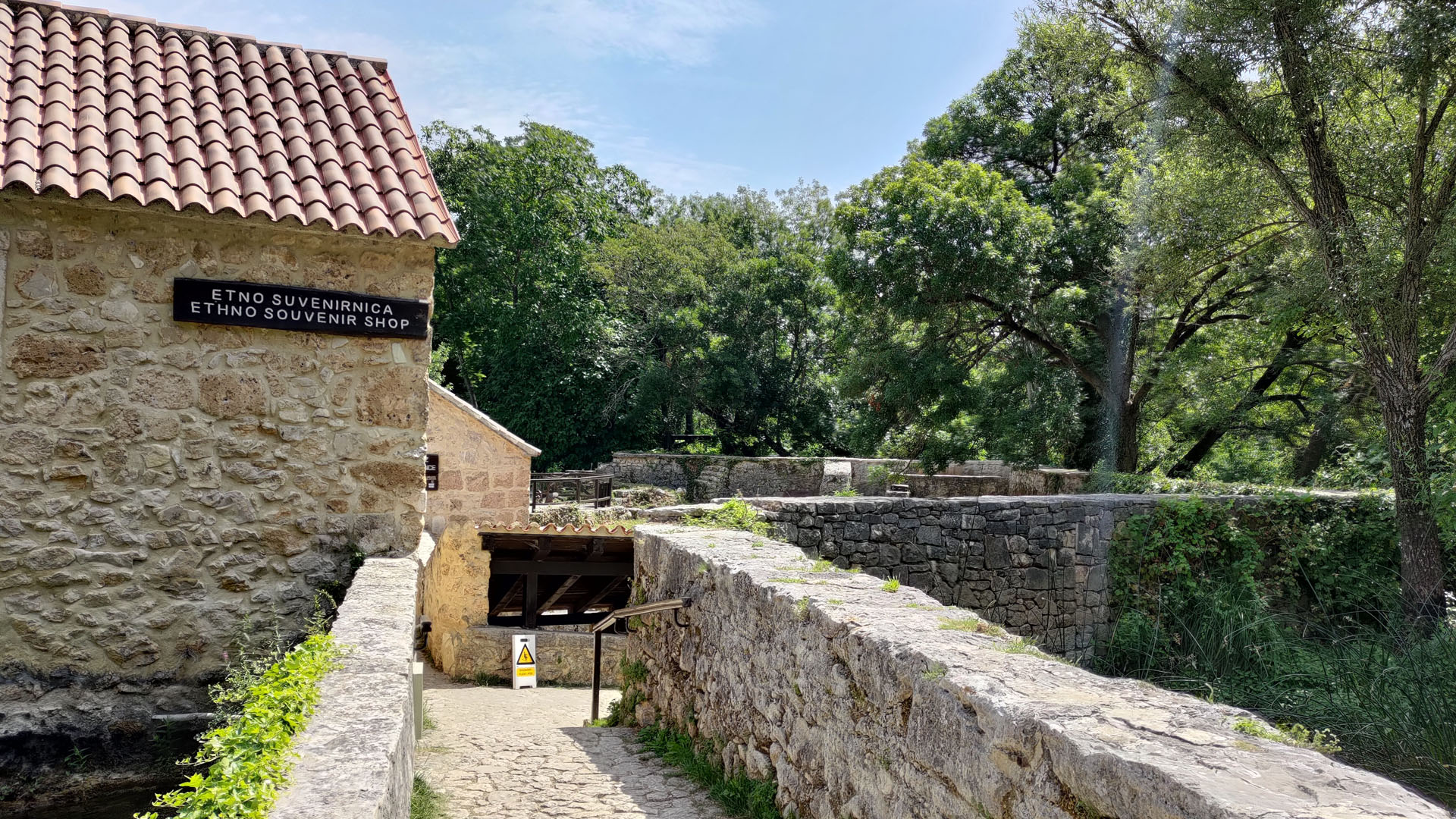
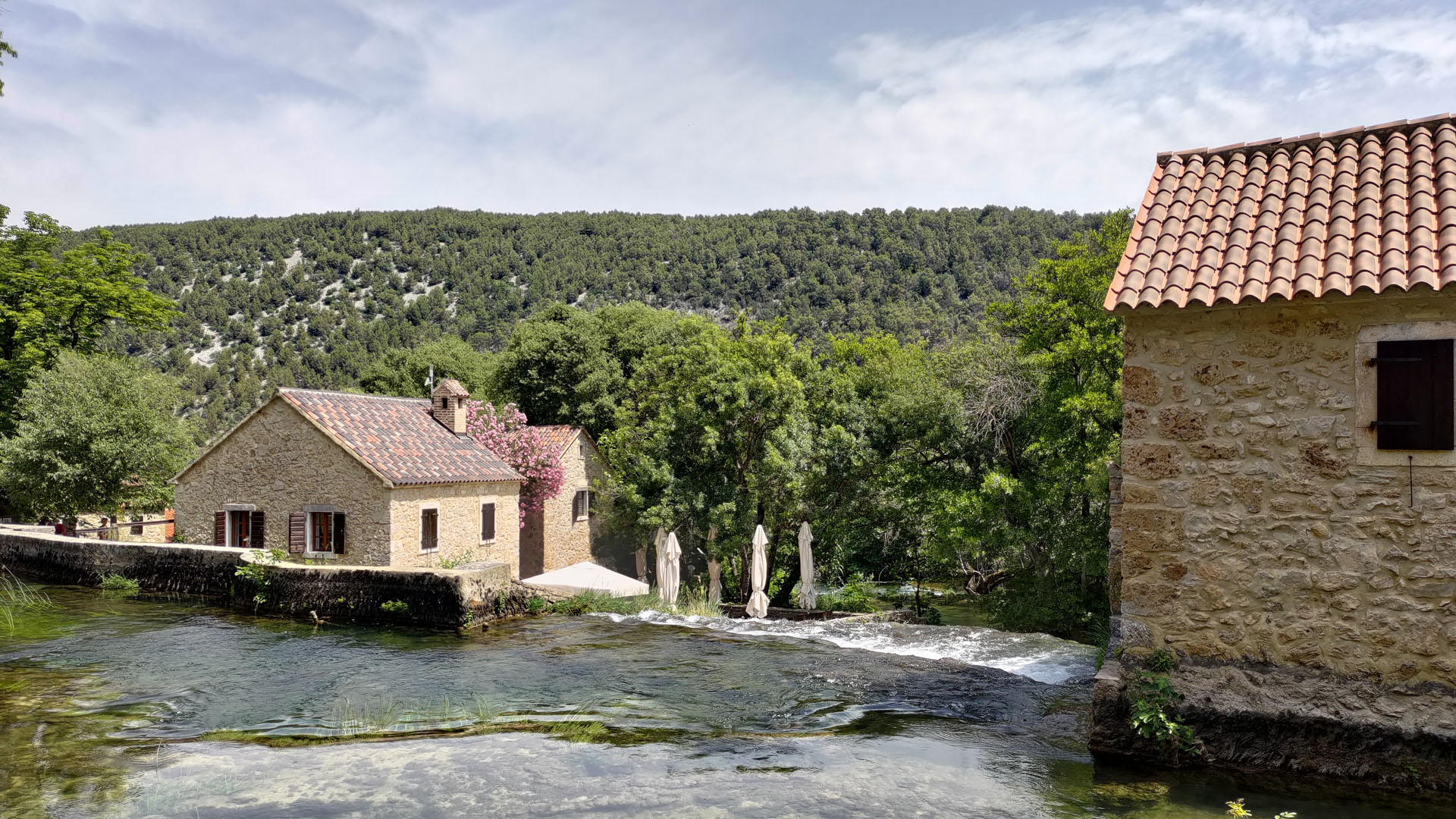
The “ethno village” (as we call it) is one of the biggest attractions of Skradinski buk. Most tourists do not go down into the village at all, presumably thinking it is a matter of souvenir shops or whatever. A pity!
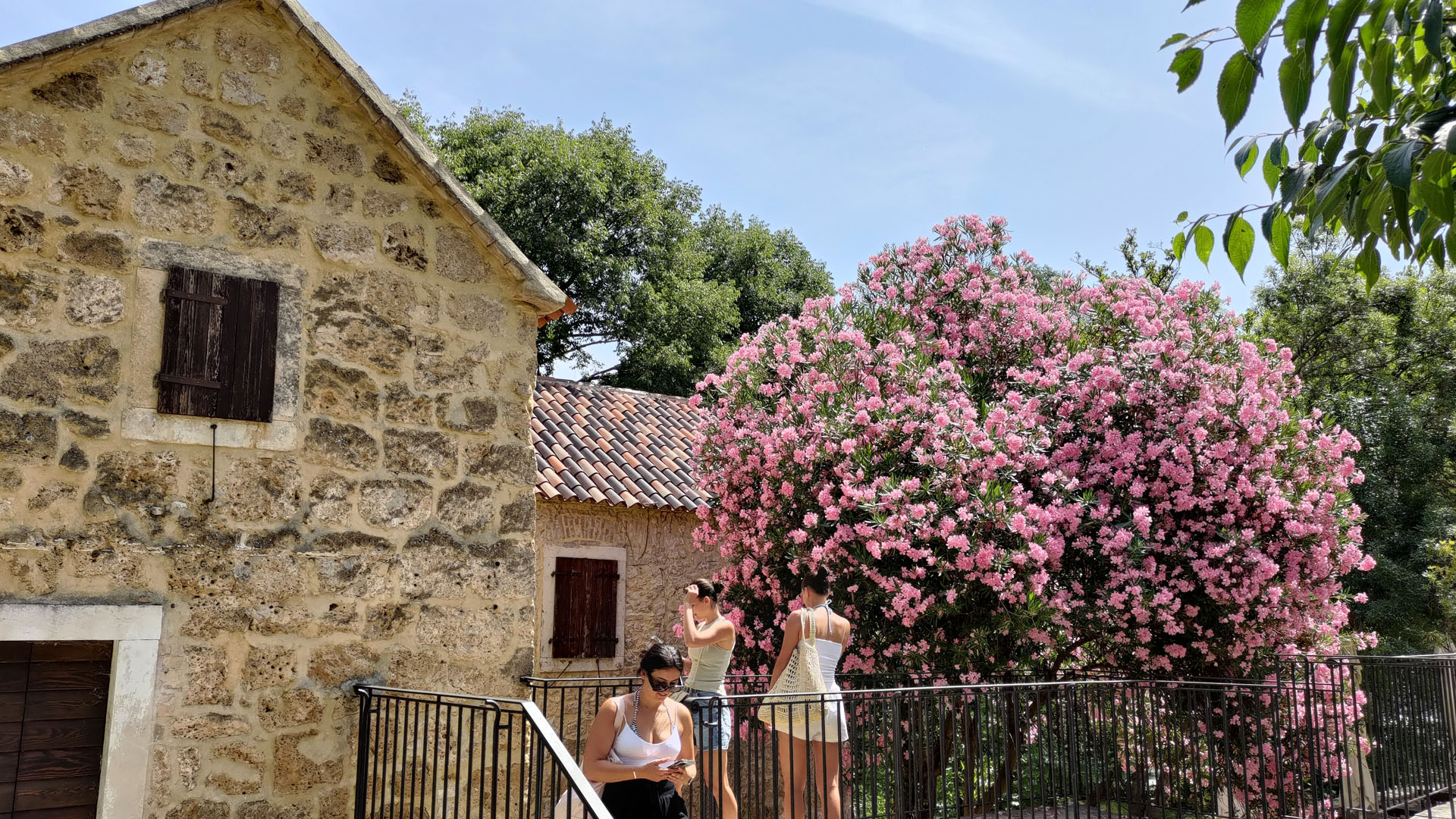
The ethno village is not some constructed attraction. It consists of authentic old stone houses and mills.

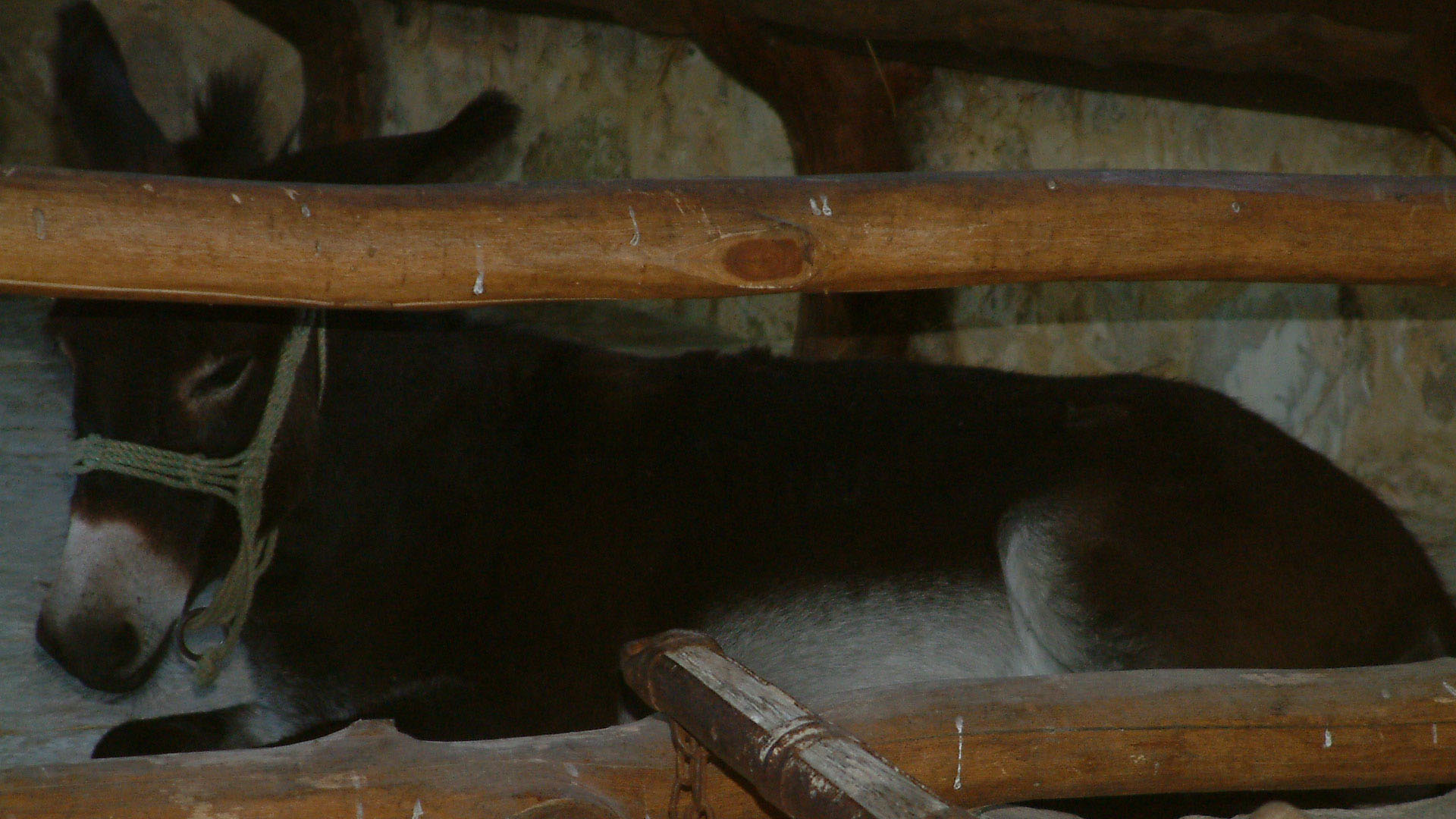
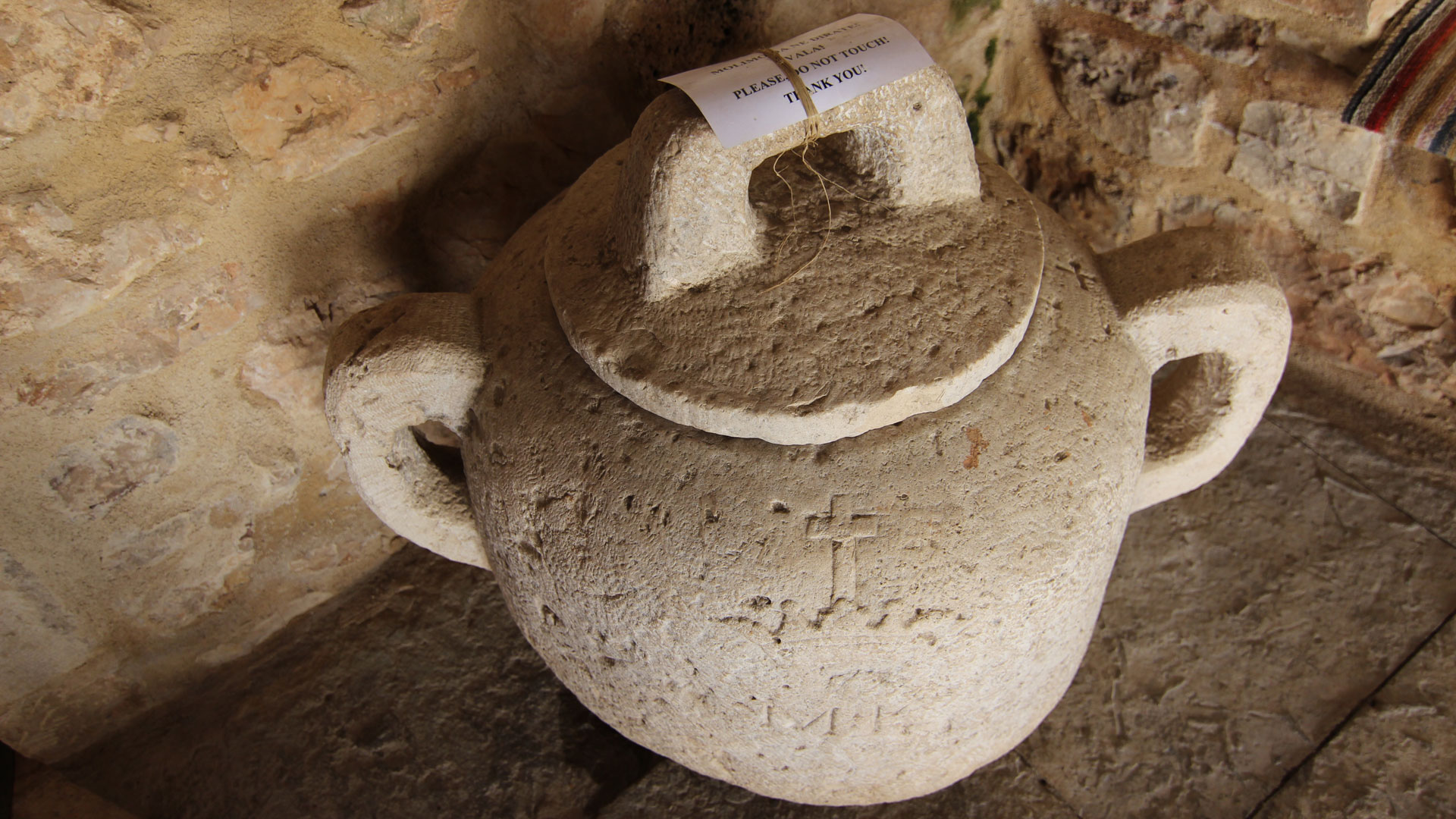
Inside them there is a praiseworthy ethnological display that shows, in an educational and interesting way, how certain things were once done that today we do not even think about.

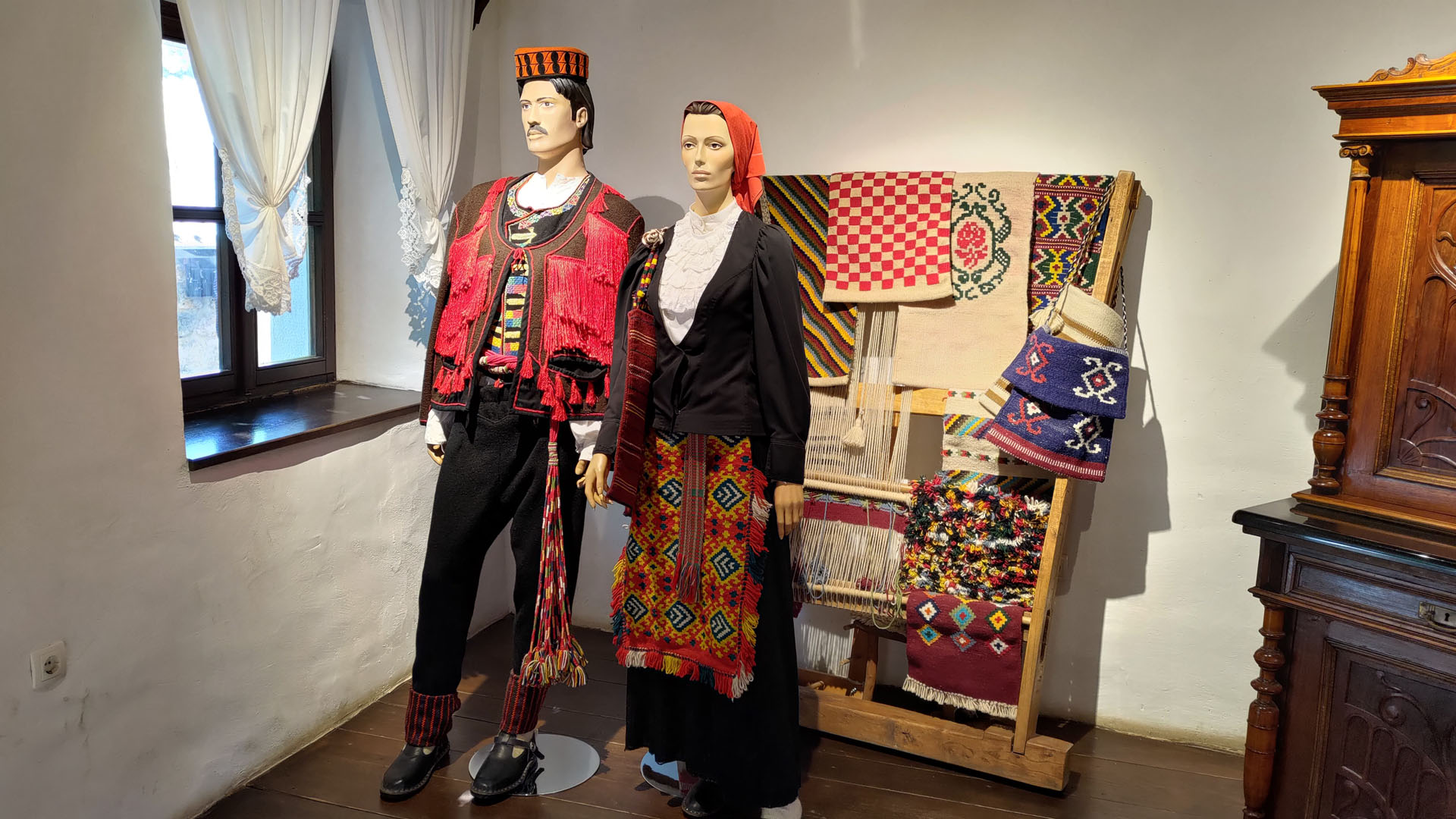
Besides the mills mentioned, where you can see the process of making flour in its most representative form, there is also a smithy, a collection of folk costumes, old tools and objects of everyday use on display.
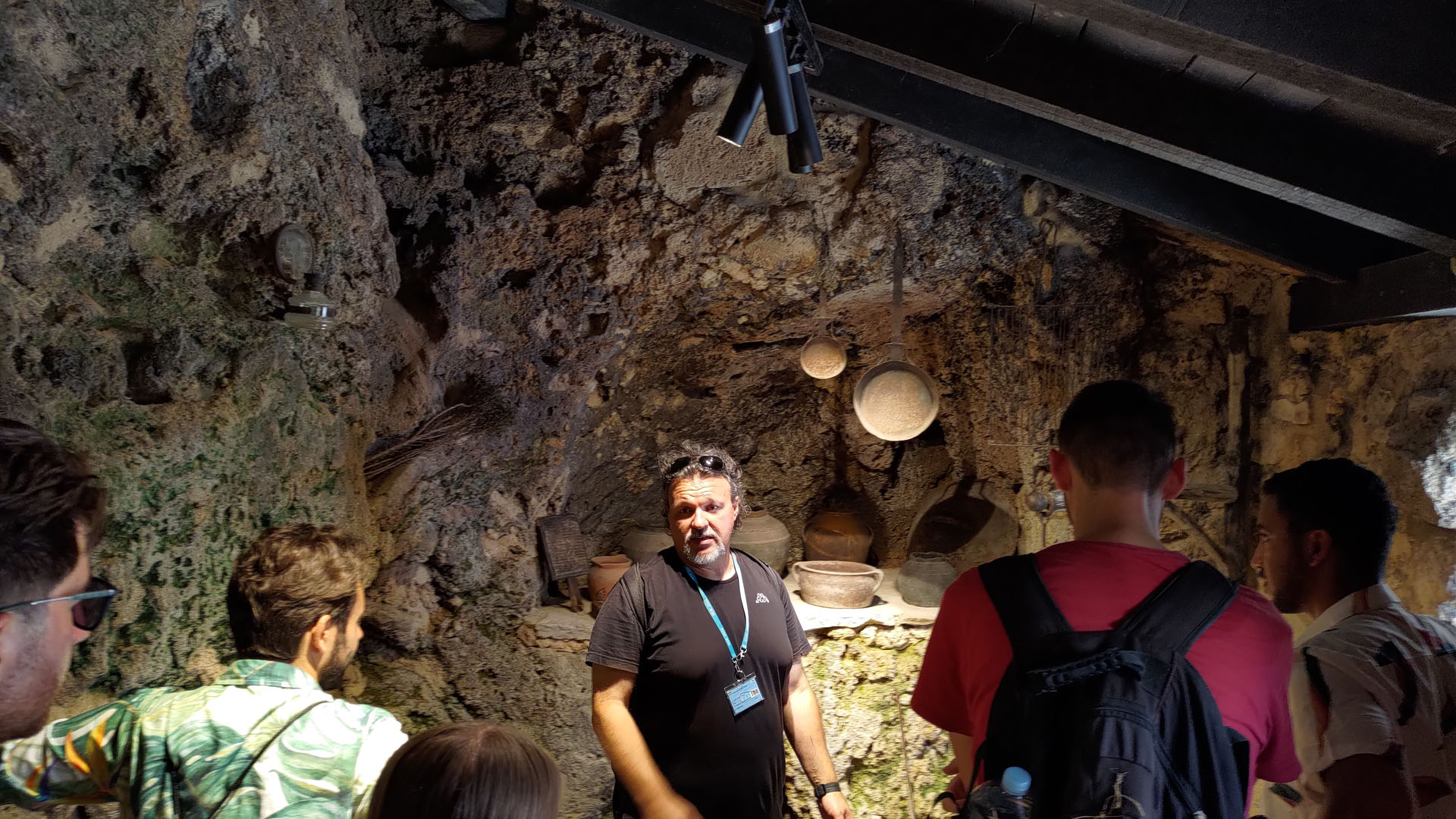

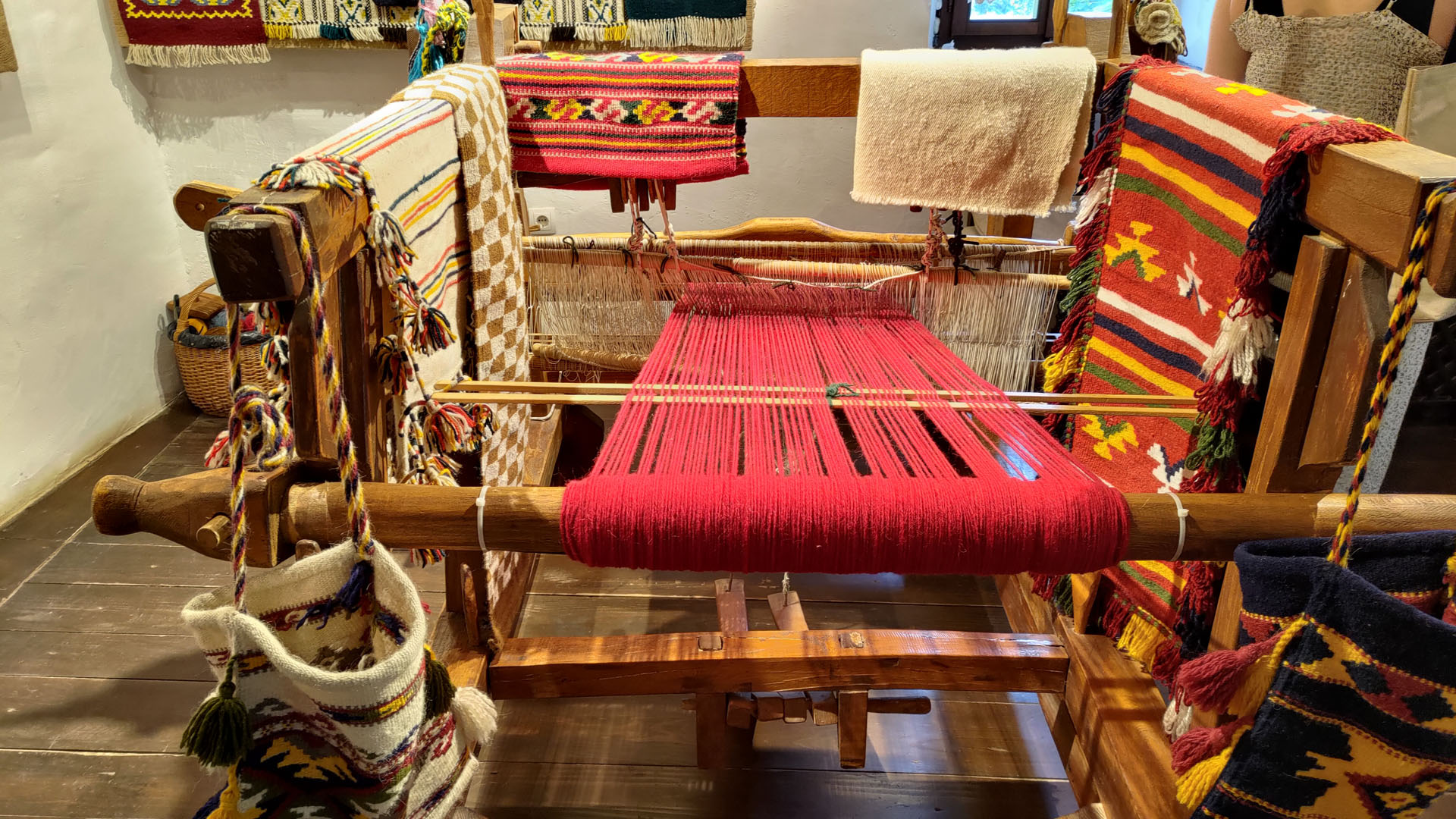
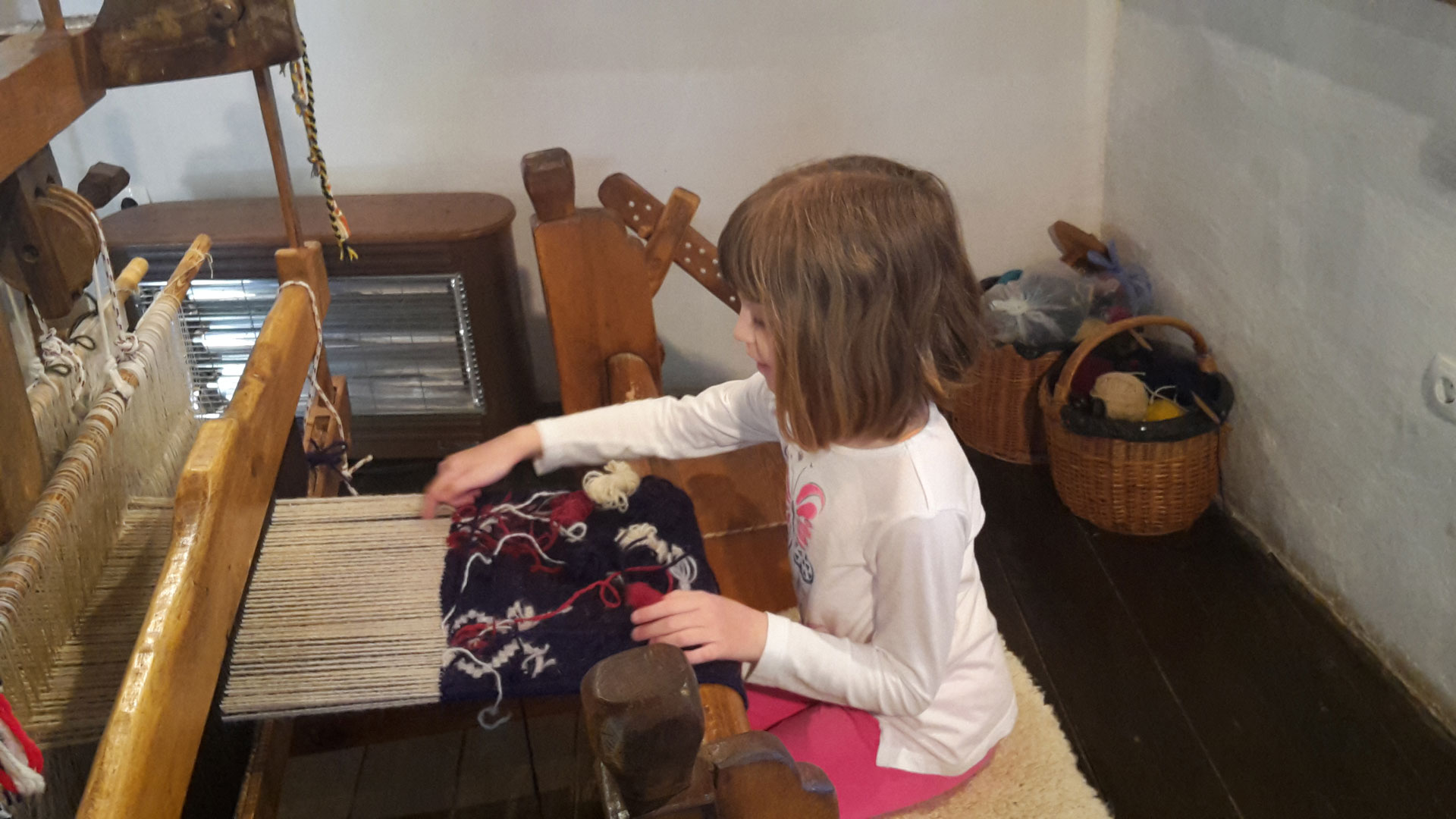
You can also see the process of making thread from spun wool, and its use on the loom. In the ethno village, trained staff dressed in traditional costumes will initiate you into all the secrets of the old crafts.

While exploring the whole complex, you will also come across stupe, the forerunner of the washing machine, which was once used not only in these parts but on all the rivers of the Dalmatian hinterland and Herzegovina.


We have visited Skradinski buk countless times, and every time we also visit the ethno village, because it is beautiful and unique! You can find old stone houses and ethno collections all over Dalmatia, but so much of it in one location and with a presentation by expert staff is hard to come by. The only thing similar, combined with a museum display, can be seen upstream on the Krka at Roški slap.
Besides the things mentioned, during the peak season cultural and artistic societies are also engaged, performing folk round dances and dances, dressed in the traditional costumes of this region.
Full credit to the park management and the people who work on it for the arrangement and design of these features!
What we don’t like?
Paid toilets, poorly built and poorly maintained. It is shameful that after paying for an extremely expensive ticket (especially in peak season), you additionally have to pay to use toilets that are ugly and poorly maintained. This is also the biggest complaint of tourists. Personally, we have no problem with the price of the tickets. I would raise it even higher if that would reduce the crowds, but then such a crucial part of the park’s infrastructure has to be at an enviable level. The toilets must be top-notch, of sufficient capacity and excellently maintained, and their use must be included in the price of the ticket.

















Special
Although our focus is on Croatia, due to great interest in reviewing some international locations from our travels, we decided to launch the Special section. In it, we will not cover locations in the same detailed way we do with Croatian ones, but will instead provide a brief overview of multiple locations grouped into meaningful categories. The only criterion we still strictly follow is that they must be natural attractions.