
Cetin Old Town (Cetingrad) – the most beautiful part of Croatia?
Location: Podcetin, CetingradLength: 100 mDifficulty: EasyDifficulty rating: K1, T1, VR1
We had long wanted to visit Cetin, which for centuries was Croatia’s bulwark and where not only Croatia but Europe too was defended. It was always somehow “out of the way”, though, because from Slunj you have to leave the main roads and head some 20 kilometres east across Kordun towards the border with Bosnia and Herzegovina. And then at last, after years of putting it off, the day came.
At Rastoke we turned off the main D1 state road onto a local road running east towards Cetingrad. The landscape we were driving through soon began to grow lovelier and lovelier. After a while it delighted us so much that with every new kilometre we became more convinced that we had just discovered the most beautiful part of Croatia!
Hills dotted with woods, pastures and fields, with scattered clusters of little houses, made a beautiful, idyllic picture. Walking the clearings and the empty lanes, a feeling of peace and calm prevailed. We will definitely come back to this part of the country for a slightly longer break.


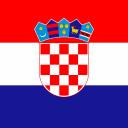
Cetin Old Town stands in the small village of Podcetin. It is first mentioned in the 14th century and differed from the other Croatian fortresses of its time. It was enclosed by a double ring of ramparts with a total height of 18 m. Besides playing an important role in the defence of Croatia for centuries, it is also notable for the famous Croatian parliament of 1527. After the defeat by the Ottomans and the death of the Hungarian-Croatian king Louis II, the Croatian nobility gathered at Cetin to decide on their future strategy. The assembly decided to recognise Ferdinand of Habsburg as King of Croatia and for Croatia to become part of the Habsburg Monarchy. It was then, on the seal of the Cetin Charter, that the šahovnica (the red-and-white chequerboard) was officially used for the first time.
While we were enjoying exploring the fortress, several things went through our minds whose common denominator might be “typically us”.
However finely the text about the Croatian parliament may be phrased, we were somehow troubled by the readiness of Croats to hand their state sovereignty over to some “higher” European authority. Then there is the fact that the Zrinski–Frankopan conspiracy of 1670 weakened the defence of this region and allowed the Ottomans to take Cetin for a period of 120 years, which also says a great deal about us and does us no credit. And as the icing on the cake, the restoration of Cetin, begun in 2010, is still nowhere near finished, and it somehow seems that the work is not proceeding with any great continuity. We gained a similar impression visiting other fortresses around Croatia. Today, when Europe – which was defended here for centuries – is handing out money left and right, it seems incredible that cultural monuments like this cannot be restored within any reasonable time.


Special
Although our focus is on Croatia, due to great interest in reviewing some international locations from our travels, we decided to launch the Special section. In it, we will not cover locations in the same detailed way we do with Croatian ones, but will instead provide a brief overview of multiple locations grouped into meaningful categories. The only criterion we still strictly follow is that they must be natural attractions.

