

The Swiss Alps

We have already written about the Alps in our article on the Dolomites. The Alps are a great mountain chain spread across the territory of several countries – Austria, Slovenia, Italy, France, Switzerland, Liechtenstein and Germany. This time we decided to give our review of the very heart of the range, where some of the most famous and most recognisable places are to be found, such as the Matterhorn, the Eiger and Lauterbrunnen, the “village with the waterfall”, often proclaimed the most beautiful village in the world.
Lauterbrunnen

Lauterbrunnen, popularly known as “the village with the waterfall”, regularly appears on lists of the most beautiful villages in the world, often in first place.

We had high expectations of this place, but we came away completely disappointed. Instead of a romantic village in a valley with a mighty waterfall plunging off a cliff, what greeted us was a drab little place in a gorge beside a railway line, with a waterfall that was barely trickling at the end of August.

The very busy road running through the middle of the village, and a literal invasion of tourists from all over the world, did nothing to improve that impression.

From the photographs we are showing you cannot really grasp how undeservedly this place fills all those top lists we mentioned. Lauterbrunnen has its moments, but they are so scattered among the bad ones that they simply cannot rescue the overall impression.
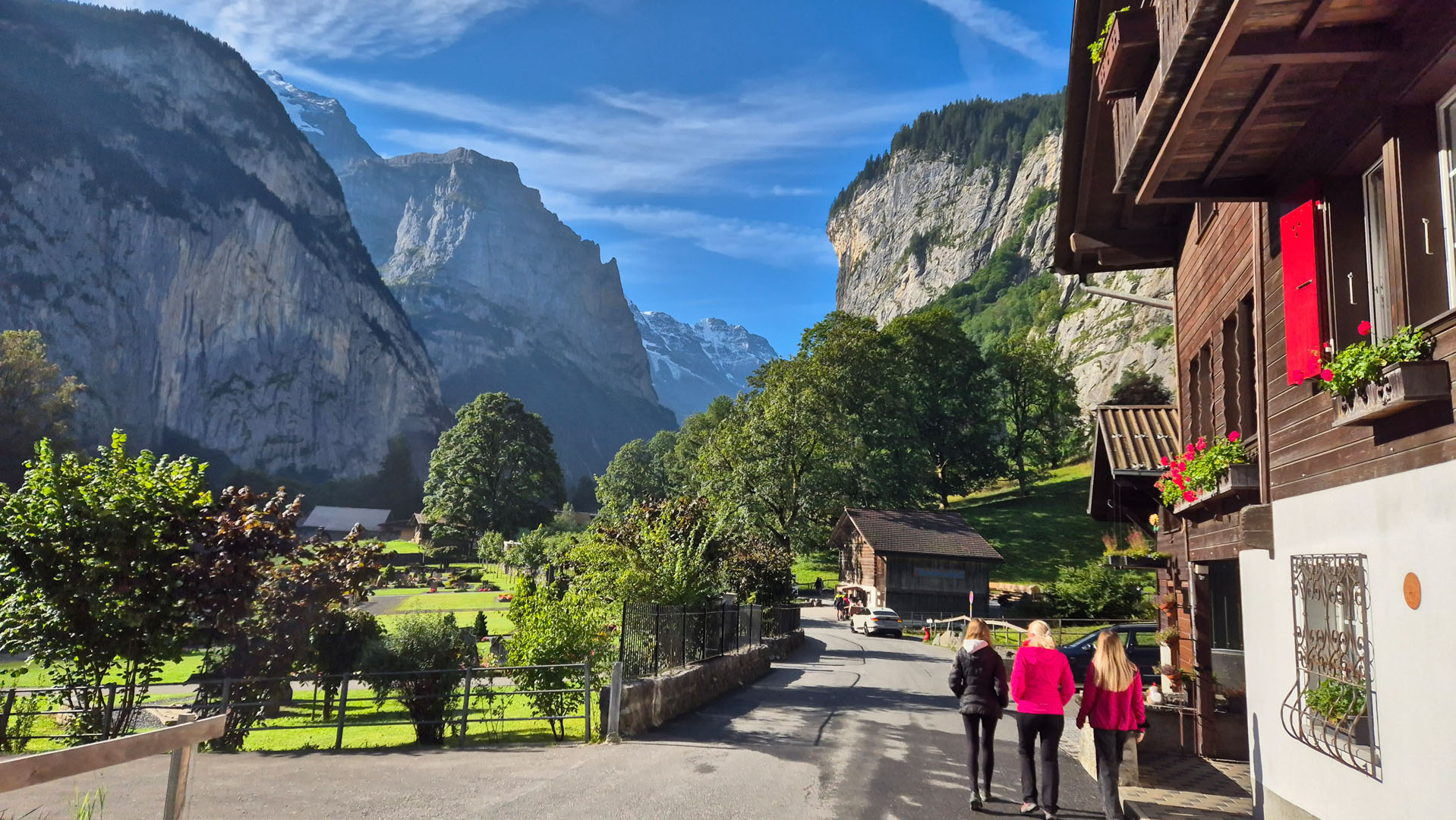
With skilful framing, sudden weather phenomena and night lighting you can certainly get very lovely, even magical photographs, but staged photographs do not make a place beautiful. We have been to many Croatian villages with incredible energy and enviable beauty that Lauterbrunnen cannot hold a candle to.

We would not recommend Lauterbrunnen as a destination at all, only as a stop on the way to Mürren or the Trümmelbach Falls.


Mürren

Since Lauterbrunnen had disappointed us, our expectations of Mürren grew!
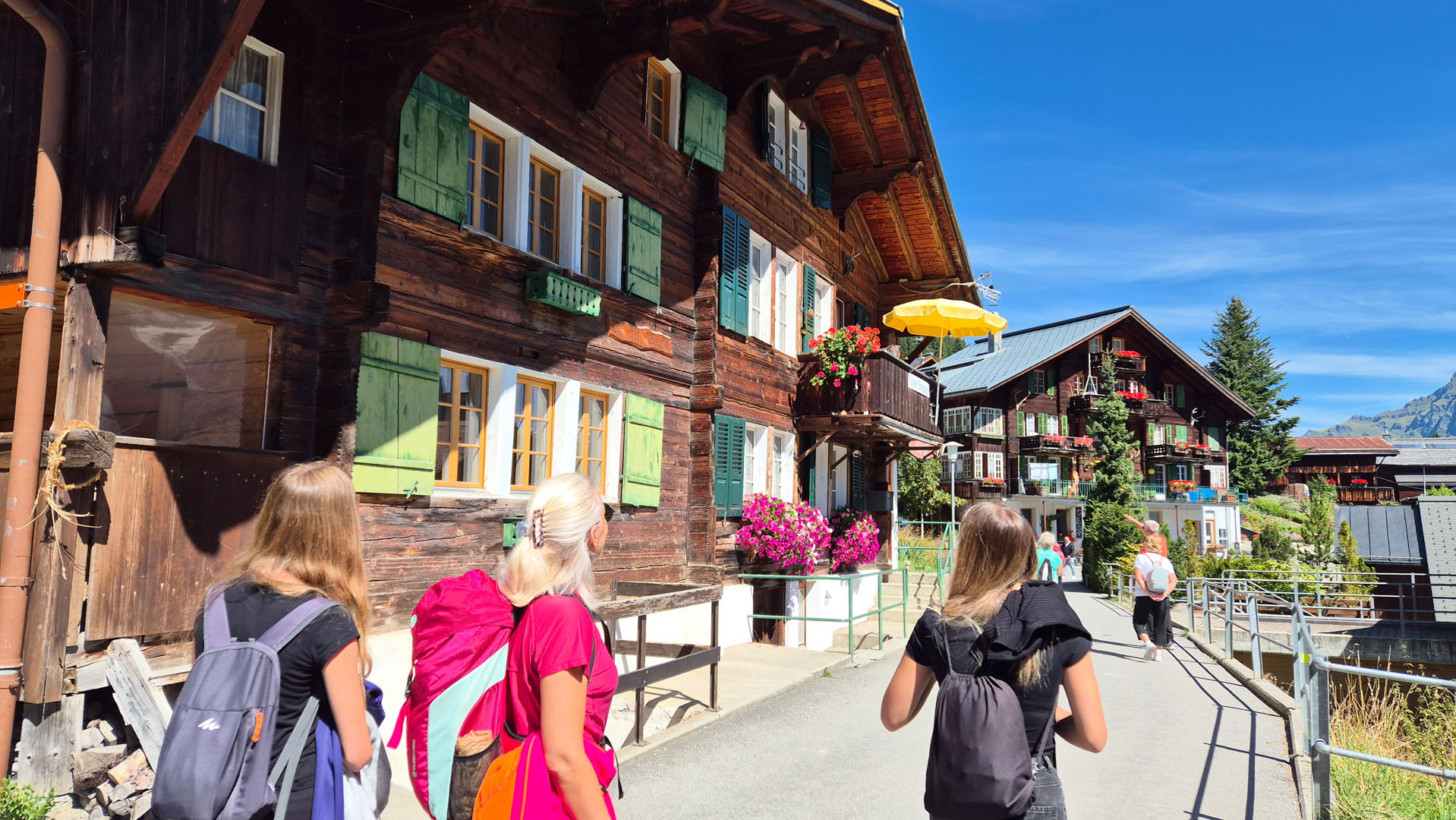
Mürren is a village of typical Swiss architecture, set on the edge of a cliff not far above Lauterbrunnen. It is a car-free place, reached only by cable car from Stechelberg.


It is surrounded by spectacular mountain ranges, the Eiger, the Mönch and the Jungfrau, whose glaciers gleam even in midsummer. Our imagination went a step further than that. Cows dotted across the meadows on the slopes around Mürren were supposed to complete the impression that we were in the “Heidi” part of Switzerland.
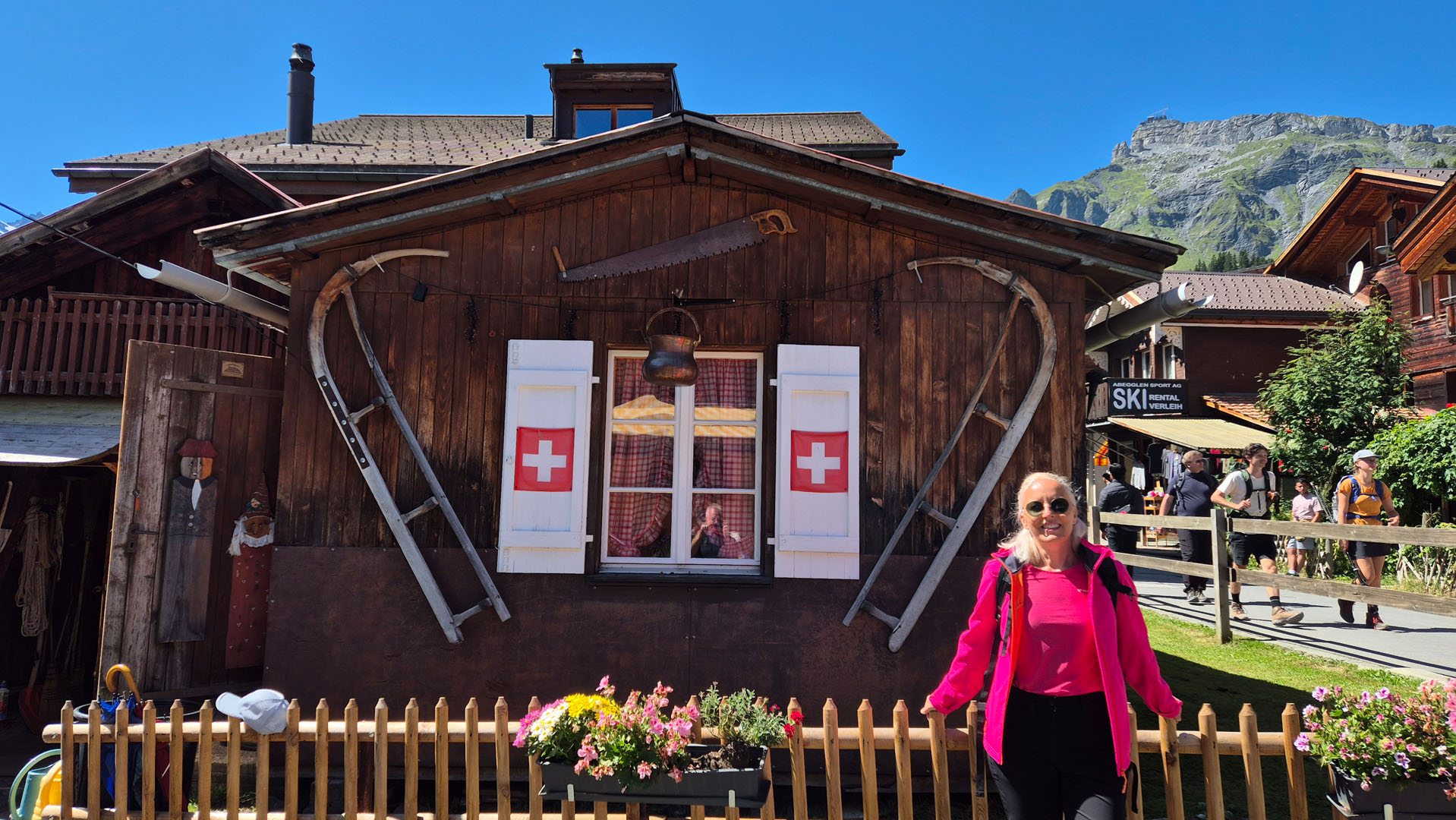
Although we still believe that “Heidi” meadows do exist in the remote corners of Switzerland, what we found here were no more than hints of that magic.

Far be it from us to say that Mürren and its surroundings are not beautiful – they are, but they did not give us the magic we had been hoping for so much.
It was pleasant to stroll along its main street. To our surprise, we found souvenirs here cheaper than anywhere else in Switzerland.
All of it, however, is far from the atmosphere we were looking for. Everything was packed with tourists, and the noise from the large building site at the cable car station carried far and wide.
After a short look round, we decided to get away from the crowds and walk at least part of the Northface Trail.

And there we did have moments that evoked the “Heidi” world!

The nature here really is beautiful! Meadows, hills, forests and views of massifs whose peaks are covered in snow and permanent ice…


The idyll, however, was very patchy. We could not fully give ourselves over to it, because every few minutes we were disturbed by the noise of helicopters and aircraft. Helicopters are a standard soundtrack in the Swiss Alps, partly because of sightseeing flights, partly because of carrying materials to building sites.


Also, when on a hill above the forest you see a modern farm with all its infrastructure and machinery, you do not have much motivation to carry on in that direction. Add to that swarms of paragliders and the many cable car pylons that look like power lines, and it becomes hard to sink into some idyllic picture stored in your memory. Perhaps the world we imagine no longer exists, or perhaps we were simply looking for it in the wrong place.

Mürren is a popular destination in its own right, but it is also known as a stop on the way to the Schilthorn.

The Schilthorn (2970 m) is one of the most popular viewpoints. A famous filming location for one of the James Bond (agent 007) films. We are not exactly obsessive visitors of film sets, so for us that is even a minus, but the Schilthorn is much more than that. It offers spectacular views over countless Alpine peaks. It was on our list right up until we had been to the Matterhorn. After the Matterhorn we concluded that the Schilthorn could not offer us anything more than what we had experienced there, so we crossed it off at the last moment. That is a sensible move financially too, because all these attractions on distant summits cost a great deal, especially if you are travelling as a family.
The Jungfraujoch (3463 m) dropped out in a similar way – a viewpoint on the glacier, up in the range opposite Mürren. The Schilthorn won that contest because you can see more from it (it offers a 360-degree view), and then the Matterhorn (Gornergrat, 3135 m) beat the Schilthorn, because the view of the Matterhorn and 29 peaks over 4000 m is simply unique!
In any case, if you decide to take the cable car up to the Schilthorn, the stations on the way are Mürren and Birg. At Birg there is the well-known Thrill Walk attraction. An adrenaline walkway with views through a glass and wire-mesh floor, it is certainly great fun for children and adults alike, but if you have been on the Biokovo Skywalk, it is unlikely to knock you off your feet completely.
Gimmelwald

In search of an even more picturesque atmosphere, the road from Mürren drops down to Gimmelwald.


Tourists describe Gimmelwald as a must-see, on the grounds that it is a “non-touristy”, “typical”, “rustic” Swiss village on the edge of a cliff.

How many of those adjectives one could agree with, I do not know. It is rustic up to a point, because there are houses and barns that really are rustic. Many of them also feel authentic, because they have not been “made up” for tourists but are full of all sorts of things scattered about. Even so, there are several “more modern” houses in the village, and the asphalt road running between them is certainly nothing authentic.
It is not that nobody here is in tourism. In Gimmelwald you will find both restaurants and hotels.
What delighted us were the cheese cabinets! They work on trust – you open them, choose a cheese and drop the asking price (or more) into a little box. The cheeses are vacuum-packed with a label and the price clearly marked, and the cabinets are refrigerated. We love cheese and we love supporting local communities, so we made our purchase with real pleasure!

Usefully, Gimmelwald has a cable car station that will take you back down to the valley and the car park, so you do not have to return to Mürren. But if you want to, the two places are connected by a line as well.
The overall impression of Gimmelwald could be summed up as – apart from a few genuinely interesting houses and the cheese cabinets, nothing special. True, the view of the mountain peaks opposite really is impressive, but you get that from the whole surrounding area anyway.


Trümmelbach Falls
The Trümmelbach Falls are an exceptional attraction a few minutes’ drive from Lauterbrunnen.
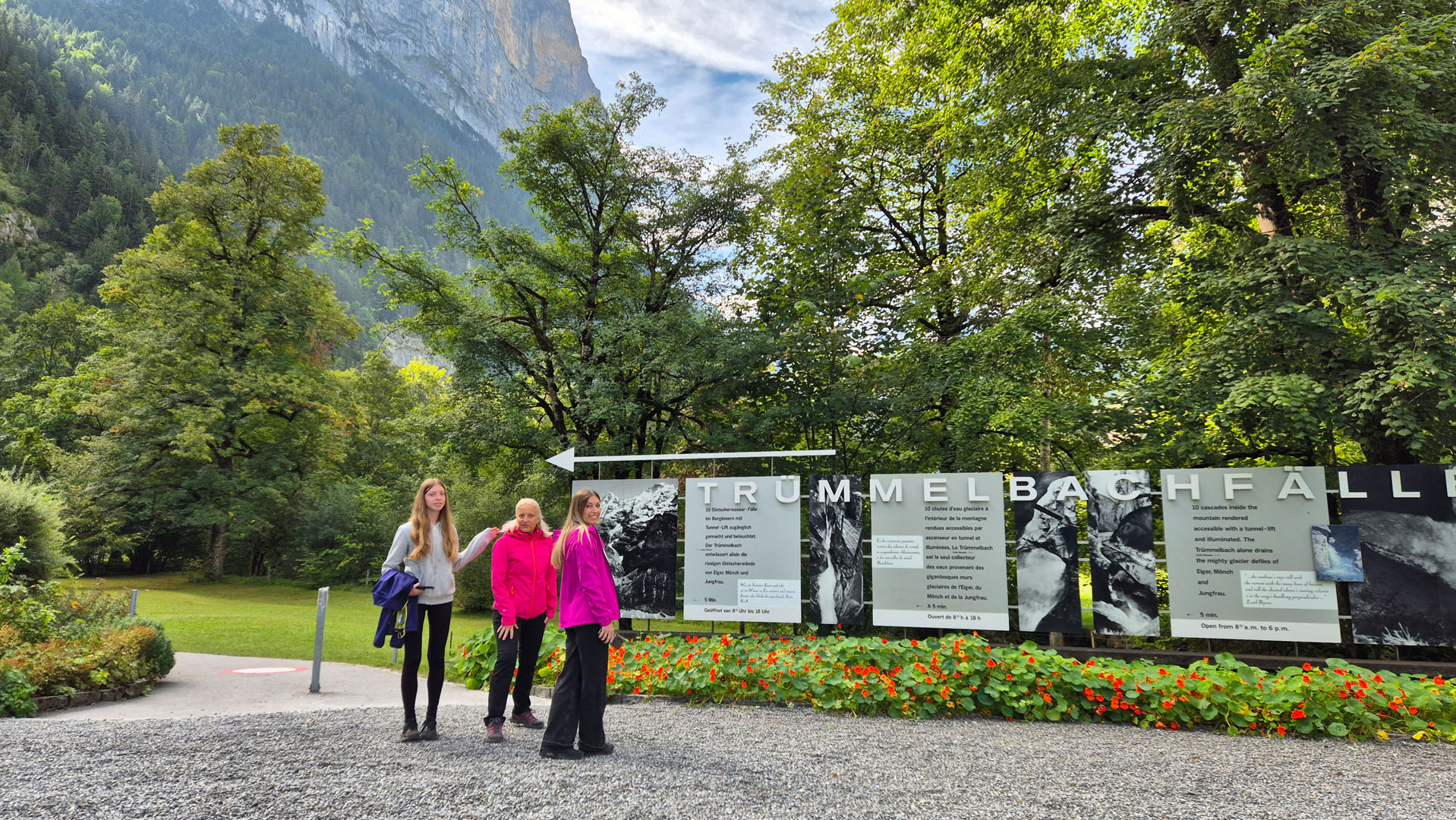
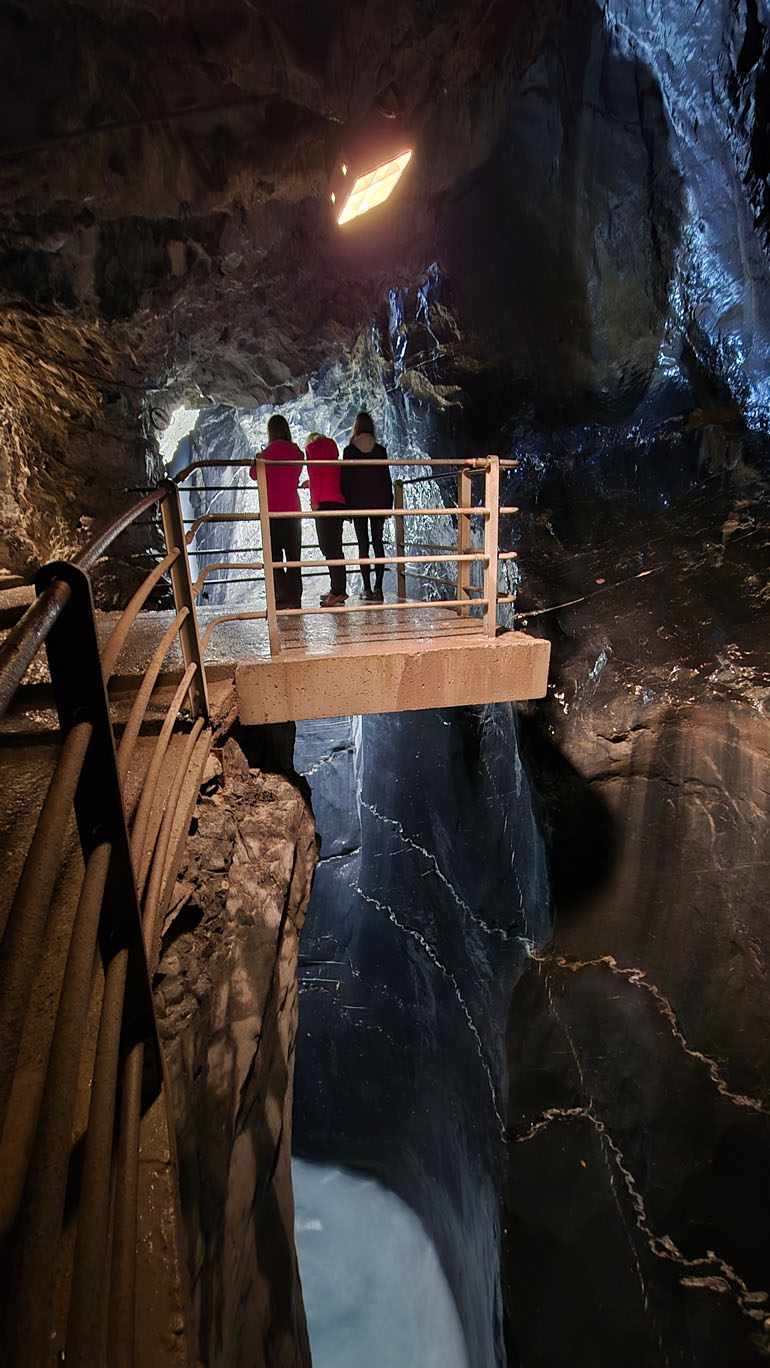
This is a series of waterfalls and rapids inside a cleft in the mountain and in the caves that surround it. Although we have visited a considerable number of caves, we had never seen anything like this.


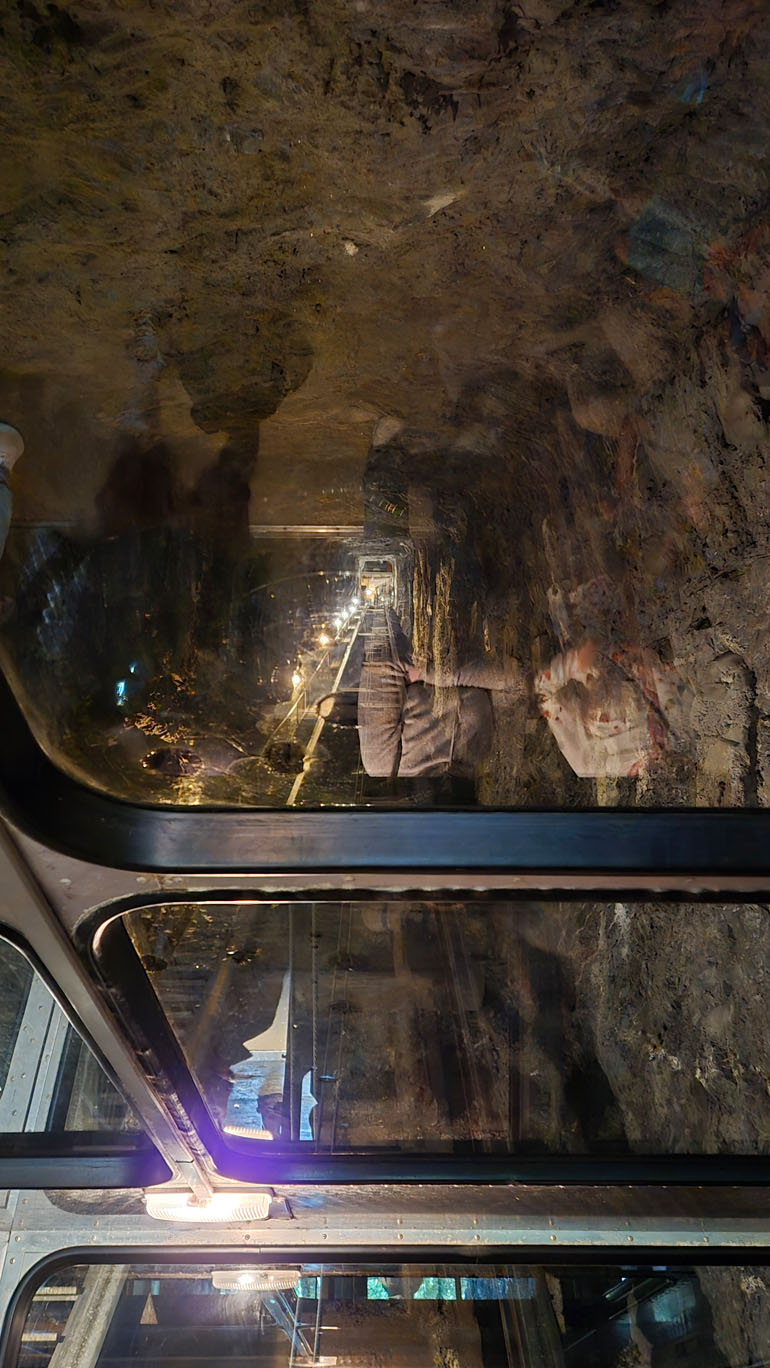
Once you have bought your ticket, you walk up to the cave entrance. There a funicular is waiting to take you through the mountain to the highest point, from which you then start your tour of the whole complex.
Very attractive and good fun. You will certainly spend about an hour here.





Eiger (Grindelwald)

Grindelwald sits in a picturesque valley at the foot of the Eiger (3,967 m). Those who have never heard of the Eiger’s north face might even find it romantic in a photograph. Those who know about it know that it is anything but romantic. The Eiger’s north wall is one of the technically most demanding climbs in the world. Logistically relatively simple, it is technically far harder than Mount Everest!

This imposing wall, which rises more than 1600 metres, demands exceptional technical, physical and mental ability, as well as nerves of steel. The combination of friable rock, rockfall, ice, damp, suddenly changing weather, strong winds and swirling gusts make it a terrifying place that has claimed many lives.

And then, at its foot, picturesque hills with meadows and scattered little houses, as in a fairy tale.

Making sure that not everything is perfect, there is the drab village centre that has grown up around the railway station. In the photograph below we show you its prettiest part.

Matterhorn (4478 m)
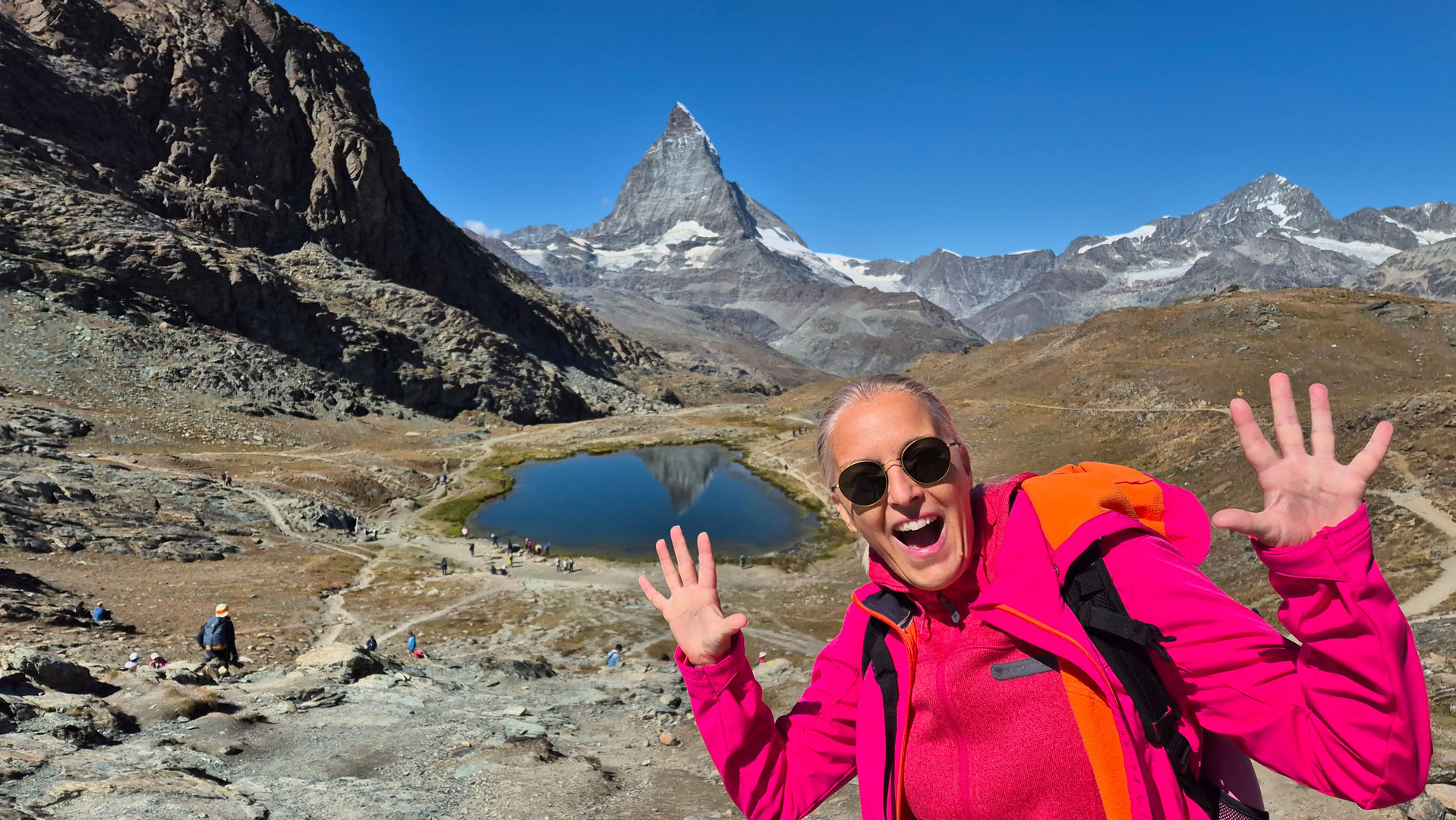
The Matterhorn is perhaps the most famous and most recognisable peak in the world. When I first saw it in a photograph, as a child, it carved itself deep into my memory. Next to it, every other peak looks ordinary.
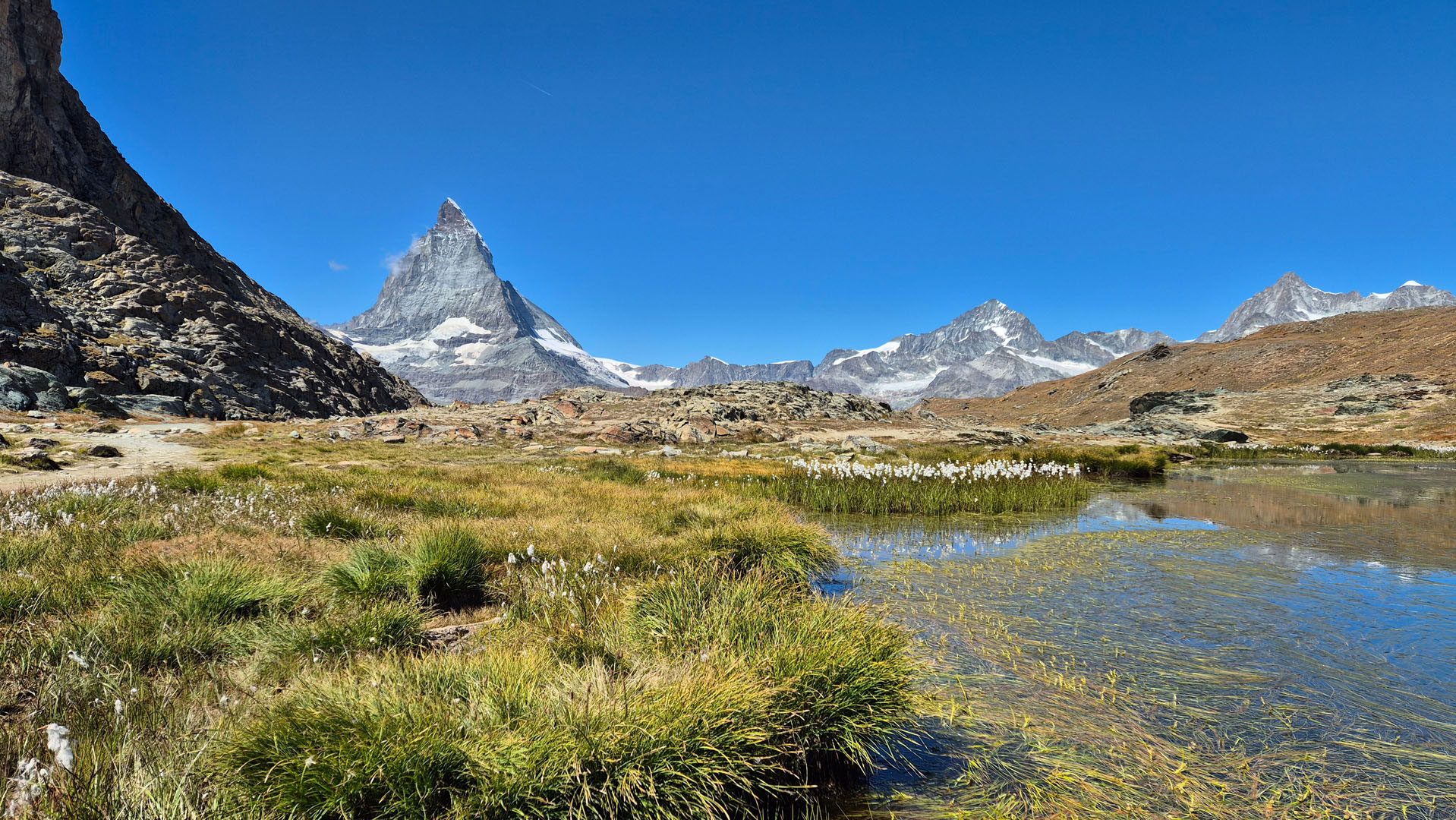
The silhouette of the Matterhorn adorns countless posters, publications, books and logos. The “Toblerone” mountain is a brand in its own right. Along with the white cross on a red flag, it is Switzerland’s main trademark.
Many people even think the Matterhorn is the “Majestic Mountain” in the Paramount Pictures logo and opening title. Although their first logo was inspired by Ben Lomond Peak in North Ogden, Utah, it later evolved into a far more pyramidal silhouette with a reflection in a lake in front of it. The Matterhorn, however, is considerably sharper and has that distinctive hooked summit, so Artesonraju in Peru is a far likelier candidate for the inspiration behind the Paramount logo.
How to plan the trip?
The day before you plan to set out, check the forecast. If cloud is forecast there is no point going, because you very probably will not see the summit. If the forecast is good, set off as early in the morning as possible. That is when the weather is most stable and the chances are highest that the Matterhorn will be visible without interference.
As the day goes on the temperature rises and, with the evaporation, cloud around the summit can be expected as early as late morning. A little of it can add to the drama, but if there is more it may hide the peak completely.

Once you know the forecast, it is a good idea to buy your ticket in advance for the main ascents around the Matterhorn, depending on which you decide on (more about that later).
How to get to the Matterhorn?
The simplest approach to the Matterhorn is via Zermatt. Zermatt is a fashionable resort from which you get your first view of the Matterhorn. From there you can then choose what you want next – a climb up the Matterhorn, or a view of it from one of the surrounding viewpoints.

Before we describe the viewpoints, we should point out that even getting to Zermatt is not all that straightforward. It can be reached only by the train that runs from Täsch where you leave the car.

Täsch has a terminal with an enormous car park, and the train from there runs only to Zermatt. The ride takes about 15 minutes, and the trains run non-stop throughout the day. You can check the times on their website, but in principle there is no need to book in advance.


It is also worth noting that getting to Täsch is itself unusual. If you are coming from the south or from the north (from the direction of Interlaken), there is a good chance you will have to pass through tunnels served by car-carrying trains. Loading and unloading are very simple and are much like boarding a ferry. Tickets can be bought on the spot or online. The trains run every half hour, and passengers stay in their cars the whole time.

Zermatt is a thoroughly touristy place with expensive brand-name shops, restaurants and accommodation. You will also find numerous souvenir shops and chocolate shops – chocolate being another of Switzerland’s symbols. You can even try an ice cream at 10 euros a scoop, and that is only the base, to which you can add extras as you wish. If you are not one for sweet things and jewellery appeals to you more, and a price of several tens of thousands of euros a piece is no problem, this is the ideal place for you!

Tempting as it is to look round Zermatt, that is best left for the way back. While the weather is stable, the Matterhorn comes first!
Climbing the Matterhorn is only for experienced alpinists with the right equipment. At its foot there is a mountain hut from which the climbs set out. Casual walkers and tourists can choose one of the viewpoints – Gornergrat or the “Klein Matterhorn” (the Little Matterhorn). For both attractions it is advisable to buy your ticket online a day earlier. Which to choose?
As for price, both attractions are equally expensive. If you are going as a family, the emphasis is on “expensive”. If money is no object, do both! Our recommendation: Gornergrat first, then the Klein Matterhorn.
The Klein Matterhorn (3883 m) is a peak on the southern side of the Matterhorn. The highest cable car in the world runs up to it. The cable car ride alone is an experience in itself! At the top is the so-called Matterhorn Glacier Paradise. Besides the multimedia displays, you can look round an exhibition of ice sculptures in chambers carved inside the glacier. On the other side of the mountain there is also a metal platform with a viewpoint over the glacier and the surrounding peaks. As for the view of the Matterhorn, it is from the side on which the mountain looks elongated. In other words, you will not see the Matterhorn here from its most famous angle!
If you want to see the Matterhorn in its most famous form, you should choose the mountain railway up to Gornergrat (3131 m).
The Gornergrat railway leaves from a terminal only some fifty metres from the station where the train from Täsch dropped you. The mountain railway runs every half hour. It has a few stops, and the last one is the mountain hut and the viewpoint at the top, which you reach after about half an hour’s ride. It is this summit that is advertised as the best view of the Matterhorn.

The whole area around the hut and the summit is exceptionally attractive! The view of the glaciers and more than 29 peaks over 4000 m is a unique experience!

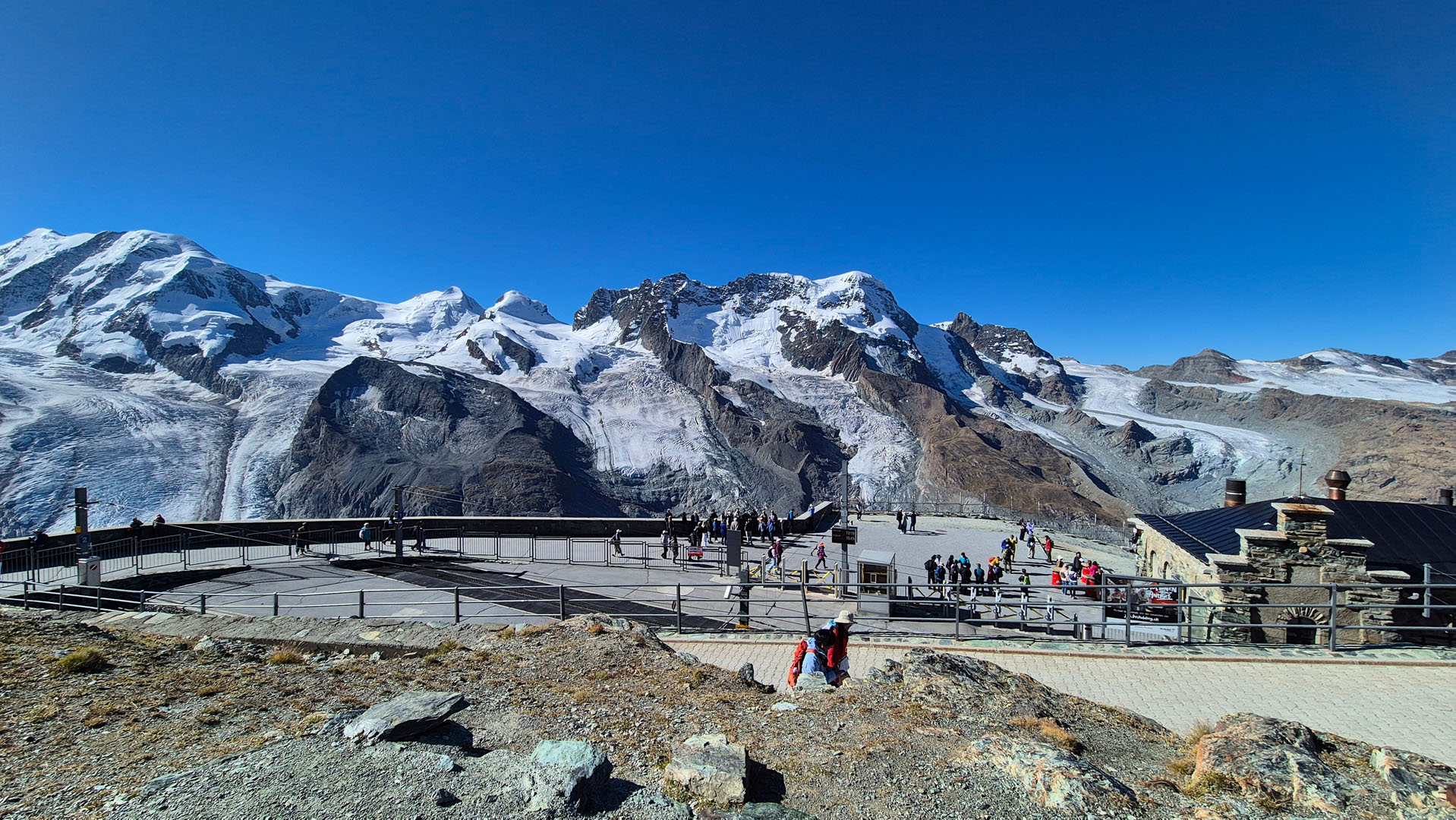


Besides the large hut with its restaurant, there are many other facilities at the top. The price of the train ticket also includes a visit to the interactive multimedia centre Zoom.
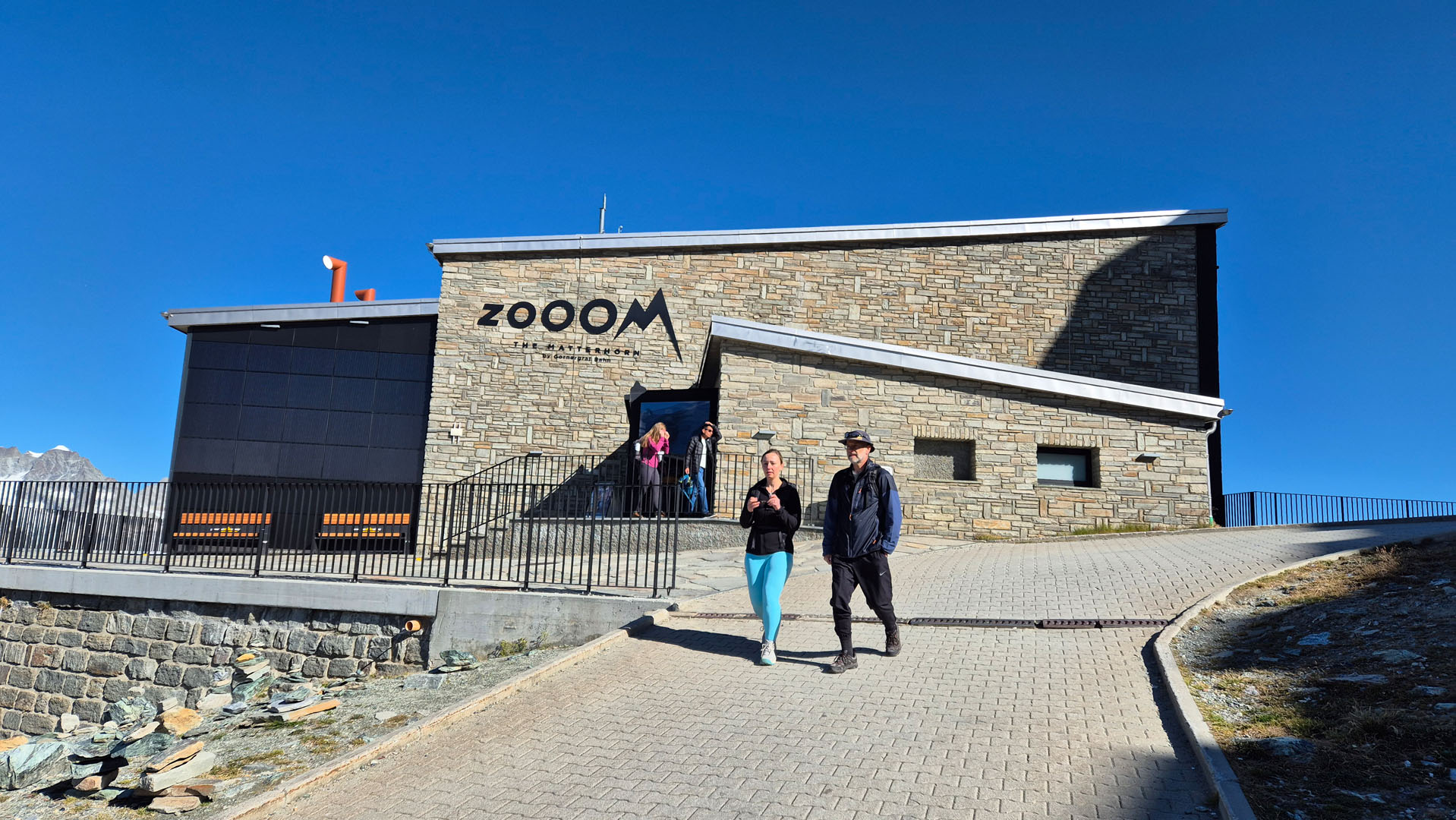
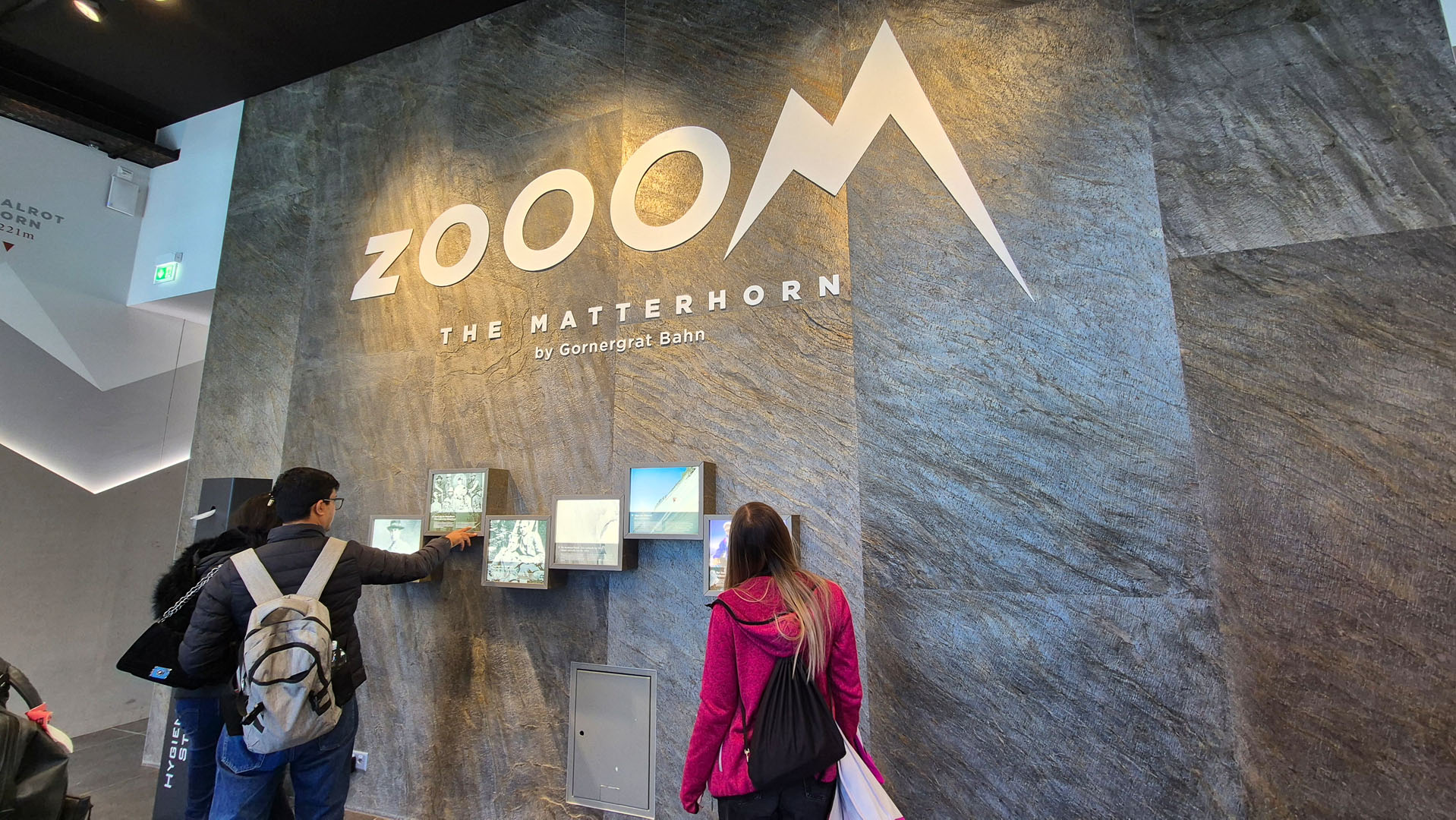
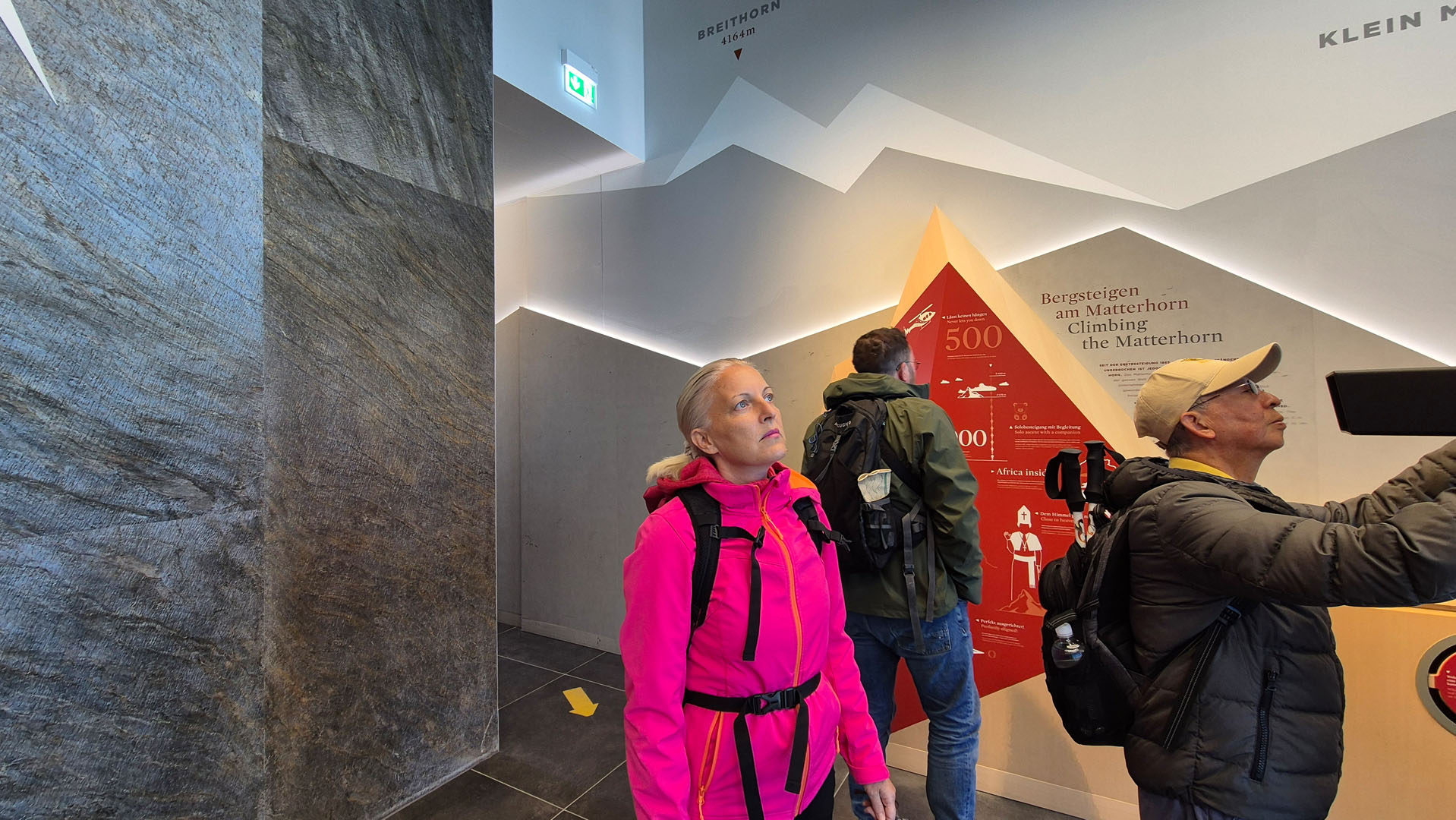
Inside the centre a circular route leads you round. First you come to a multimedia hall where you can enjoy fly-overs around the Matterhorn. After that you reach a panoramic window with telescopes and projected content through which you can learn all sorts of interesting things.

At the end there is a hall with VR equipment that simulates a paraglider flight.
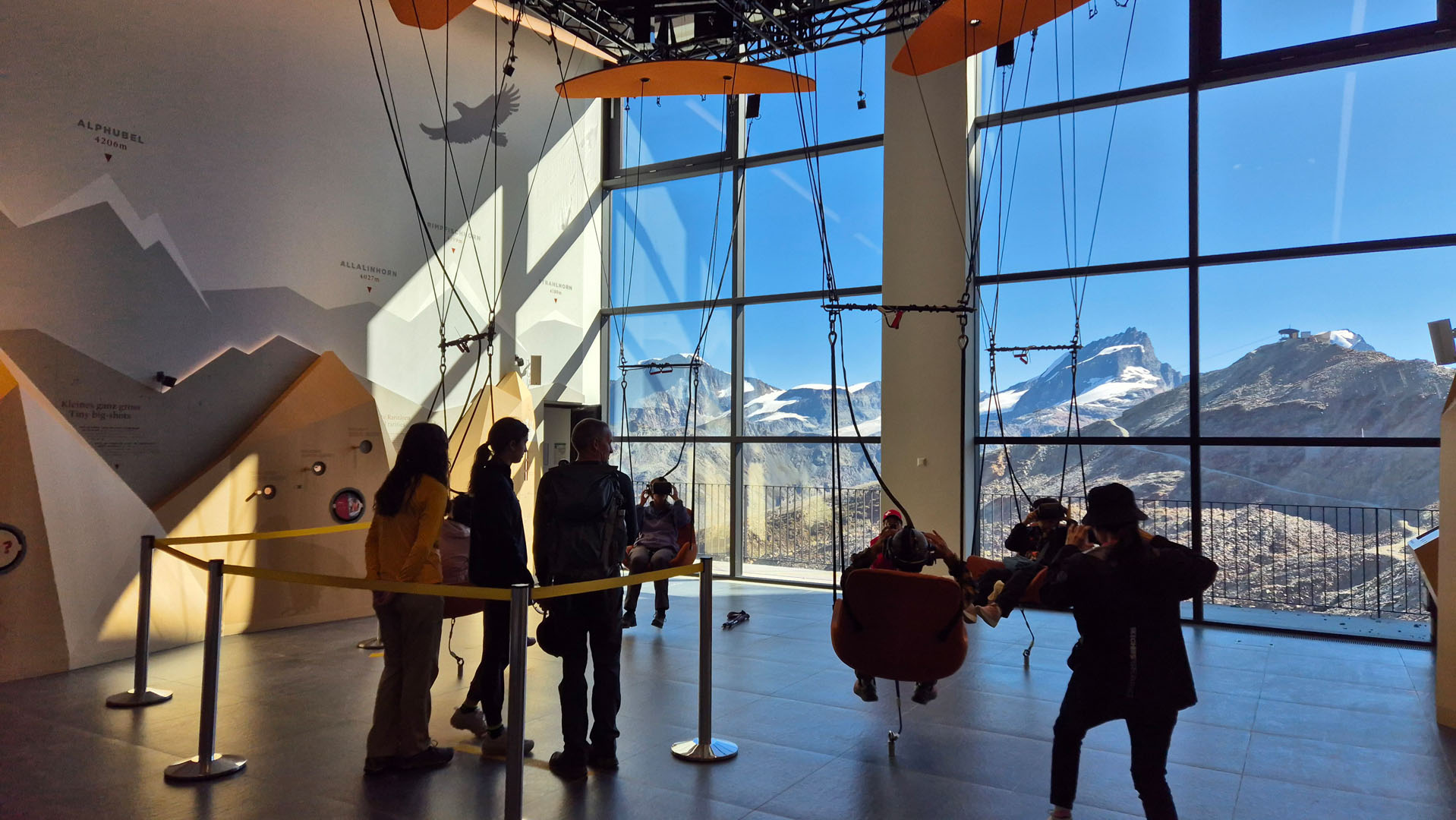
All in all, nothing spectacular, but interesting.

Just below the Zoom centre stands a “golden” locomotive, one of the first three engines that ran on this mountain line. After restoration it was gilded and put on display as a historic exhibit and a photo attraction with the Matterhorn in the background.
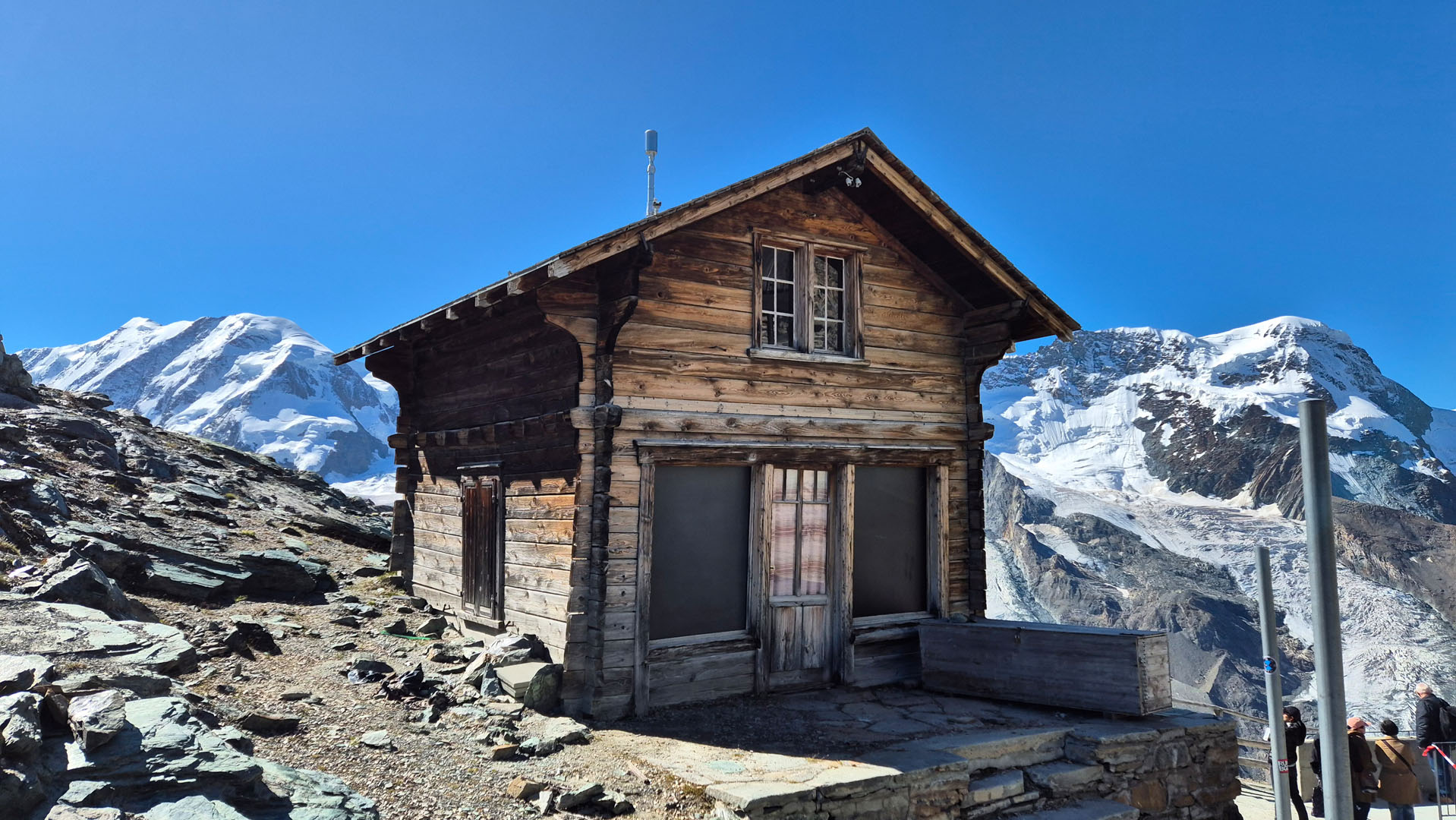
Above the hut is the highest point. From it there is literally a 360-degree view!

After the summit we certainly recommend going down to Lake Riffelsee (Rotenboden station), where you can experience the Matterhorn in its epic scene, reflected in the water.

For the reflection to show clearly, the surface of the lake must not be rippled by wind. The wind usually picks up towards the middle of the day.

You can get down to the lake on foot or by train. Conveniently, you can use the train in both directions as you wish – getting off at the stations and back on again on the way to your final destination. All on the same ticket.
Once you are off the train, a mountain path of a few hundred metres leads from the station to the lake. The whole landscape is very attractive!


Oeschinensee
Oeschinensee is one of the most beautiful lakes in the world. It lies in an area that has been under UNESCO protection since 2007.

The trail we walked along its northern side is one of the most beautiful hiking trails we have ever been on!


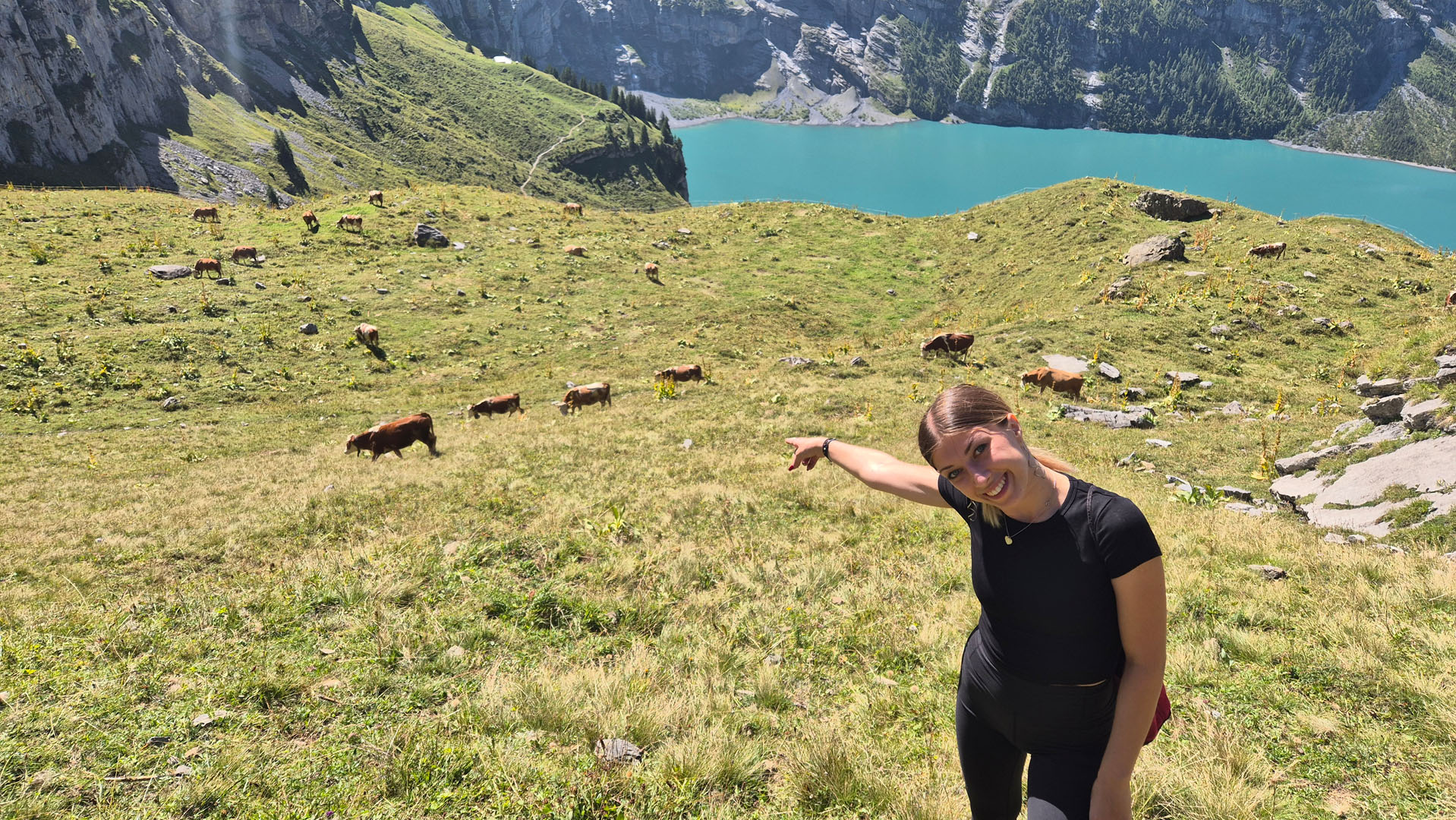
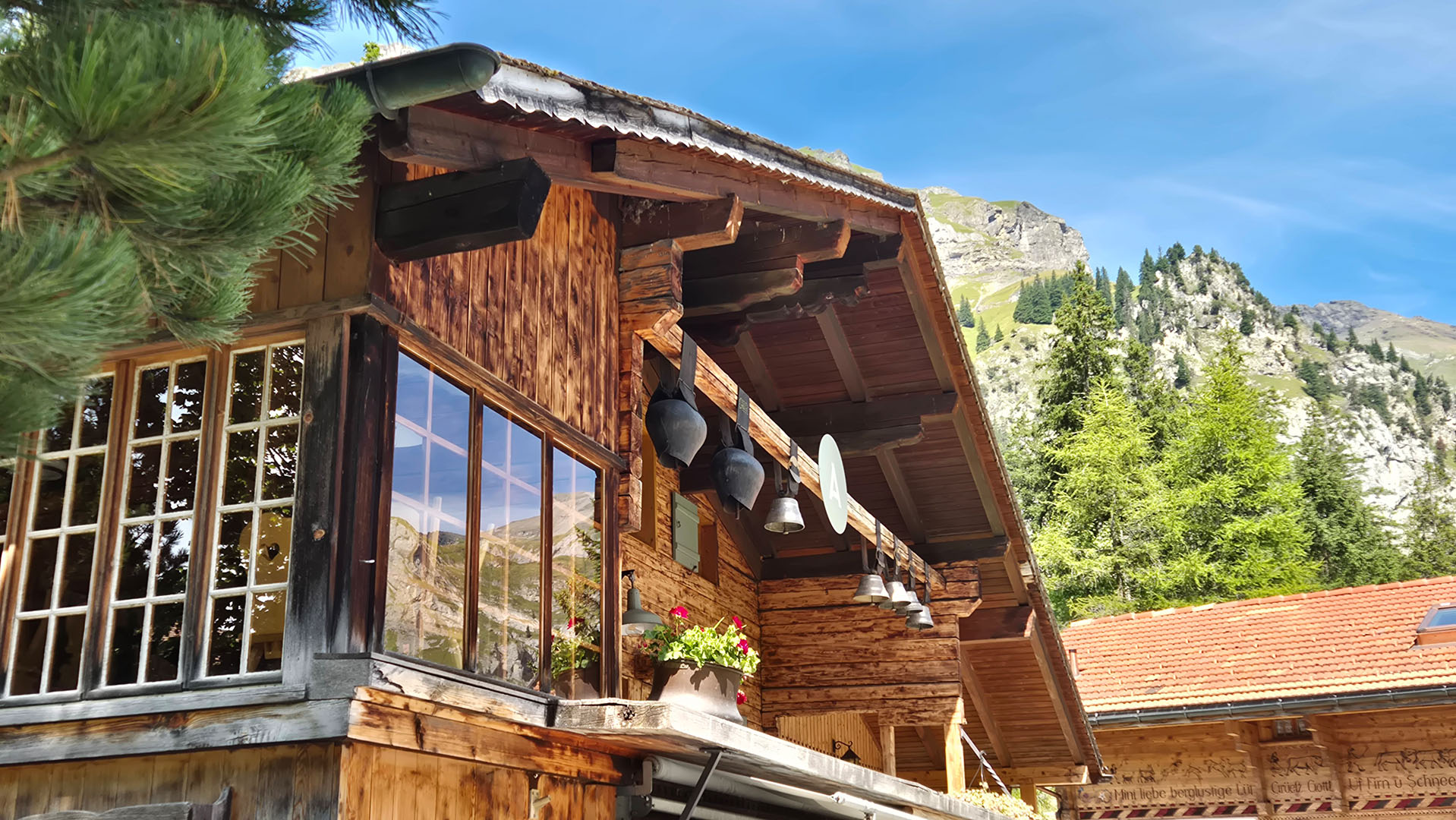
This trail has everything – spectacular views, exposure that still stays within safe limits, forests, meadows, rocky ground, waterfalls, mountain streams and a river, mountain huts, typical Swiss cows scattered across the clearings, and a beautiful lake framed by a spectacular massif whose peaks are crowned with glaciers.

If you consider that you are in an isolated spot, far from the settlements down in the valley, what more could you want?

Although the other places we visited also had some of the most spectacular views we have ever seen, Oeschinensee is still the brightest star of our trip through the Swiss Alps.

Even a place like this, however, can easily turn into a slog and a complete fiasco if you plan your visit badly. Although the lake lies at 1578 m above sea level, and the end of August already means far more pleasant conditions outdoors, the sun still beats down hard. Coming back in the early afternoon we saw an enormous number of people only just setting out on the adventure around the lake. Overweight visitors, families with small children and day trippers not in the best of shape were all visibly sweating, barely catching their breath, and often asked us whether it was worth going on and how far it was to some point of interest. We felt sorry for them, because they will carry away a bad memory of such an incredible place.
That first stretch of the lake on the “lower path” is also the least appealing! It is by far the most crowded part too. People wade into the lake through the mud, so the water there is cloudy and very unattractive.
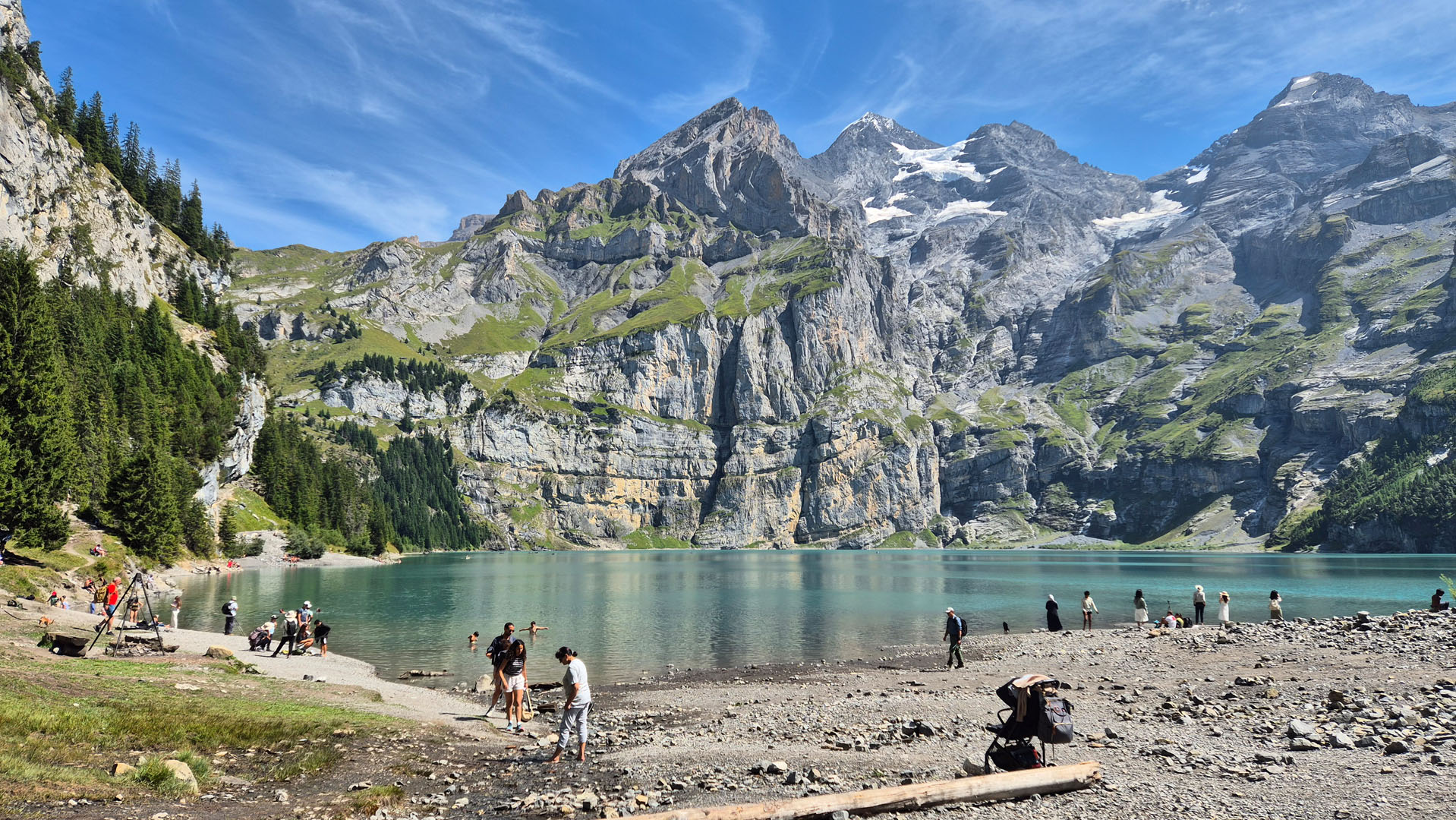
Despite being the “lower path”, it too starts with a climb straight away, so that does not help make it a pleasant stroll either.
What we definitely recommend is setting off for the lake as early in the morning as possible! From Kandersteg, the first cable car leaves at 8:30, but do check the information on their website a few days before your visit.

Tickets should be bought online! At many places that is now a requirement, because it is how parks manage visits in order to reduce crowds and unnecessary queuing. You can leave your car in the cable car car park 46.497195537579245, 7.682623798149956.
The cable car ride takes about ten minutes. After that you should set off not down to the lake, but along the “upper path” above it! In fact there is no lower and upper path. It is all one circular trail that runs along the northern side to the far end of the lake and back. At the farthest point there is a mountain hut and a café. The other sides of the lake are simply too steep for any path that would suit a tourist walk. As for places to eat and drink, there is one at the near end of the lake as well.
The “upper path”

The first part of the trail (from the cable car) is level, and then it forks onto the upper section, which starts straight away with a slightly steeper climb.
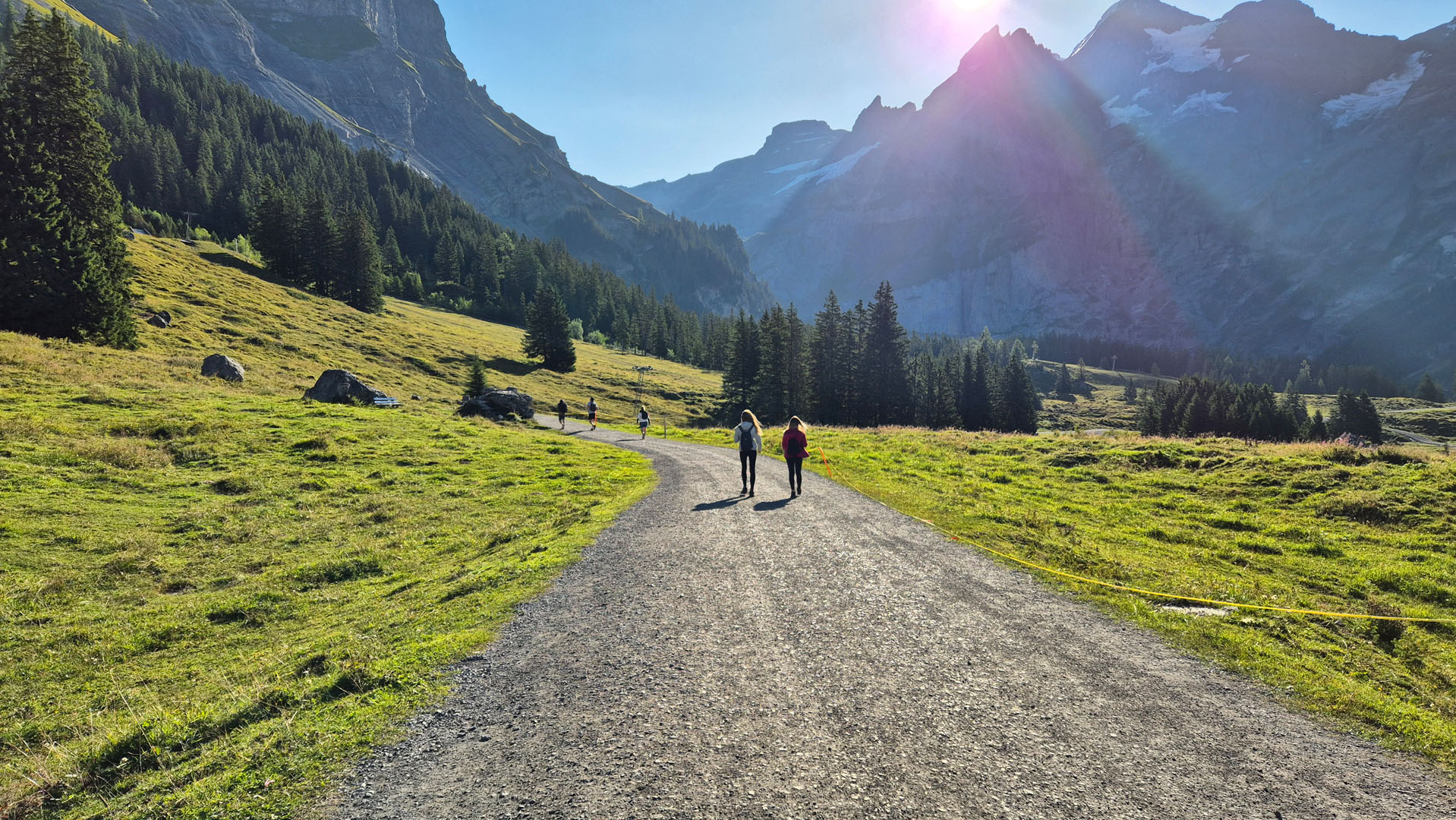
The gradient is nothing special and anyone of roughly average fitness, or even below, should be able to manage it. The key is to get it behind you in the morning cool, while a good part of the trail is still in shade.

As you head east, the views begin to open up. Very shyly at first, then more and more.

Soon you come to remarkably exposed points with spectacular views in every direction. The lake lies far below.

The trail is about 8 km long in total and has almost 500 m of ascent. To some that may sound like a lot, but it is not. The landscape enchants you so much that nothing feels hard!
The whole trail, with plenty of resting, lounging in the meadows, paddling in the rapids, snacking and taking photographs, can be walked in 5 hours.
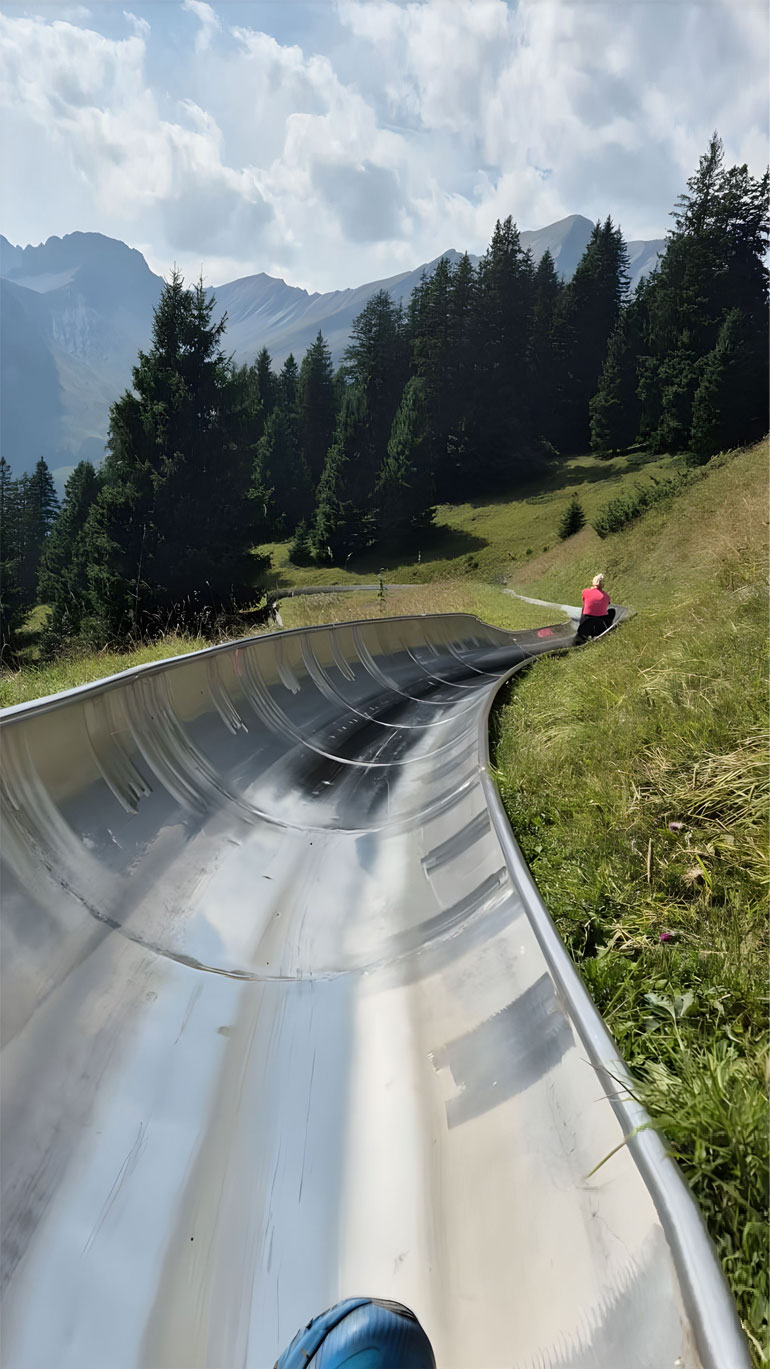
Be sure to leave another hour for the mountain toboggan run, which children and adults will enjoy equally.




Susten Pass
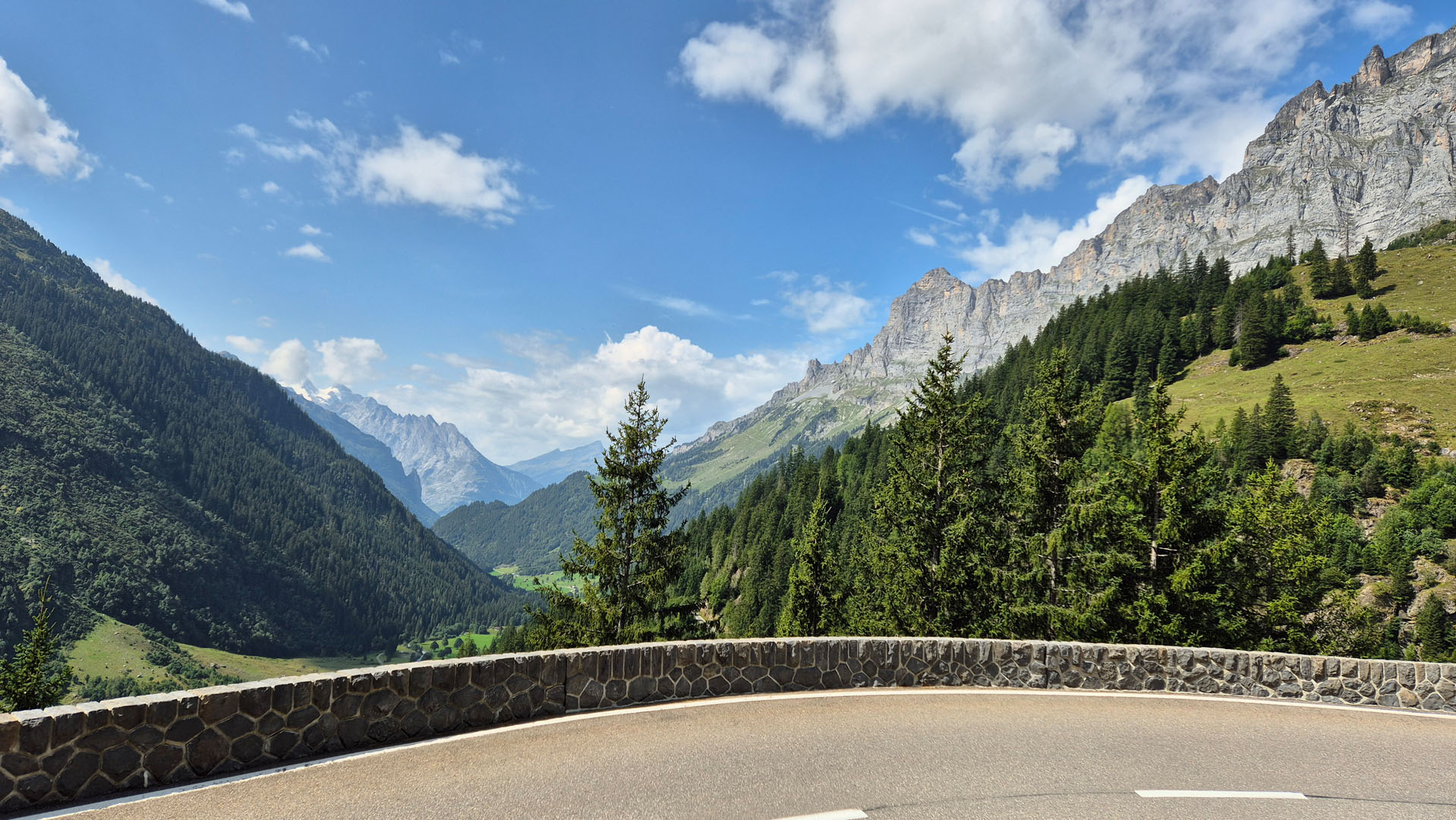
On the way to our destination, the valley where we were staying, we crossed this legendary pass. On the way out we drove through thick fog and temperatures that, in August, were dropping towards zero. On the way back the weather was kind to us, the clouds parted and opened up the views of this unique place.

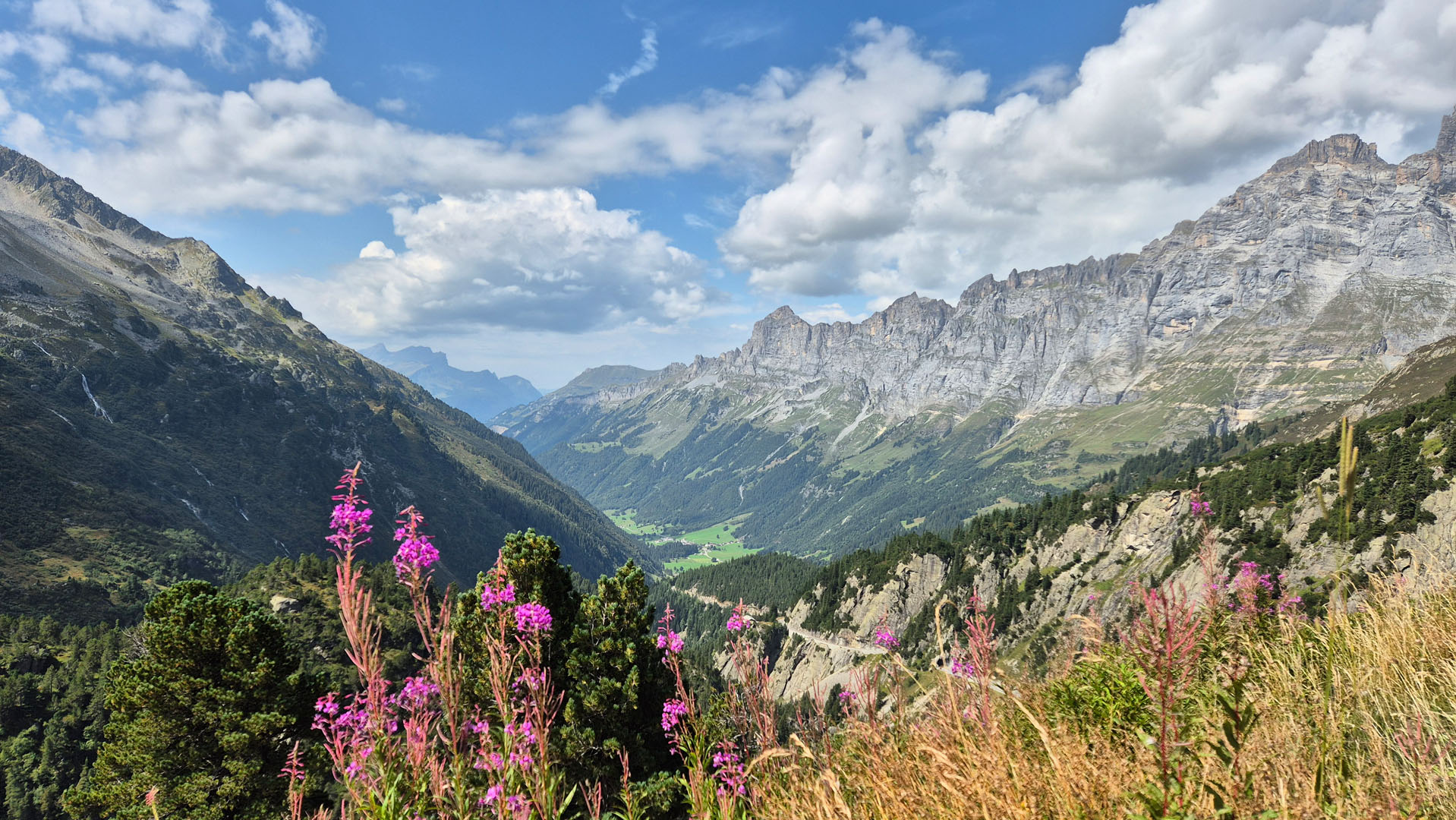
The road, which winds its way up to 2260 m, links Innertkirchen and Wassen.
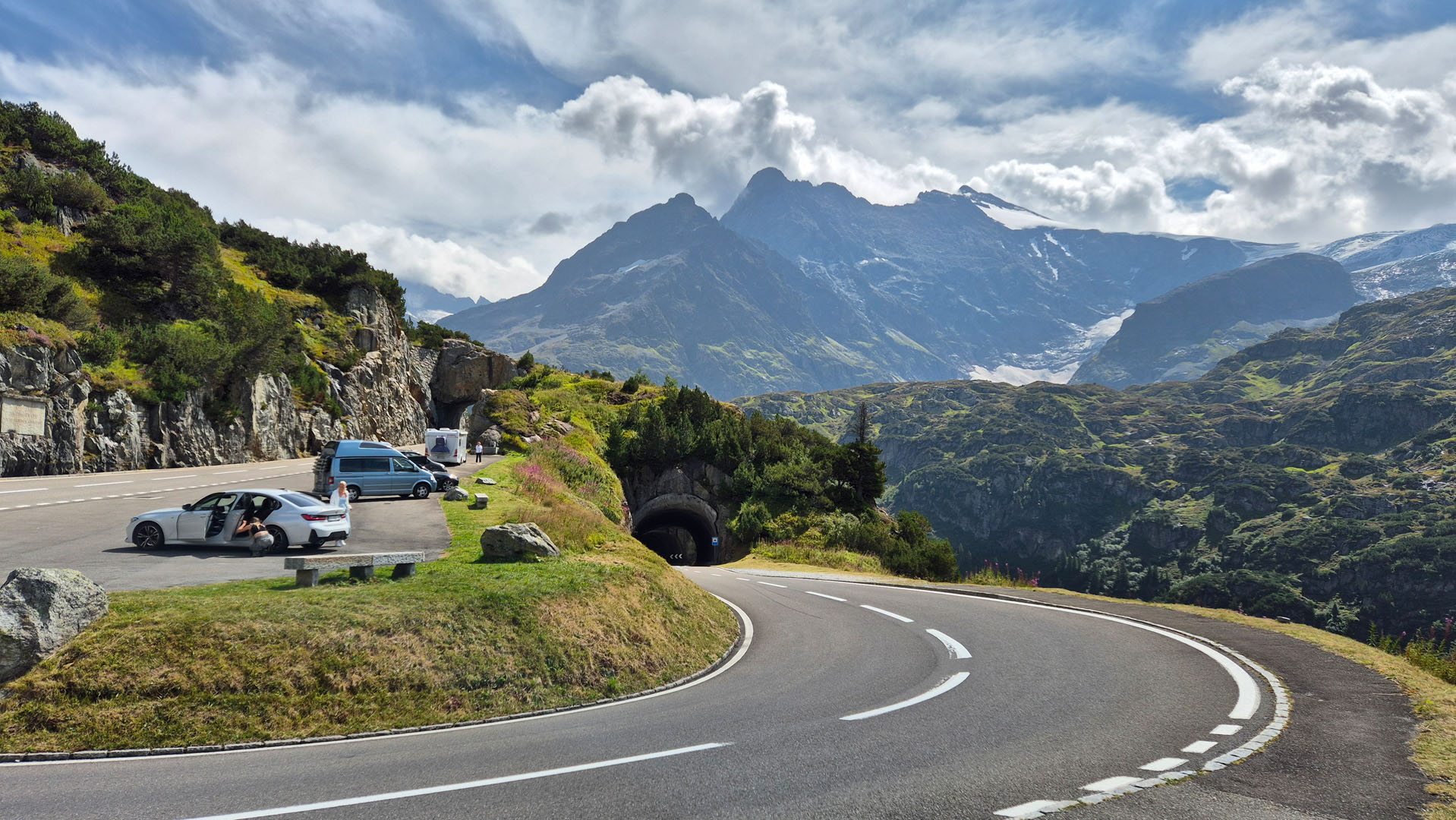

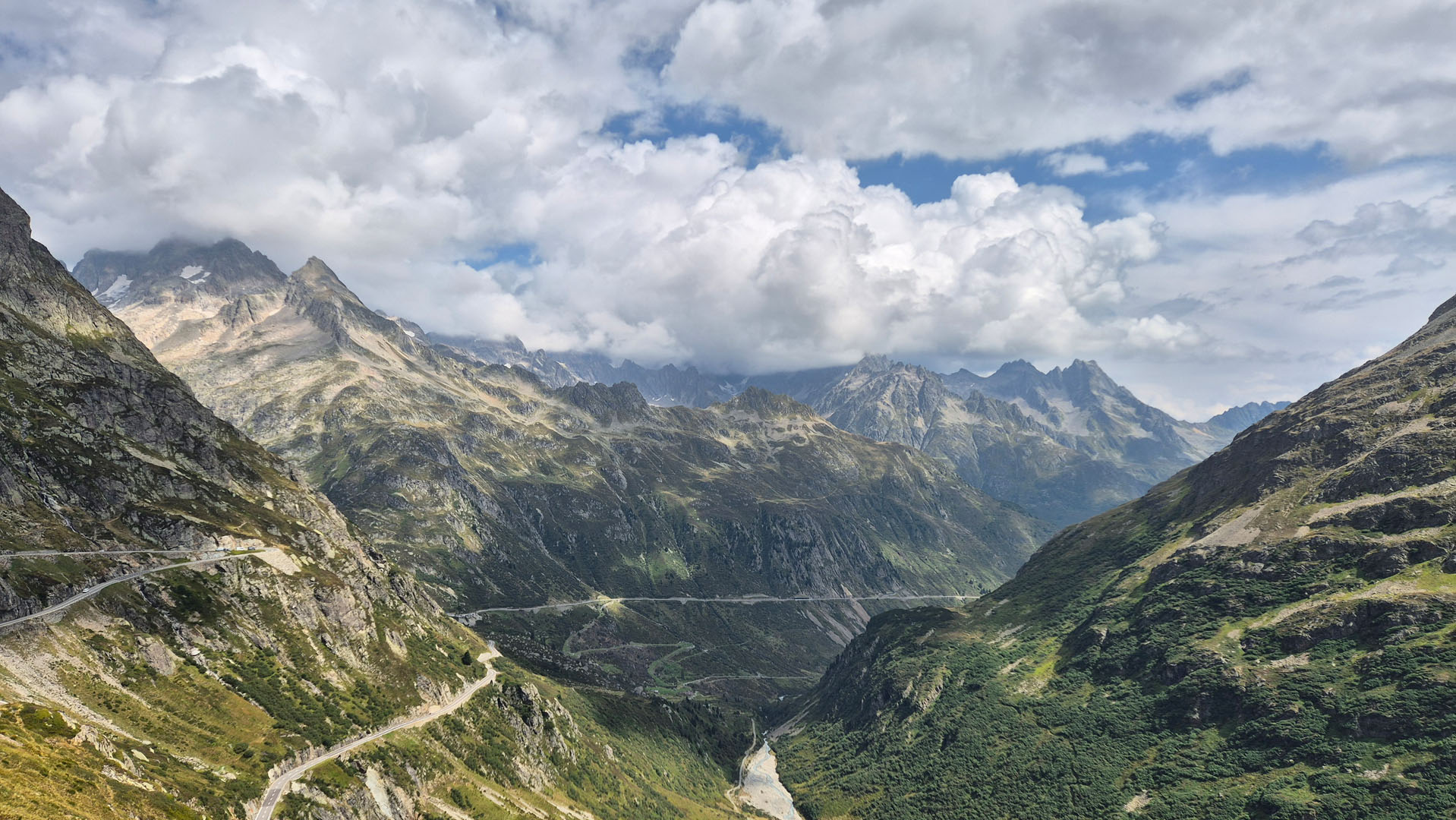
The Susten Pass is a favourite gathering place for everyone in love with octane and spectacular scenery. We saw countless motorbikes and sports cars racing up and down, clearly not in order to get anywhere but to enjoy the drive.
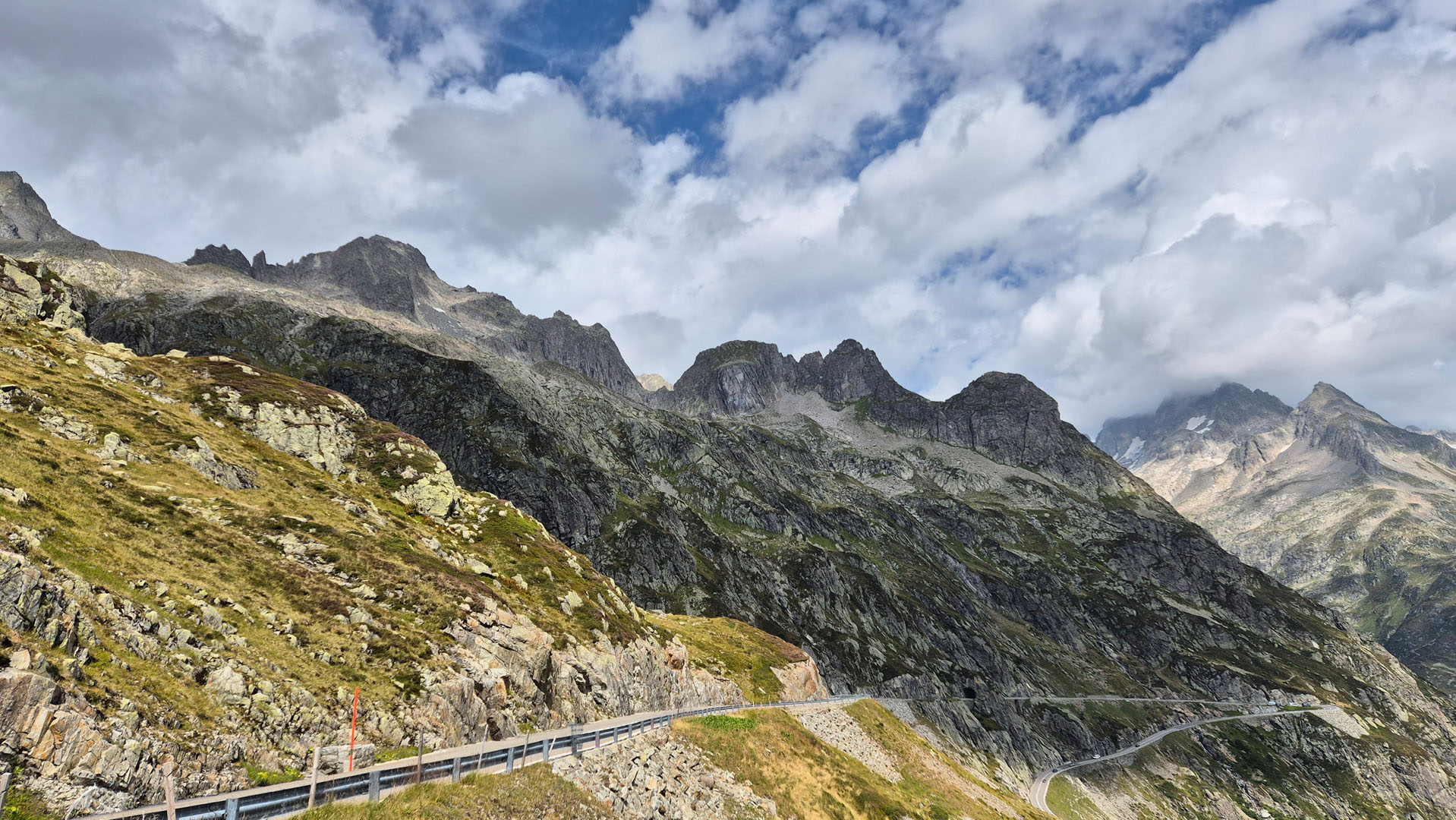
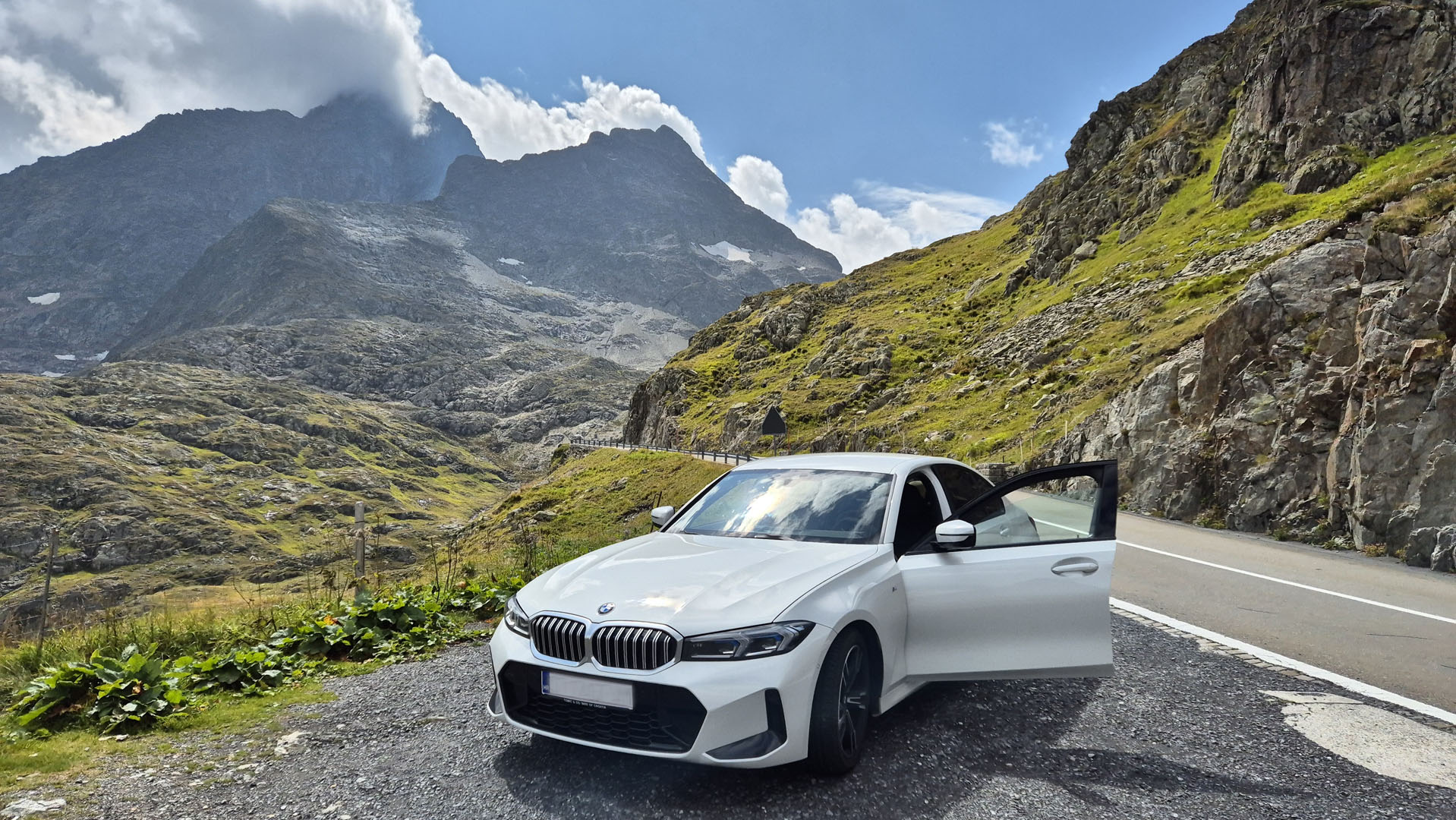
We felt the appeal of driving those hairpins ourselves, with views of countless mountain peaks.

Conclusion
In search of “Heidi meadows” we visited some of the most picturesque places in the Swiss Alps, and in the world. Chasing something that may be purely a product of the imagination, we set the bar of expectation very high. Some of the places almost reached that bar, but on the whole we were left short of the experience we were after. Perhaps the atmosphere of the “Heidi” novels and cartoons does not exist. Perhaps it belongs to a past that cannot be brought back or replicated, or perhaps such places are hidden away in less touristy corners, far from cable cars, modern farms and helicopter routes. Yes, we know there is an “official Heidi house”, but that is not what we were looking for.
If we set aside our obsession with the imaginary, the Swiss Alps are magnificent! Unlike the Dolomites, they are distinguished by greater altitudes. While in the Dolomites the glacier on the Marmolada is the only one you can see during the summer, the Swiss Alps have countless numbers of them. Almost every peak is locked in ice, which gives that recognisable picture wherever you turn your gaze. The vertical scale you can experience here is rarely found anywhere else. Every so often there is some superlative or other, such as “the highest railway in the world”, “the highest cable car in the world” and the like. From some places you can see countless peaks over 4000 m.
On the other hand, the drama of the Dolomites is unmatched. Their sharp peaks and rock sculptures are not to be found anywhere else in the world. But it is not all about peaks either. The Dolomites also have some of the most beautiful passes, pastures and scenery straight out of the most romantic picture books.
The Swiss Alps are vast and we are aware that we have only scratched their surface. Even so, some things were common to most of the regions we passed through: the food in the restaurants is bland, everything is very expensive, and you drive the whole time under the stress of being caught on camera if you happen to go a kilometre or two over the limit. We also did not feel the “Swiss spirit”. We rarely met local people. Mostly they were foreigners working as waiters and shop assistants. We missed feeling a little more of Swiss culture and of their everyday life. We do not want to believe that their everyday life really is that sterile.
Finally we have to mention Swiss cheese. Although “Swiss cheese” sounds like a stereotype, something hyped without any real basis, their cheeses really are excellent. We tried them in their local dairies and in villages high up in the mountains, and every one was excellent! They are full of flavour and come in a great variety, and they are more affordable than our own domestic cheeses.
Special
Although our focus is on Croatia, due to great interest in reviewing some international locations from our travels, we decided to launch the Special section. In it, we will not cover locations in the same detailed way we do with Croatian ones, but will instead provide a brief overview of multiple locations grouped into meaningful categories. The only criterion we still strictly follow is that they must be natural attractions.

