

The Walls of Ston: An Engineering Marvel of the Dubrovnik Republic
Location: StonLength: 1 kmElevation gain: 120 mDifficulty: EasyDifficulty rating: K1, T1, VR1
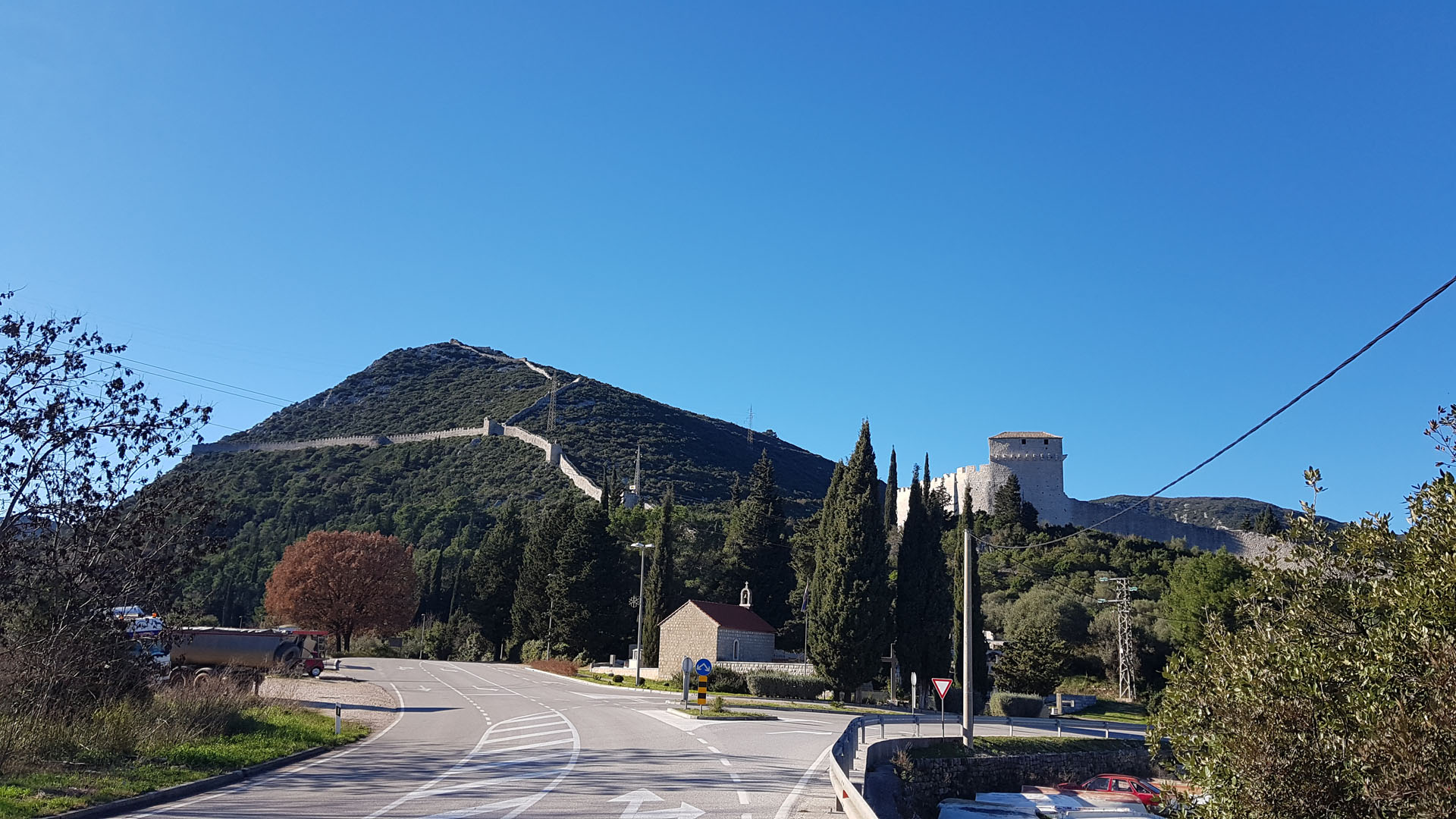
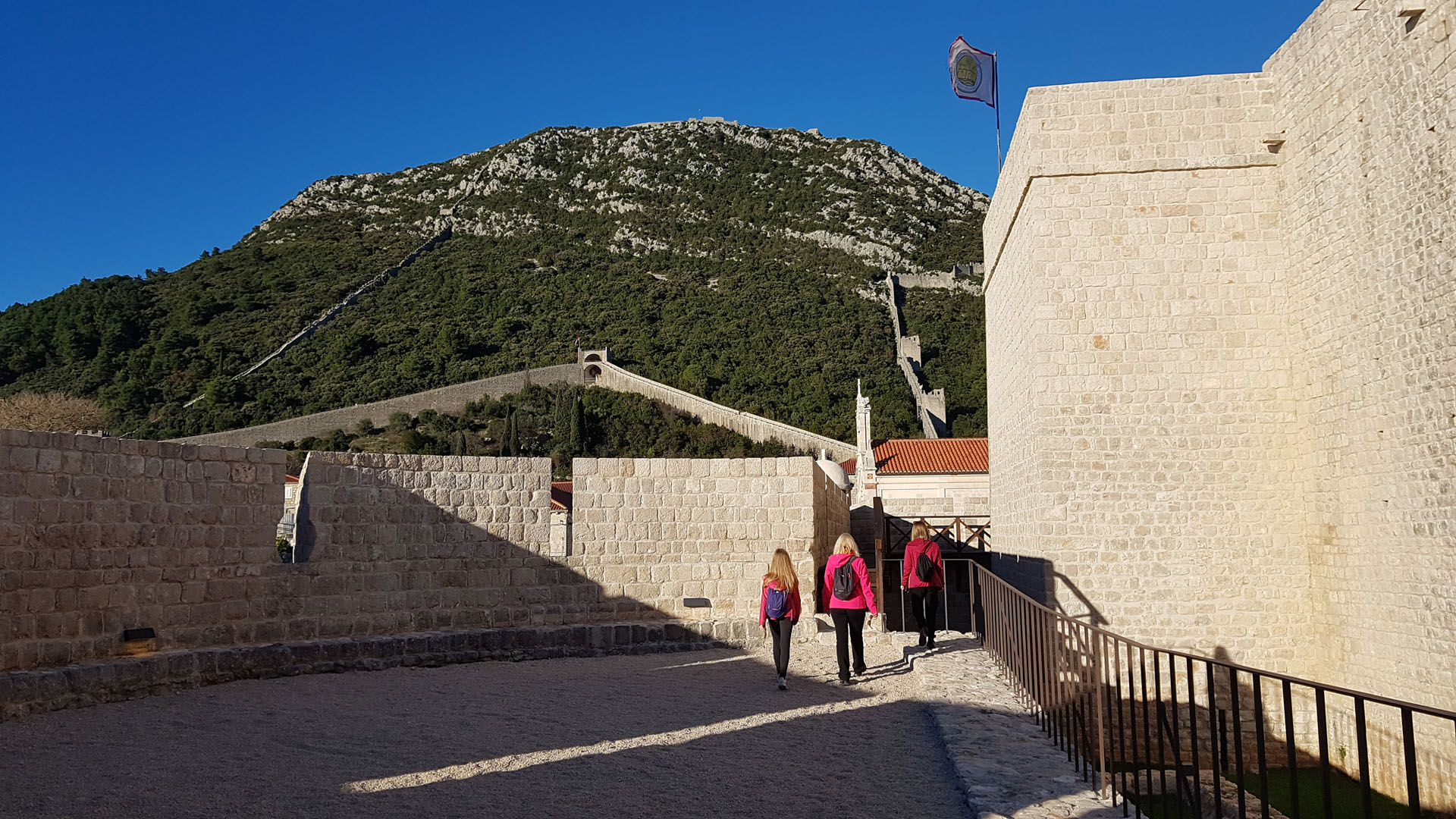
The Walls of Ston are often referred to as the European Wall of China. While such comparisons might seem a bit much, knowing that the Great Wall of China was built over two millennia with limitless resources, the association comes naturally the moment you see the Walls of Ston rising from the town and stretching across the hillside. Those who haven’t seen them before, or didn’t even know they existed, are often left speechless by the sight.

The Walls of Ston were built by the Dubrovnik Republic to defend its western borders and one of its most vital resources – salt. Aside from its famous oysters, Ston has been known since ancient times for salt production, a commodity that was once more valuable than gold itself. Just as Dubrovnik had to protect its eastern lands, especially the fertile fields and mills on the Ljuta River by building Sokol Grad, it also had to safeguard its vital interests on the western front with this imposing architectural achievement.
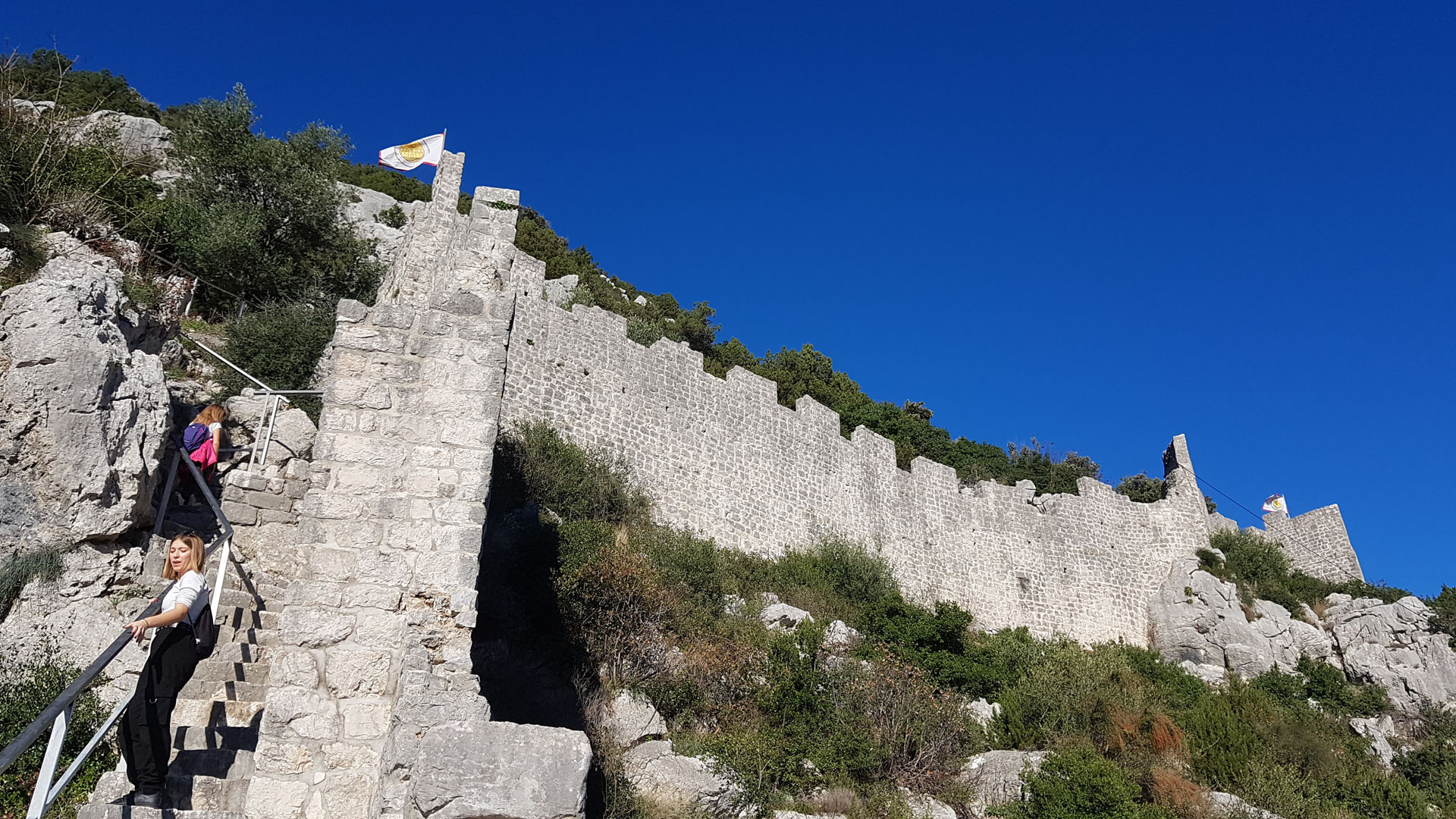
The walls were originally over 7 kilometers long. Construction of the defense system began in 1333, and today it stands as one of the largest preserved fortification systems in the world. Beyond the walls themselves, the system consists of numerous structures – 3 fortresses, 41 towers, and 7 bastions.

The project designed and built here by the Dubrovnik Republic wasn’t just about walls and forts. It involved building two complete towns, defensive moats, rainwater drainage systems, and the regulation of the coastline and local streams. It was an incredible feat of engineering that only highlights the global significance and power of Dubrovnik at the time.
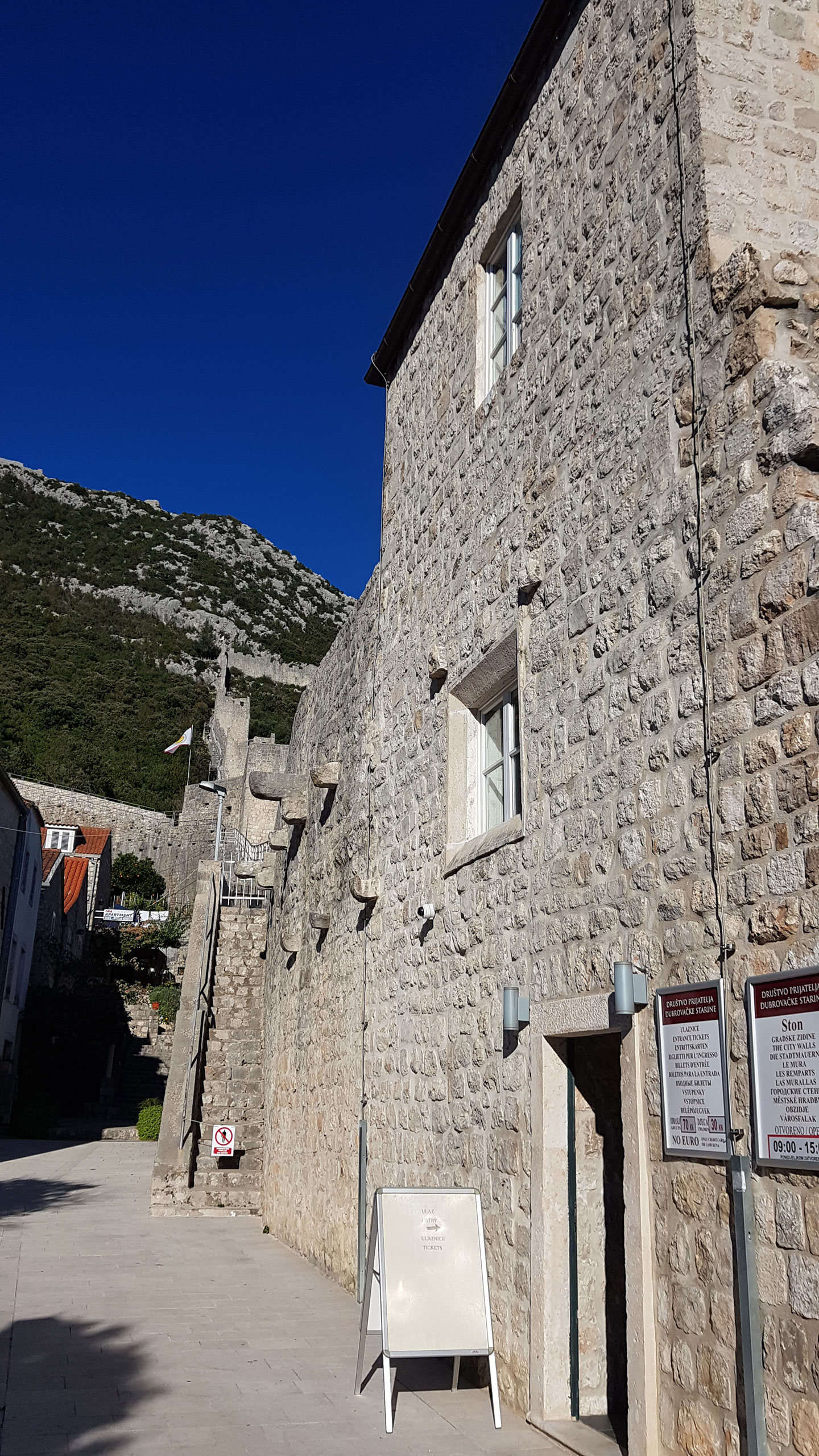
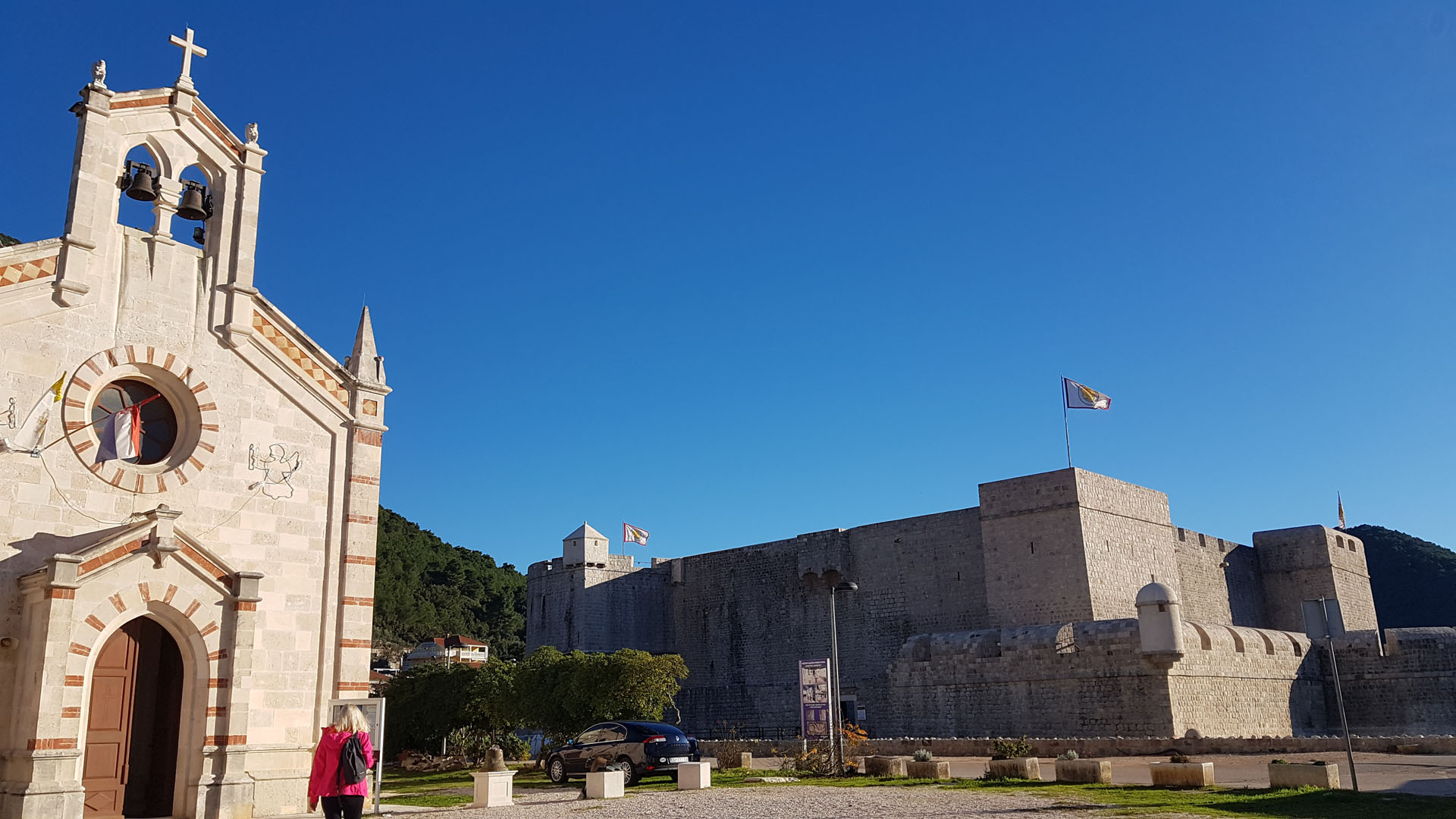
Our tour of the walls began on the Ston side. Tickets can be purchased at one of the towers (Barabanata), located right across from the parking lot, which serves as the starting point for the walk.
We chose the route that leads directly uphill, connecting Ston with Mali Ston. The climb is quite steep in sections and fully exposed to the sun, so it’s wise to choose your visiting time carefully.

As you climb higher, spectacular views begin to open up – first over Ston, and then across the landscape toward the east and north.

With breaks for rest, photography, and soaking in the views, it takes about 40 minutes to reach Mali Ston. The walls there culminate in the mighty Koruna Fortress.


At one time, the entire village of Mali Ston was enclosed by walls and towers. Parts of this system are still visible today.

Mali Ston is a beautiful place full of incredible hidden corners, so it is definitely worth exploring.


After a short walk through the village, we head back toward Ston via the pedestrian path that runs alongside the road. The return walk takes about 15 minutes.

As mentioned, the ticket price also includes a visit to the Veliki Kaštio Fortress, which occupies a prominent position within Ston itself.

A dominant water-filled moat surrounds the fortress. This is perhaps the only functional moat we’ve ever seen around a fortress in Croatia.

The fortress itself is in excellent condition, and its summit offers a beautiful view of Ston and the walls.

Before the construction of the Pelješac Bridge, Ston was approached from the north. Although passing through Neum was always a hassle due to border waits, that route was much more scenic, as it passed through the stunning Mali Ston Bay, dotted with numerous islets. It was the first true encounter with the fairytale-like south around Dubrovnik.
Now, visitors arrive in Ston from the south. While the stretch of road from the Pelješac Bridge to the mainland junction is less exciting, the journey is much faster – and seeing the Pelješac Bridge itself is always an experience in its own right.





Special
Although our focus is on Croatia, due to great interest in reviewing some international locations from our travels, we decided to launch the Special section. In it, we will not cover locations in the same detailed way we do with Croatian ones, but will instead provide a brief overview of multiple locations grouped into meaningful categories. The only criterion we still strictly follow is that they must be natural attractions.